
 By M. S. Siddiqui
Climate justice is the concept that recognizes climate change as a moral ethical and legal issue, acknowledging that its impacts are felt disproportionately by marginalized and vulnerable populations. It advocates for solutions that address historical inequalities and ensure the burdens, compensation and benefits of climate action are shared fairly, focusing on human rights and equity for all.
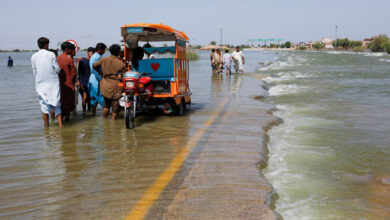
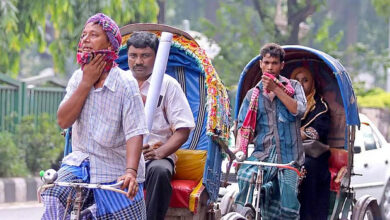
The impacts of climate changes are already damaging ecosystems, livelihoods, infrastructure and food security. Extreme heat exposes workers to heat stress, costing lives and reducing productivity. For example, Bangladesh has been on the front line of climate change for decades, repeatedly confronting heatwaves, tropical cyclones, floods and droughts. Devastating floods are happening more often. Climate change made the pre-monsoon rain that destroyed the summer paddy crop in 2017 twice as likely. Alongside extreme weather, sea level in Bangladesh is rising by 3.8 to 5.8 mm per year – faster than the global average. A recent BIDS study found that during last few years, the income of agricultural workers has been reduced by 20% and global warming may reduce production of rice by 2.5% by 2030.
Climate impacts in Bangladesh are increasing at an alarming rate, and current safeguards
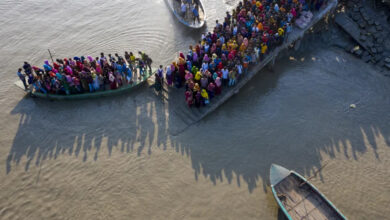
Soon there won’t be enough to protect people. The projected sea level rise could displace 0.9 million people by 2050. Bangladesh needs a bolder adaptation response, alongside a functional loss and damage mechanism and a transition away from fossil fuels.
In 2019, the richest were responsible for more carbon emissions than 5 billion people—the equivalent of 66 percent of humanity, according to Oxfam’s research. To be more specific, it is wealthy polluters—rich industrialized countries and in particular carbon billionaires—that are driving staggering levels of emissions.
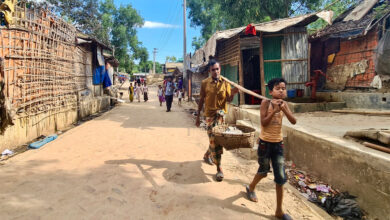
Climate crisis is also causing loss of lives, livelihoods, language, and culture, putting many at risk of food and water shortages, and triggering displacement and conflict. The climate crisis impedes the right to good health as well. Rising temperatures, increased frequency of extreme weather events, polluted air and water contribute to significant health impacts, including heat stress, disease outbreaks, malnutrition, and trauma from having lived through disasters. It has also impacts on a country’s education system and impacts the futures of young generations.
In between 2010 and 2020, human mortality from floods, droughts, and storms was 15 times higher in highly vulnerable regions, compared to regions with very low vulnerability.
The impact of climate change has different dimensions based on inequality of structure, socio-economic condition, intergenerational gap etc.
Structural inequalities occur even within the same country, the impacts of climate change may be felt unevenly due to structural inequalities based on race, ethnicity, gender, and socioeconomic status.
Socioeconomic inequalities due to climate change due to being distributed unequally around the world. Low-income countries, and vulnerable populations within those countries. Globally, the 10 percent of households with the highest per capita emissions contribute 34–45 percent of global household greenhouse gas emissions, while the bottom 50 percent contribute 13–15 percent.
Intergenerational inequity among the children and young people today have not contributed to the climate crisis in a significant way but will bear the full force of climate change impacts as they advance through life. Their life and livelihood is impacted by the actions of the previous generations.
It links human rights to climate change, striving for solutions that are human-centered and protecting the rights of the most vulnerable. It calls for equitable solutions that go beyond emissions reduction to create a more just world, by addressing systemic inequalities and ensuring everyone has access to clean air, water, and food. Some countries and corporations should bear more responsibility for the climate crisis than others, and that solutions must reflect this historical and systemic inequality.
But it doesn’t affect everyone equally — nor is everyone equally responsible. Climate justice recognizes that unfortunately, those who contribute least to carbon emissions are paying the highest cost. It also hold all responsible – the countries, corporations, and people driving our climate crisis. The climate crisis is affecting every country on every continent. For example, a farmer in Bangladesh emits few greenhouse gases, yet must cope with the extreme weather that devastates her land and livestock year after year.
Internationally, climate justice is linked with an agenda for human rights and international development, and sharing the benefits and burdens associated with climate stabilization, as well as concerns about the impacts of climate change. In 2022, the UN General Assembly declared that access to a clean, healthy, and sustainable environment is a universal human right.
The declaration recognizes that the impact of climate change, the unsustainable management and use of natural resources, the pollution of air, land and water, the unsound management of chemicals and waste, and the resulting loss in biodiversity interfere with the effective enjoyment of all human rights.
The concept of climate justice has been widely used to refer to the unequal historical responsibility that countries and communities bear in relation to the climate crisis. It suggests that the countries, industries, businesses, and people that have become wealthy from emitting large amounts of greenhouse gases have a responsibility to help those affected by climate change, particularly the most vulnerable countries and communities, who often are the ones that have contributed the least to the crisis. Climate justice means putting equity and human rights at the core of decision-making and action on climate change.
The Principles of Climate Justice have been adopted by a civil society organization (Mary Robinson Foundation) are: (1) Respect and Protect Human Rights, (2) Support the Right to Development, (3) Share Benefits and Burdens Equitably, (4) Ensure that Decisions on Climate Change are Participatory, Transparent and Accountable, (5) Highlight Gender Equality and Equity, (6) Harness the Transformative Power of Education for Climate Stewardship, (7) Use Effective Partnerships to Secure Climate Justice.
These principles are rooted in the frameworks of international and regional human rights law. However, such laws are often difficult to enforce, particularly when regulatory agencies are underfunded, and issues regarding who has the right to bring a case can make it challenging for communities to raise issues independently.
Climate justice requires effective action on a global scale which in turn requires a pooling of resources and a sharing of skills across the world. The nation states may remain the basic building block of the international system but without openness to coalitions of states and corporate interests and elements within civil society as well, the risk is that the whole house produced by these blocks will be rendered uninhabitable.
Openness to partnership is a vital aspect of any coherent approach to climate change, and in the name of climate justice, this must also involve partnership with those most affected by climate change and least able adequately to deal with it – the poor and under-resourced.
Climate justice places an ethical and moral challenge at the heart of the argument for climate action. It must include legal action based on global commitment of different resolutions and conventions and also refusal to abide by their commitments.
M. S. Siddiqui is CEO, Bangla
Chemical. He can be reached
at shah@banglachemical.com

2 Comments