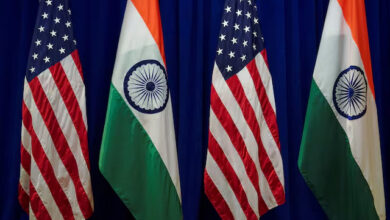
Category: India

  • Defence Sourcing Not Driven By Ideology, Says India On Germany’s ‘Offer’

    Defence Sourcing Not Driven By Ideology, Says India On Germany’s ‘Offer’

    New Delhi: India’s policy of choosing from where to source defence hardware is driven by national interest, and is not at all ideological, Foreign Secretary Vikram Misri said in response to a question by NDTV linked to the official visit of German Chancellor Friedrich Merz.

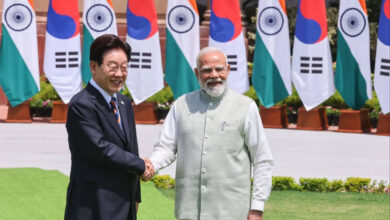
    The German leader, who met with Prime Minister Narendra Modi today, said Germany wants to cooperate more closely on security issues to reduce India’s reliance on Russia. India is already in talks for a potential deal to build six submarines by Germany’s Thyssenkrupp Marine Systems in a partnership with Mazagon Dock Shipbuilders.

    “On the security policy remarks that the German chancellor made and other remarks on decrease in our [defence] sourcing from other sources, I think as far as the security policy aspect is concerned, he was pointing to what I was talking about earlier, which was a change in the approach that Germany has taken with regard to defence and security policy insofar as India is concerned,” Misri said.

    “But look, our approach on defence sourcing is driven entirely by national interest. There are a lot of factors involved in that, and it is certainly not ideological, it is entirely driven by our interest. So I would not say that sourcing from one is linked to sourcing from another,” he added.

    India still works closely with Russia, where much of its military equipment originates, on security policy, and it is one of the largest buyers of Russian gas and oil alongside China.

    “We have a process in place that sets the requirements that we have at any given time. We look at where in the world if we are going to source it from outside, if we are not going to manufacture locally, can we source it in the most convenient manner. I don’t think one is influenced by the other,” he said.

    Defence cooperation is an important pillar of the India-Russia strategic partnership. At present, it is guided by the Agreement on the Programme for Military Technical Cooperation signed between the two countries. The two sides have periodic exchanges of armed forces personnel and military exercises.

    India and Russia also have an institutionalised structure to oversee the complete range of issues of military and military technical cooperation. Some of the battle-proven Russian-origin defence hardware that India uses include T-90 main battle tanks, Sukhoi-30MKI, MiG-29K, to name a few.

    Over the years, cooperation in the military technical sphere has evolved from a purely buyer-seller relationship to joint research, design development and production of state of the art military platforms. The highly successful BrahMos cruise missile is a big example of this. The joint venture Indo-Russia Rifles Pvt Ltd has started making AK-203 assault rifles in India.

    Misri said Germany’s defence policy in relation to India has changed.

    “We can clearly see that clearances that used to take a long time earlier are now being approved very fast. The backlog has been nearly cleared. On the question you asked about the submarine deal, as you are probably aware, there are technical, financial and commercial discussions involved in a deal of this kind. These discussions are continuing. All I can say is that discussions have maintained a positive momentum,” he added.

    He said it would be difficult to say where India and Germany are exactly at this point in time since these discussions have not concluded.

    “The Defence Ministry would have a better sense of that. But what I can say is that discussions are proceeding positively, and we hope to see a positive outcome,” the Foreign Secretary said.

  • India probe finds Tata Steel, JSW Steel, SAIL breached antitrust law, regulatory order shows

    India probe finds Tata Steel, JSW Steel, SAIL breached antitrust law, regulatory order shows

    New Delhi : India’s competition watchdog has found market leaders Tata Steel, JSW Steel, state-run SAIL and 25 other firms breached antitrust law by colluding on steel selling prices, a confidential document shows, putting the companies and their executives at risk of hefty fines.

    The Competition Commission of India (CCI) has also held 56 top executives, including JSW’s billionaire Managing Director Sajjan Jindal, Tata Steel CEO T.V. Narendran and four former SAIL chairpersons, liable for price collusion over varying periods of time between 2015 and 2023, according to a CCI order dated October 6, which has not been made public and is being reported for the first time.

    JSW declined to comment, while Tata Steel, SAIL, and the executives did not respond to Reuters queries. The CCI also did not respond to requests for comment.

    The CCI investigation – the most high-profile case involving the steel industry – started in 2021 after a group of builders alleged in a criminal case brought to a state court that nine companies were collectively restricting the supply of steel and increasing prices.

    Reuters reported in 2022 the watchdog raided some small steel companies as part of an investigation into the industry.

    The probe was later expanded to as many as 31 companies and industry groups, as well as dozens of executives, the CCI’s October order, reviewed by Reuters, shows. Under CCI rules, details of cases related to cartel-like activity are not made public before they have concluded.

    The CCI investigation has “found the conduct of the parties to be in contravention” of Indian antitrust law and “certain individuals have also been held liable,” the order stated.

    The findings are a critical stage of any antitrust case.

    They will be reviewed by top CCI officials and companies and executives will also have the opportunity to submit any objections or comments in a process that is likely to take several months given the scale of the investigation.

    The CCI will then issue its final order, which will be released publicly.

    RISK OF SIGNIFICANT FINES

    India is the world’s second-largest producer of crude steel, and demand for the alloy has been rising as infrastructure spending has increased in the fast-growing major economy.

    JSW Steel has 17.5% of the Indian market, Tata Steel 13.3% and SAIL 10%, according to data from commodities consultancy BigMint.

    Global inflows to ESG funds peaked in 2021 at $645 billion. But that was back when the Biden administration was encouraging investors to put

    In the last fiscal year to March 2025, JSW Steel reported standalone revenues of $14.2 billion, while Tata Steel’s were $14.7 billion.

    The CCI is empowered to impose penalties on steel companies of up to three times their profit or 10% of turnover, whichever is higher, for each year of wrongdoing. Individual executives can also be fined.

    JSW and SAIL have denied the allegations before the CCI, according to two people familiar with the matter, who declined to be named because the case was confidential.

    One of them said JSW had also submitted its response to the CCI, and denied the allegations.

    At 0852 GMT, shares in JSW Steel extended losses to 1.33%, SAIL was down 3.2%, and Tata Steel turned negative and fell as much as 0.7%. The main Nifty Metal Index also turned negative in Mumbai trade.

    WHATSAPP CHATS REVIEWED

    The CCI opened the case after Coimbatore Corporation Contractors Welfare Association alleged in a case it brought before a Tamil Nadu state court in 2021 that steel companies had hiked prices by 55% during a six-month period to March 11 that year, and were artificially boosting prices by restricting supply to builders and consumers.

    After the public prosecutor said the issue was an antitrust matter, the judge then ordered the CCI to take “appropriate action” on the complaint of the association, whose members are involved in road and highway construction.

    Other companies in the CCI document that were found to have allegedly colluded on prices, were Shyam Steel Industries, state-run Rashtriya Ispat Nigam and other smaller-sized firms. Shyam and Rashtriya did not respond to Reuters queries.

    The CCI has asked the steel companies to submit their audited financial statements for the eight financial years to 2023, the October order showed. The watchdog typically seeks such details to calculate potential penalties.

    While the October order did not detail the evidence analysed, an internal CCI document from July 2025 said officials had uncovered WhatsApp messages exchanged between regional industry groups of steel product makers that suggested wrongdoing.

    The messages “indicate that they are involved in fixing the prices/cutting down production,” said the July document.

  • As India claims fourth-largest economy spot, what it means on the ground

    As India claims fourth-largest economy spot, what it means on the ground

    NEW DELHI: When Ramesh Chandra Biswal left his job as a space scientist in the US, he returned to eastern India and ran an agriculture startup on a promise of his country’s rapid economic growth.

    Nine years on, as India positions itself as the world’s fourth largest economy, he is still waiting for the promise to come true.

    India’s economy was the sixth largest in the world, valued at about $2.6 trillion in 2017, when Biswal launched his Villamart project in his home village in Odisha.

    According to calculations in the Indian government’s end-of-year economic review, it has now grown to $4.19 trillion, overtaking Japan’s economy in terms of nominal Gross Domestic Product.

    The review also projects that India will overtake Germany to become the world’s third-largest economy within the next three years, trailing only the US and China in economic weight.

    But on the ground, Biswal was not sure what the projections meant because they had no impact on his life or business.

    “The hype around India becoming the fourth largest economy is not grounded. People cannot relate to that,” he said.

    “The number of people here in India is much more than Japan … We have to improve the per capita income instead of telling the story of being the fourth largest economy.”

    Over the years that he has been running his company, Biswal has not noticed much change, but hoped that the news of the country’s growth would at least create a positive hype and motivate everyone.

    “People are trying. As an entrepreneur, we are also trying, struggling every day, trying to do something new,” he said.

    “I’m getting some respect in society. That way, it is giving me the driving force.”

    But not everyone was immediately optimistic. For Sarvesh Sau, a fruit seller in Delhi, it has been increasingly difficult to keep his family afloat.

    “Rich people are getting rich, those who have resources … but a low-income group person like me finds it difficult to manage a decent living despite putting in more than 12 hours of work every day.

    “We are a big nation, and we will look big compared to others. Are we able to match Japan?”

    The world’s most populous nation, India has about 1.46 billion people and a GDP per capita estimated by the World Bank to be about $2,700. It is about 12 times lower than Japan’s.

    Yogendra Kumar, a plumber in Noida, said his income has been rising, but it is consistently outpaced by the cost of living, leaving him feeling poorer over time.

    “I have heard that India has become the fourth largest economy, but I don’t know how to react to that. It does not make any difference to our lives. It sounds good that India is growing, but the matter of fact is that for people like me the struggle for survival is more acute now than before,” he said.

    “Today I earn more but the inflation takes away all the money, and it makes it difficult to have a comfortable life,” he told Arab News. “Mustard oil was 50 rupees 10 years ago. It is now 200 rupees. A cooking gas cylinder used to cost 500 rupees — now it costs more than double. Everything is so expensive.”

    While India’s claim of being the fourth-largest economy is still awaiting review by the International Monetary Fund, Prof. Arun Kumar, a development economist, does not expect it to be confirmed.

    “Our GDP data, as the IMF has said, is suspect because it doesn’t include the informal sector … According to my estimate, we are still the seventh largest economy, just ahead of Italy,” he told Arab News, also estimating India’s actual growth to be much lower than the government’s projection.

    “Even though official data shows a 7 percent to 8 percent rate of growth, people realize that it’s not growing so well,” Prof. Kumar said.

    “The rate of growth is only of the organized sector, not of the unorganized sector … The unorganized sector is declining and that is where 94 percent of the employment is.”

  • ‘Bangladesh isn’t Pakistan, it doesn’t send terrorists’: Shashi Tharoor slams BCCI over Mustafizur’s IPL release

    ‘Bangladesh isn’t Pakistan, it doesn’t send terrorists’: Shashi Tharoor slams BCCI over Mustafizur’s IPL release

    New Delhi : India’s opposition Congress MP Shashi Tharoor has sharply criticised the Board of Control for Cricket in India (BCCI) for instructing IPL franchise Kolkata Knight Riders (KKR) to release Bangladesh pacer Mustafizur Rahman, saying the decision reflects an unwarranted politicisation of sport.

    In an interview with The Indian Express yesterday (4 January), Tharoor said cricket should not be dragged into political controversies and described the BCCI’s move as “absolutely appalling”.

    Tharoor’s remarks came after the Bangladesh Cricket Board (BCB) decided not to send its national team to India for next month’s T20 World Cup, citing security concerns and government advice. The decision followed the BCCI’s directive that led to Mustafizur’s release from KKR.

    “Bangladesh is not Pakistan. Bangladesh has not been dispatching terrorists across the border. It’s not a comparable situation at all,” Tharoor said, adding that India’s diplomatic relationship with Bangladesh is fundamentally different from that with Pakistan.

    He questioned the rationale behind targeting KKR for selecting Mustafizur, noting that teams were allowed to choose players from a pool approved by the BCCI itself. “If a player was included in the registered pool, why is a franchise to be blamed for selecting him?” he asked.

    Tharoor said it made no cricketing sense and appeared to be a knee-jerk reaction to social media outrage. He also raised concerns about singling out an individual player who, he said, has never engaged in hate speech or made any statements against India.

    “There is a moral issue here,” Tharoor said. “Why must cricket alone bear the burden of public anger when India continues to engage with Bangladesh at multiple levels? Who are we victimising here – a professional sportsman who has done nothing wrong?”

    Tharoor further questioned whether the move signalled discrimination, asking whether Bangladeshi Hindu cricketers such as Litton Das or Soumya Sarkar – both of whom have played in the IPL before – would have faced similar treatment had they been selected.

  • ‘It was important to make me happy,’ says Trump as he warns India of higher tariffs

    ‘It was important to make me happy,’ says Trump as he warns India of higher tariffs

    The United States could raise tariffs on India if New Delhi does not meet Washington’s demand to curb purchases of Russian oil, President Donald Trump said on Sunday, escalating pressure on the South Asian country as trade talks remain inconclusive.

    “[Prime Minister Narendra] Modi is a good guy. He knew I was not happy, and it was important to make me happy,” Trump told reporters aboard Air Force One.

    “They do trade, and we can raise tariffs on them very quickly,” Trump said in response to a question on India’s Russian oil purchases.

    India’s commerce ministry did not immediately respond to a request for comment.

    Trump’s comments follow months of trade negotiations after the US doubled import tariffs on Indian goods to 50% last year as punishment for its heavy buying of Russian oil.

    Indian markets reacted on Monday, with the information technology stock index falling about 2.5% to its lowest in more than a month, as investors worried that strained trade relations could further delay a US-India trade deal.

    Republican Senator Lindsey Graham, a close Trump ally travelling with him, said US sanctions on Russian oil companies and higher tariffs on India had helped curb Indian oil imports.

    Graham is backing legislation to impose tariffs of up to 500% on countries such as India that continue to buy Russian oil.

    “If you are buying cheap Russian oil, [you] keep Putin’s war machine going,” he said, adding that “we are trying to give the President ability to make that a hard choice by tariffs.”

    Trump’s actions were the main reasons India was now buying “substantially less Russian oil,” Graham said.

    Trade experts warn, however, that New Delhi’s cautious approach risks weakening its position.

    Ajay Srivastava, founder of trade think tank Global Trade Research Initiative, said Indian exports already face a 50% US tariff, with 25% linked to purchases of Russian crude.

    While Indian refiners have cut imports after sanctions, he said, buying has not stopped entirely, leaving India in a “strategic grey zone.”

    “Ambiguity no longer works,” Srivastava said, urging India to clearly state its stance on Russian oil. He warned that even a complete halt may not end US pressure, which could shift to other trade demands, and that higher tariffs risk deeper export losses.

    Separately, India struck a cautious diplomatic stance after the United States captured Venezuela’s President Nicolas Maduro on Saturday, urging dialogue without explicitly naming Washington.

    Despite steep tariffs, India’s exports to the US leapt in November, though shipments fell more than 20% between May and November 2025. As New Delhi seeks to clinch a trade deal with Washington, the government has asked refiners for weekly disclosures of Russian and US oil purchases to address US concerns.

    Modi has spoken to Trump at least three times since the tariffs were imposed. India’s commerce secretary met US trade officials last month, but talks remain unresolved.

  • India Debunks Claims of PM Modi-Somaliland Talks, Calls Recognition Reports ‘Fake’

    India Debunks Claims of PM Modi-Somaliland Talks, Calls Recognition Reports ‘Fake’

    New Delhi: India has debunked claims made by a social media account stating that the President of the Republic of Somaliland held official talks with Prime Minister Narendra Modi and that India was set to recognise Somaliland.

    Responding to the claims, the MEA Fact Check unit stated that the claims are “fake” and urged people to stay alert against disinformation.

    In a post on X, the Minister of External Affairs Fact Check unit wrote, “Fake news alert! The posts below are fake. Be vigilant against fake news on social media platforms.”

    The government agency also shared screenshots of the malicious posts of the social media handles circulating the false news.

    The post was shared by an account named “ME24 – Middle East 24”, which claimed that Prime Minister Narendra Modi had held formal discussions with Somaliland President Abdirahman Mohamed Abdullahi and that recognition of Somaliland by “the world’s largest democracy” was imminent.

    MEA FactCheck also rejected reports that Somalia had recalled its ambassador to India over the alleged recognition move, stating that the online content was false.

    Screenshots shared by the unit showed visuals and captions falsely portraying official-level engagement between India and Somaliland, which the government said had no basis.

    The clarification assumes importance given Somaliland’s long-standing political status.

    The region declared independence from Somalia on May 18, 1991, following the Somali Civil War, but has not been recognised internationally, except by Israel, which formally acknowledged Somaliland as a sovereign state on December 26, 2025.

    Amid the broader international debate, Somaliland has rejected allegations that it agreed to host Israeli military facilities or resettle displaced Palestinians from Gaza in exchange for recognition.

    Israel Recognises Somaliland As Independent Nation
    Earlier this week, Israeli Prime Minister Benjamin Netanyahu confirmed that Somaliland would join the Abraham Accords, saying Israel wanted to support “a democratic, moderate country” willing to participate in the agreement, according to reports.

    The declaration of mutual recognition was signed by Israeli Prime Minister Benjamin Netanyahu and Foreign Minister Gideon Sa’ar on behalf of Israel and by Somaliland President Abdirahman Mohamed Abdullahi for Somaliland. The breakaway region is located in a strategically important part of the Horn of Africa, along the Red Sea corridor.

    Speaking to President Abdullahi over the phone, Netanyahu described the moment as historic.

    Somaliland President Abdurrahman Mohamed Abdullahi, also known as Cirro, is expected to visit Israel in the coming weeks, during which he would formally join the Abraham Accords, Israel’s public broadcaster Kan reported.

    The recognition has triggered protests across Somalia, with demonstrations reported on December 30 in Mogadishu, Baidoa, Dhusamareb and other cities. The African Union and the European Union reiterated that Somalia’s territorial integrity should be respected, Al Jazeera reported.

    Somaliland’s president has said more nations would soon recognise the region, which continues to be claimed by Somalia despite maintaining its own government, currency and military.

  • Defence, Capital Goods to lead India’s Capex revival: Report

    Defence, Capital Goods to lead India’s Capex revival: Report

    New Delhi [India], January 3 (ANI): India’s capital expenditure (capex) upcycle is showing early but credible signs of revival, and market strategists believe several investment-linked sectors are poised to benefit the most over the next two to three years.

    According to the India Equity Strategy 2026 by Antique Stock Broking, improving macros, policy support, and rising private and household investment are setting the stage for a broad-based capex recovery.

    Defence remains one of the strongest structural beneficiaries of the capex push. Higher budgetary allocations, a robust order pipeline, and the government’s continued emphasis on indigenisation under the Atmanirbhar Bharat programme are driving multi-year revenue visibility for defence manufacturers. Export opportunities are also expanding, adding an incremental growth lever.

    Capital goods companies are expected to see outsized earnings growth as fresh order inflows coincide with high operating leverage.

    With capacity utilisation above long-term averages and a pickup in private sector investment, even modest revenue growth could translate into sharp profit expansion. Valuations in parts of the sector have also corrected, improving risk-reward, the report said.

    Industrial and electronics manufacturing services (EMS) stand to gain from both domestic capex and global supply-chain diversification. As multinational companies pursue “China+1” strategies, India is emerging as a preferred manufacturing base, supporting sustained demand for industrial equipment, electronics, and automation-linked services.

    While public capex remains supportive, the key shift is the gradual return of private investment. This benefits infrastructure developers, construction companies, and engineering players, particularly those exposed to roads, railways, power, and urban infrastructure, the report highlighted.

    Further, it said the lower interest rates, improved affordability, and rising household investment are reviving housing demand.

    This, in turn, supports real estate developers and building material companies such as cement and construction inputs, which typically lag early in the cycle but accelerate as execution gathers pace, it added. (ANI)

  • Security beefed up in Tripura along Bangladesh border amid concerns over movement of armed groups

    Security beefed up in Tripura along Bangladesh border amid concerns over movement of armed groups

    Agartala : Security measures along specific sections of the India-Bangladesh border in Tripura have been intensified in light of reports regarding the movements of two armed groups operating in Bangladesh, officials in India said yesterday (3 January).

    The groups of concern are the Parbatya Chattagram Jana Samhati Samiti (PCJSS) and the United Peoples Democratic Front (UPDF), reports The Hindu.

    Rinku Lather, the district magistrate for Gomati district in southern Tripura, has released a notification expressing concerns that members of the PCJSS and UPDF might attempt to cross into the state alongside other individuals from Bangladesh and Rohingyas, with intentions to “commit crimes, engage in smuggling and disrupt public order.”

    This warning stems from information obtained from the Border Security Force, reads the notification.

    Additionally, the notification indicates that restrictions under Section 183 of the Bharatiya Nagarik Suraksha Sanhita, 2023 will be enforced to maintain peace and security, while thwarting the plans of anti-national elements and organisations that threaten public safety.

    A night curfew has been instituted from 6pm to 6am in select border areas of the Karbook subdivision of Gomati district, effective until 28 February.

    However, residents living within 300 metres of the international border will be exempt from these restrictions.

    Tripura shares an 856-km border with Bangladesh, reports The Hindu, with Gomati and Dhalai districts adjacent to the Chittagong Hill Tracts (CHT) in Bangladesh.

    The Indian daily said that on 13 June last year, Tripura police detained 13 individuals associated with the PCJSS, including two women.

    At the time, officials said these individuals entered India seeking medical care after suffering injuries from clashes with a rival group in Panchari, CHT, with many exhibiting visible bandages on their limbs.

  • Four Chip Plants to Start Full-Scale Production from 2026, Says Vaishnaw

    Four Chip Plants to Start Full-Scale Production from 2026, Says Vaishnaw

    On the occasion of the approval of the third tranche of the Electronics Component Manufacturing Scheme (ECMS), Union Electronics and IT Minister Ashwini Vaishnaw said on Friday that four semiconductor units in the country, including those by the Tata Group, Micron and CG Semi, will move beyond pilot runs and trial production to begin regular, large-scale manufacturing from 2026.

    “In several segments, India will meet a significant share of domestic demand and even emerge as an exporter of products such as PCBs, laminates, lithium-ion cells, enclosures and optical transceivers. The value chain is clearly taking root. By 2026, four semiconductor units—Micron, Tata, CG Semi and another facility—will begin commercial production, marking a historic milestone,” he said.

    In continuation of the approvals of 24 applications for an investment of ₹12,704 crore announced earlier, the Ministry of Electronics and Information Technology (MeitY) has further approved 22 proposals under the Electronics Components Manufacturing Scheme (ECMS), with projected investment of ₹41,863 crore and projected production of ₹2,58,152 crore. These approvals are expected to generate 33,791 direct employment opportunities.

    The approvals cover manufacturing across 11 target segment products with cross-sectoral applications spanning mobile manufacturing, telecom, consumer electronics, strategic electronics, automotive and IT hardware.

    These include five bare components—PCBs, capacitors, connectors, enclosures and lithium-ion cells; three sub-assemblies—camera modules, display modules and optical transceivers; and three supply-chain items—aluminium extrusion, anode material and laminates.

    A total of 46 applications have been approved under the scheme, with cumulative investments amounting to ₹54,567 crore. These projects are expected to generate employment for 50,794 people and drive cumulative production worth ₹3.67 lakh crore.

    Vaishnaw noted that as India moves towards building a robust AI stack, the focus is on strengthening all layers of the ecosystem.

    “We are developing AI-based applications at the top layer, building large and small language models at the middle layer, and placing strong emphasis on the bottom infrastructure layer through initiatives such as the Electronics Component Manufacturing Scheme (ECMS) and the Semiconductor Mission,” he said.

    He also put forward a challenge to industry, stating that future approvals and disbursements will be linked to structured plans for local sourcing, design excellence and Six Sigma implementation. Highlighting skilling as the fourth major pillar, he said that while multiple skilling initiatives are already in place, there is a need for a far more coordinated and outcome-driven approach.

  • Rajnath Singh Signs Condolence Book For Zia At Bangladesh High Commission

    Rajnath Singh Signs Condolence Book For Zia At Bangladesh High Commission

    New Delhi: Defence Minister Rajnath Singh on Thursday signed the Condolence Book in the High Commission of Bangladesh in Delhi. Singh expressed sorrow at the passing of former Prime Minister and BNP Chairperson Begum Khaleda Zia.

    In a post on X, he said, “Went to the High Commission of Bangladesh in New Delhi. Signed the Condolence Book expressing our profound sorrow at the passing of former Prime Minister and BNP Chairperson Begum Khaleda Zia. Our thoughts are with her family and the people of Bangladesh.”

    Earlier in the day, Acting Chairman of Bangladesh Nationalist Party (BNP), Tarique Rahman on Thursday shared a heartfelt note thanking the supporters who gathered for the funeral of his mother, Khaleda Zia.

    Rahman thanked officials of the government and dignitaries that visited Bangladesh from abroad representing their heads of state for the funeral.

    “In yesterday’s moments of deep personal loss, I want to speak from the heart and thank the many individuals whose care and professionalism helped the country conduct itself through my mother’s final farewell,” Rahman said in a post on X.

    Bangladesh on Wednesday held the Namaz-e-Janaza of former Prime Minister Begum Khaleda Zia at the South Plaza of the Jatiya Sangsad Bhaban, as thousands gathered to pay their final respects to the veteran leader.

    The funeral prayer was led by the khatib of the Baitul Mukarram National Mosque, while BNP Standing Committee member Nazrul Islam Khan oversaw the proceedings.

    Following the Namaz-e-Janaza, it was announced that Khaleda Zia was buried beside her husband, former president Ziaur Rahman, at Sher-e-Bangla Nagar in the capital. The funeral drew wide regional attention, with multiple South Asian nations dispatching senior representatives to Dhaka to attend the state funeral, The Daily Star reported.

    External Affairs Minister S Jaishankar also attended Khaleda Zia’s funeral in Dhaka.Bangladesh High Commissioner to India Riaz Hamidullah on Wednesday said that the visit by External Affairs Minister S Jaishankar would see New Delhi and Dhaka script a new chapter in ties, driven by shared interests.

    In a post on X, he said, “As HE Dr @DrSJaishankar left Dhaka after a whirlwind 4-hr visit, #Bangladesh & #India would look forward to script a new chapter in ties, in shared interests driven by pragmatism and mutual interdependence, as indeed briefly discussed with @bdbnp78 Acting Chair, @trahmanbnp this afternoon.”