Category: Bangladesh

  • UN rights chief offers support to combat Bangladesh’s election misinformation

    UN rights chief offers support to combat Bangladesh’s election misinformation

    DHAKA, January 13: Chief Adviser Professor Muhammad Yunus on Tuesday sought support from the United Nations human rights office to counter a surge of misinformation targeting the February 12 elections.

    “There has been a flood of misinformation surrounding the elections. It is coming from both foreign media and local sources,” Professor Yunus said during a phone conversation with Volker Türk, the UN High Commissioner for Human Rights.

    “They have flooded social media with fake news, rumours and speculation. We are concerned about the impact this may have on the elections,” the Chief Adviser added.

    High Commissioner Türk said he was aware of the problem and offered the support of the UN human rights office to address what he described as a growing misinformation challenge.

    “There is a lot of misinformation. We will do whatever is needed,” Türk said, adding that the UN rights agency would work closely with Bangladesh to tackle the issue.

    During the conversation, the two leaders also discussed the upcoming referendum, the importance of institutional reforms, the work of the Enforced Disappearance Commission, the formation of the National Human Rights Commission (NHRC), and the global geopolitical situation.

    High Commissioner Türk stressed the importance of establishing “a truly independent” National Human Rights Commission to carry forward the work related to enforced disappearances.

    In response, Professor Yunus said the NHRC ordinance has already been promulgated and that a new commission would be reconstituted ahead of the February 12 elections.

    “We will do it before we leave,” he said.

    The Chief Adviser said he had shared the final report of the Enforced Disappearance Commission with the UN High Commissioner for Human Rights, describing it as a crucial document that would go a long way toward ensuring accountability and justice for the victims of enforced disappearances during the autocratic regime from 2009 to 2024.

    UN High Commissioner for Human Rights Volker Türk praised the Chief Adviser’s efforts over the past year and a half. He said his office had supported the work of the Enforced Disappearance Commission and would continue to do so.

    SDG Coordinator and Senior Secretary Lamiya Morshed was present during the conversation.

  • Long-term energy strategy prepared to ensure fuel security : Finance Adviser

    Long-term energy strategy prepared to ensure fuel security : Finance Adviser

    'Energy remains a critical issue for the economy as both power and energy sectors rely heavily on a secure supply'
    ‘Energy remains a critical issue for the economy as both power and energy sectors rely heavily on a secure supply’

    By Md Akter Hossain

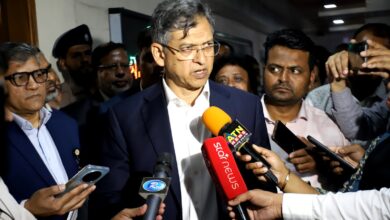
    Dhaka: Finance Adviser Dr Salehuddin Ahmed on Tuesday said the government has prepared a long-term energy strategy recognising fuel security as one of Bangladesh’s major challenges.

    “Energy remains a critical issue for the economy as both power and energy sectors rely heavily on a secure supply. Without an assured fuel supply, local production will be affected,” he told reporters after separate meetings of the Advisers Council Committee on Public Purchase and the Advisers Council Committee on Economic Affairs at the Secretariat.

    “There are two dimensions—power and energy. A comprehensive approach has been taken. This includes offshore drilling initiatives and the utilization of coal including domestic coal resources. All these have been consolidated into a single framework,” he said.

    Responding to another question over the interim government’s success, the adviser said it is not that everything has been done or that we have achieved 100 out of 100.

    “Definitely, there were expectations we could not meet due to limitations,” he said, citing procedural rules, the need for inter-agency coordination, the role of government officials, the availability of skilled manpower, and commitment as key challenges.

    “Without addressing these, implementation cannot happen just because we planned or wanted it,” he added.

    Responding to a recent Transparency International Bangladesh (TIB) report claiming advisers exercise more power than formal institutions, Dr Salehuddin said such narratives are common and not unusual.

    “Sometimes people speak louder, sometimes less. It is not correct to say nothing has been done, nor is it correct to claim everything has been achieved. There are realities and constraints,” he said.

    On reports that some countries, including Iran and Nepal, were reluctant to engage economically with Bangladesh, he said he was unaware of the specific context but insisted Bangladesh’s overall economic position remains stable.

    “Bangladesh is being viewed positively by many. For example, in terms of SDG financing, even the United Nations says Bangladesh has the capacity to mobilise funds and that other countries follow when Bangladesh agrees,” he said.

    “Bangladesh is doing quite well. There may be occasional political or economic shocks but no country develops in a straight line. Economic progress is never linear anywhere,” he added.

    Addressing concerns over persistently high inflation, Dr Salehuddin said, “High inflation is not just about supply and demand, nor can it be solved simply by increasing the policy rate. Supply-side issues, market dynamics, people’s behavior, cooperation, and above all governance play a major role,” he said.

    Prices can’t be controlled simply by sending inspectors or magistrates and that does not work anywhere, he added.

  • CAB Youth Parliament Calls for 13 Energy Reforms, Urges Cancellation of Adani Power Deal in Election Manifestos

    CAB Youth Parliament Calls for 13 Energy Reforms, Urges Cancellation of Adani Power Deal in Election Manifestos

    By Md Akter Hossain

    Dhaka: The Consumers Association of Bangladesh (CAB) Youth Parliament has called on political parties and candidates contesting the upcoming parliamentary elections to include a clear commitment to comprehensive energy sector reforms in their election manifestos, including the cancellation of the power purchase agreement with India’s private company Adani Power.

    The demand was raised at a press conference held at Dhaka Reporters Unity on Tuesday, where the youth platform of CAB unveiled a 13-point reform proposal aimed at ensuring energy security, transparency, and public interest–oriented management of the power and energy sectors.

    A key demand of the proposal is the repeal of the Rapid Increase in Supply of Energy Including Electricity (Special Provisions) Act. The CAB Youth Parliament urged swift settlement of the ongoing CAB writ petition related to the law and called for the cancellation of all contracts and licenses issued under it. They also demanded an immediate halt to furnace oil–based power generation.

    The organization further called for re-establishing the electricity and primary energy sectors as “service sectors”, free from profit motives, and ensuring cost-based pricing for electricity and energy services.

    To reduce import dependency, the proposal recommends cutting fossil fuel imports by at least 5 percent through improved energy efficiency and conservation. It also advocates increasing electricity generation by an average of 15 percent over the next five years through continuous expansion of solar power, prioritizing solar energy as a small and medium-scale industry.

    In addition, the CAB Youth Parliament demanded a five-year freeze on LNG import expansion and a ban on any further increase in coal-based power generation capacity.

    In a written statement, the organization called for a public hearing–based action plan to utilize unused gas reserves in Chhatak (East) and Bhola/South regions. It also demanded recovery of financial losses incurred by the state due to controversial energy agreements from the responsible parties.

    The proposal emphasized ensuring 100 percent exploration and extraction of domestic gas through local companies, including Bapex, using funds from the Gas Development Fund, subject to public hearings. Those involved in corruption and criminal activities in the energy sector should be prosecuted as “fuel criminals,” the statement said.

    The press conference was moderated by Dhaka University student Nausheen Jahan Takia, while written statements were presented by DU students Aritra Roddur Dhar, Ashiqul Islam, Sadman Shakib, Sabat Mostafa Prothan, and Talha Bin Imran of BRAC University. CAB Energy Advisor M Shamsul Alam was also present.

    The CAB Youth Parliament expressed hope that political parties and candidates would reflect these demands in their election manifestos, stating that the proposed reforms are essential to protect national interest and ensure long-term energy sustainability.

  • Bangladesh Heading Toward a Deepening Energy Crisis

    Bangladesh Heading Toward a Deepening Energy Crisis

    Bangladesh Heading Toward a Deepening Energy Crisis
    Bangladesh Heading Toward a Deepening Energy Crisis

    By Md Akter Hossain 

    Bangladesh is moving steadily toward a serious energy crisis as domestic gas production continues to decline and dependence on costly imported liquefied natural gas (LNG) grows amid global uncertainty.

    Over the past year, gas output from four of the five companies operating in the country has fallen, according to Petrobangla data. To bridge the widening gap between demand and supply, the Energy Department plans to import at least 115 LNG cargoes worth Tk 51,500 crore in the 2025–26 fiscal year. However, energy experts and business leaders warn that geopolitical tensions and disruptions in the global energy market could severely threaten Bangladesh’s energy security.

    Currently, daily gas demand stands at 3.8 billion cubic feet, while supply is only 2.58 billion cubic feet, leaving a deficit of 1.22 billion cubic feet per day. Gas supply is also 176 million cubic feet per day lower than last year, further straining power generation, fertilizer production, and industrial operations.

    The roots of the crisis date back to the tenure of the ousted Awami League government, when policymakers prioritized imports over investment in domestic exploration. That strategy has now resulted in rising energy prices, mounting fiscal pressure, and increased vulnerability to international market shocks. The situation has been compounded by recent disruptions in LPG supply, partly due to US sanctions affecting global shipping and energy trade.

    An analysis of gas producers shows a troubling trend. Bangladesh Gas Fields Company Limited’s production dropped by 523 MMCM year-on-year, while Bapex recorded a 14 percent decline. US multinational Chevron—responsible for nearly half of Bangladesh’s gas supply—saw production fall by more than 1,000 MMCM in a year. Only Sylhet Gas Fields Limited registered a marginal increase.

    Officials acknowledge that dwindling reserves are reducing output and that nearly 150 million cubic feet of gas is lost daily due to system inefficiencies. As a result, even new wells have failed to significantly improve overall supply.

    Energy experts argue that successive governments, including the current interim administration, have failed to take decisive steps to boost local exploration and reduce import dependence. They warn that unless a sustainable, long-term strategy is implemented soon, the growing energy crisis will place immense pressure on the next elected government and pose serious risks to Bangladesh’s economic stability.

  • February election: UN says won’t send observers to Bangladesh

    February election: UN says won’t send observers to Bangladesh

    Dhaka : The United Nations has said it will not deploy election observers to Bangladesh’s upcoming parliamentary polls, citing the absence of a mandate from its principal decision-making bodies.

    Responding to questions during the UN’s daily press briefing in New York yesterday (5 January), UN secretary-general’s spokesperson Stéphane Dujarric said the organisation no longer sends election observers unless authorised by either the UN General Assembly or the Security Council.

    The UN had last sent volunteers to observe the electoral process in Bangladesh ahead of the eight parliamentary elections in 2001.

    Asked whether the UN would send observers to Bangladesh’s national parliamentary election scheduled for 12 February, Dujarric replied, “No. We do not… the UN itself doesn’t send observers unless there is a mandate from the General Assembly or the Security Council. So that’s no longer something that we do.”

    He added that the UN could consider other forms of engagement.

    “I can check for you whether the UN country office is offering any technical support, which is something that we often do in terms of the elections,” he said.

    The spokesperson was also asked to comment on the return of BNP Acting Chairman Tarique Rahman to the country after 17 years and how it might relate to Bangladesh’s democratic transition.

    “I’m not an assessor of news. Journalists assess news,” Dujarric said. “So, we will support in any way we can elections and the free expression by the Bangladeshi people of their political vision for their country.”

    In response to a question on the death of former prime minister Khaleda Zia, Dujarric expressed condolences on behalf of the organisation.

    “We obviously send condolences to her family and to the people of Bangladesh on her passing,” he said.

    Khaleda Zia was Bangladesh’s first female prime minister and served three terms in office.

  • Bangladesh, Pakistan air chiefs talk ‘potential procurement’ of JF-17 Thunder aircraft

    Bangladesh, Pakistan air chiefs talk ‘potential procurement’ of JF-17 Thunder aircraft

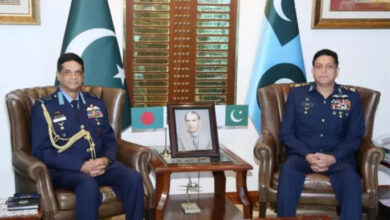
    Bangladesh Air Force Air Chief Marshal Hasan Mahmood Khan (L) and Pakistan Air Force Air Chief Marshal Zaheer Ahmed Baber Sidhu (R) in Islamabad on 6 January 2026. Photo: ISPR Directorate of Pakistan
    Bangladesh Air Force Air Chief Marshal Hasan Mahmood Khan (L) and Pakistan Air Force Air Chief Marshal Zaheer Ahmed Baber Sidhu (R) in Islamabad on 6 January 2026. Photo: ISPR Directorate of Pakistan

    Dhaka: Bangladesh and Pakistan’s air chiefs have held a discussion on the “potential procurement” of JF-17 Thunder aircraft, according to the Inter Services Public Relations Directorate of Pakistan.

    Bangladesh Air Force Chief Air Marshal Hasan Mahmood Khan met Pakistan Air Force (PAF) Chief Air Marshal Zaheer Ahmed Babar Sidhu in Islamabad. Khan headed a senior defence delegation during the visit, reports Dawn.

    The meeting centred on expanding operational cooperation and institutional synergy, with particular focus on training, capacity building and collaboration in aerospace technology.

    The Bangladeshi air chief received a guard of honour on arrival.

    Air Chief Marshal Sidhu briefed his counterpart on PAF’s latest developments and pledged support for the Bangladesh Air Force through a full training pipeline, from basic flying to advanced and specialised courses.

    He also promised expedited delivery of Super Mushshak trainer aircraft, backed by a long‑term training and support framework.

    Khan commended PAF’s combat record and voiced interest in drawing on its operational expertise. He sought help with the maintenance of Bangladesh’s ageing fleet and with integrating air defence radar systems to strengthen surveillance.

    The ISPR Directorate confirmed that detailed discussions were held on the potential procurement of JF‑17 Thunder aircraft. The delegation also toured key PAF facilities.

    The visit highlighted the historic ties between the two countries and signalled a shared intent to deepen defence cooperation and build a lasting strategic partnership.

    The JF‑17, jointly produced by China and Pakistan, is a multi‑role aircraft that has already demonstrated its combat effectiveness in clashes with India in 2019 and 2025.

  • Bangladesh says at least 287 killed during Hasina-era abductions

    Bangladesh says at least 287 killed during Hasina-era abductions

    DHAKA: A Bangladesh commission investigating disappearances during the rule of ousted prime minister Sheikh Hasina said Monday at least 287 people were assumed to have been killed.

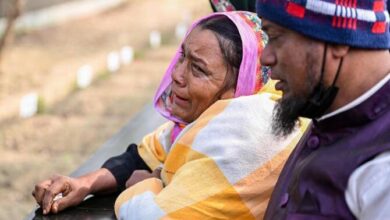
    The commission said some corpses were believed to have been dumped in rivers, including the Buriganga in the capital, Dhaka, or buried in mass graves.

    The government-appointed commission, formed after Hasina was toppled by a mass uprising in August 2024, said it had investigated 1,569 cases of abductions, with 287 of the victims presumed dead.

    “We have identified a number of unmarked graves in several places where the bodies were presumably buried,” Nur Khan Liton, a commission member, told AFP.

    “The commission has recommended that Bangladesh seek cooperation from forensic experts to identify the bodies and collect and preserve DNA samples from family members.”

    In its final report, submitted to the government on Sunday, the commission said that security forces had acted under the command of Hasina and her top officials.

    The report said many of those abducted had belonged to the country’s largest Islamist party, Jamaat-e-Islami, or the Bangladesh Nationalist Party (BNP), both in opposition to Hasina.

    In a separate investigation, police in December began exhuming a mass grave in Dhaka.

    The grave included at least eight victims of the uprising against Hasina, bodies all found with bullet wounds, according to Criminal Investigation Department (CID) chief Md Sibgat Ullah.

    The United Nations says up to 1,400 people were killed in crackdowns as Hasina attempted to cling to power.

    She was sentenced to death in absentia in November for crimes against humanity.

    “We are grateful for finally being able to know where our brother is buried,” said Mohamed Nabil, whose 28-year-old sibling Sohel Rana was identified as one of the dead in the grave in Dhaka.

    “But we demand a swift trial for the police officials who shot at the people during the uprising.”

  • India’s transparency body refuses to disclose exporter-wise limestone trade data with Bangladesh

    India’s transparency body refuses to disclose exporter-wise limestone trade data with Bangladesh

    Dhaka: India’s transparency watchdog has upheld a decision not to disclose exporter-wise details of limestone shipments to Bangladesh from the northeastern state of Meghalaya, ruling that the information is protected under the commercial confidence provisions of the Right to Information (RTI) Act.

    The Central Information Commission (CIC) said there was no overriding public interest in making the data public and that disclosure could potentially harm the competitive position of the exporters concerned.

    Meghalaya, a mineral resource-rich state sharing a 443km international border with Bangladesh, regularly exports limestone and boulders to the neighbouring country, making cross-border mineral trade a significant economic activity.

    In its order, the CIC said releasing the information would contravene Section 8(1)(d) of the RTI Act, which exempts disclosure of commercial information that could harm the competitive position of third parties.

    RTI applicant W Mathew Mawdkhap had sought “the name and address of the exporters who exported limestone to Bangladesh through Bholaganj Land Customs Station in East Khasi Hills, bordering Bangladesh, during the financial year 2023–24” from the office of the Deputy Commissioner, Shillong Customs Division.

    The request was denied, citing Section 8(1)(d) of the RTI Act.

    Mawdkhap’s first appeal was also dismissed, prompting him to move the Central Information Commission with a second appeal challenging both earlier decisions.

    Rejecting the appeal, Information Commissioner Vinod Kumar Tiwari said the information sought related to the names and addresses of exporters and the quantity of limestone exported to Bangladesh during the 2023–24 financial year.

    Such exporter-wise trade data, the Commission held, “constitutes commercial information that is ordinarily treated as confidential within commercial and regulatory frameworks”.

    The CIC noted that disclosure of exporter-specific trade volumes could “provide their competitors with strategic insight into their commercial activities” and thereby harm their competitive position.

    The Commission further observed that regulatory authorities receive commercial information from private entities in a fiduciary capacity as part of statutory compliance. “Releasing such information indiscriminately in the public domain would undermine the trust and confidentiality expected in such interactions,” it said.

    During the hearing, the appellant did not appear before the Commission and failed to place any material on record to establish an overriding public interest, Tiwari noted.

    “In the absence of any such justification, the Commission finds no reason to disturb the concurrent findings of the Central Public Information Officer (CPIO) and the First Appellate Authority (FAA),” the order said.

    The customs department had argued that exporter-wise limestone export data to Bangladesh is not meant for public dissemination unless required by law or disclosed with the consent of the concerned third parties.

    Finding no infirmity in the denial of information, the CIC ruled that the exemption invoked was “legally sustainable” and dismissed the appeal.

  • Bangladesh Bank buys another $187m to stabilise dollar rate

    Bangladesh Bank buys another $187m to stabilise dollar rate

    Dhaka: Bangladesh Bank purchased $187.5 million from commercial banks today (4 January) at a rate of Tk122.30 per dollar as part of its ongoing efforts to keep the exchange rate stable.

    With the latest purchase, the central bank has bought a total of $3.32 billion so far in the current fiscal year.

    Market insiders said the move is part of Bangladesh Bank’s intervention strategy in the foreign exchange market, which began in July last year through auction-based dollar purchases. The initiative is aimed at maintaining balance under the market-based exchange rate regime.

    Under this approach, when dollar supply exceeds demand, the central bank steps in to buy dollars to prevent the exchange rate from falling sharply. Conversely, when demand rises, it retains the option to sell dollars to ease pressure on the market.

    Bankers noted that dollar demand has declined in recent months due to several factors. These include a reduction in the government’s immediate foreign debt repayment obligations, slower business and investment activities, and a fall in imports of capital machinery, all of which have eased pressure on foreign currency demand.

    Despite adequate dollar availability in the market, data suggest signs of stagnation in import activities. Private sector credit growth fell to a record low of 6.58% by the end of November last year, reflecting subdued import demand.

    On the positive side, remittance inflows, a major source of foreign currency, have shown strong growth. Bangladesh recorded its highest-ever monthly remittance inflow of $3.29 billion in March 2025, driven largely by Eid-ul-Fitr-related transfers. This remains the country’s all-time record.

    The second-highest remittance inflow was recorded in December of the same year, amounting to $3.22 billion, further strengthening foreign exchange supply in the market.

  • ‘Win for Hindus’: BJP leaders, spiritual gurus hail Bangladeshi player Mustafizur Rahman’s KKR exit

    ‘Win for Hindus’: BJP leaders, spiritual gurus hail Bangladeshi player Mustafizur Rahman’s KKR exit

    Bharatiya Janata Party (BJP) leader Sangeet Singh Som and the spiritual figures he rallied behind over their criticism of Shah Rukh Khan’s Indian Premiere League team Kolkata Knight Riders selecting a Bangladeshi player on Saturday welcomed Board of Control for Cricket in India’s (BCCI) decision instructing KKR to release the bowler.

    The selection of Mustafizur Rahman, a Bangladeshi left-arm fast-medium bowler, of the IPL team as it comes amid souring India-Bangladesh ties over attacks on Hindus.

    Amid the backlash, to release Mustafizur Rahman.

    Welcoming the decision, BJP leader Sangeet Som on Saturday said this is a “victory of Hindus”.

    “Thanks to BCCI for its decision in view of the 100 crore Sanatanis of India. We said yesterday that cognisance will be taken of this matter because the sentiments of 100 crore people cannot be taken lightly… This is the victory of the Hindus of the entire nation,” Som said, speaking to ANI news agency.

    “Shah Rukh Khan has understood that he should not go against Sanatanis while living in India. He has also understood that thousands of Sanatanis have made him Shah Rukh Khan,” he added

    Uttar Pradesh minister and BJP leader Narendra Kashyap also praised BCCI decision, saying “We welcome the decision of the BCCI that they understood the sentiments of the nation and removed the Bangladeshi player, as atrocities are being committed against Hindus in Bangladesh, something Prime Minister Modi and the government are raising objections over.”

    Spiritual figures who were the first ones to voice out their objection to the selection of Mustafizur Rahman also backed BCCI’s decision, but questioned Bollywood star Shah Rukh Khan’s silence on the matter.

    Spiritual leader Devkinandan Thakur welcomed the Board of Control for Cricket in India’s (BCCI) decision to ask to release Bangladesh pacer Mustafizur Rahman from their squad for the Indian Premier League (IPL) 2026 season. He said the move was justified in the backdrop of alleged atrocities against Hindu minorities in Bangladesh.

    “I thank the BCCI for this decision. Atrocities are being committed against Hindus in Bangladesh, and if a player from that nation plays in the IPL, it is not acceptable,” ANI quoted spiritual leader Devkinandan Thakur, who had termed Shah Rukh Khan “heartless” and “cruel”, as saying.

    “Mr KKR (Shah Rukh Khan) has still not given any statement. It is painful that Mr KKR is not standing with the Hindus,” he added.