Category: Feature

  • Bangladesh garment curbs trigger shortages for Indian retailers

    Bangladesh garment curbs trigger shortages for Indian retailers

    A salesman stands inside a retail store with a sign advertising a sale in New Delhi, India. REUTERS/Adnan Abidi/File Photo
    A salesman stands inside a retail store with a sign advertising a sale in New Delhi, India. REUTERS/Adnan Abidi/File Photo

    Dhaka : Major Indian fashion retailers are grappling with supply shortages nearly three months after New Delhi restricted the import of readymade garments from Bangladesh through land routes.

    According to a report by New Delhi-based Business Standard, brands such as Marks & Spencer, H&M, Zudio, and Lifestyle are facing delays in replenishing merchandise, with the impact most visible in the affordable fashion segment.

    The Directorate General of Foreign Trade (DGFT) issued a directive on 17 May 2025, limiting garment imports from Bangladesh to only two seaports-Kolkata and Nhava Sheva (Mumbai). Previously, most consignments entered India through land ports, ensuring faster turnaround. The new policy has slowed shipments by two to three weeks, particularly affecting products priced under ₹1,000.

    Industry data shows garment imports from Bangladesh have already fallen by about 25% year-on-year. This disruption comes at a sensitive time, just ahead of India’s festive season between September and November, when consumer demand peaks during Diwali, Durga Puja, Navratri, and other festivals. Retailers typically rely on continuous fresh supplies to boost sales in this period.

    Bangladesh’s role in India’s apparel market

    Bangladesh, the world’s second-largest garment exporter after China, plays a crucial role in supplying affordable apparel to India. The Confederation of Indian Textile Industry (CITI), cited by The Hindu, estimates that India annually imports garments worth ₹5,000-₹6,000 crore from Bangladesh, much of it for mass-market retail.

    Between January and June 2025, India imported $254.44 million worth of apparel from Bangladesh, 3.5% higher than the same period last year, according to International Trade Centre (ITC) and CITI figures. In 2024, imports totalled $634 million, growing at a compound annual growth rate of 19% over the last decade.

    Although sourcing within India has increased, categories previously dependent on Bangladeshi imports are still experiencing delays.

    Smaller traders bear the brunt

    The Clothing Manufacturers Association of India (CMAI) has projected sourcing costs will rise 3–5% due to higher shipping charges, Business Standard reported. While larger retailers are better placed to cushion the blow with advance orders, smaller traders and grey-market operators, who rely on low-cost, quick shipments, are struggling the most.

    The DGFT did not cite a specific reason for the curbs. However, the move followed controversial remarks by Bangladesh’s interim leader Muhammad Yunus during his China visit, when he described India’s northeastern states as “landlocked” and highlighted Bangladesh’s position as their access point to the sea. He presented this as a potential opportunity for Chinese economic engagement in the region.

    The statement was sharply criticised by Indian politicians across party lines, who deemed it provocative and harmful to regional trust.

    Relations between the two neighbours had already soured after former Prime Minister Sheikh Hasina fled to India on 5 August 2024. New Delhi has since voiced repeated concerns over Dhaka’s handling of attacks on Hindu minorities, further straining ties.

    Despite tensions, trade links remain significant. Bilateral trade reached $12.9 billion in 2023–24, with India exporting $11.46 billion to Bangladesh so far in 2024–25, while imports stood at $2 billion.

    India’s own garment sector is also facing headwinds after US President Donald Trump imposed a 50% tariff on apparel imports from New Delhi.

  • What is the politics behind Mamata’s resignation announcement?

    What is the politics behind Mamata’s resignation announcement?

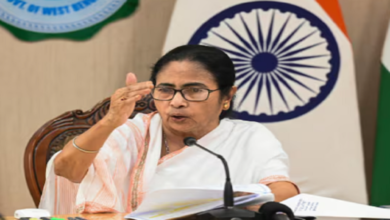
    What is the politics behind Mamata's resignation announcement?

    There is no sign of abating the agitation over the rape and murder of a young woman doctor at RG Kar Medical in Kolkata. This incident has created a strong resentment against the state government in the minds of the common people. Due to which the discomfort is increasing in the Trinamool government.

    But many say that Chief Minister Mamata Banerjee is a Janu politician. His strategy to win a losing match. The way Mamata took the initiative to talk to the agitating junior doctors and then waited for 2 hours for the meeting and finally offered to resign was a ploy.

    Recently, in a press conference, the Chief Minister apologized to the common people of the state and demanded justice. Said, I agree to resign. I don’t want the Chief Minister’s chair. I want Tilottama to get justice, common people get justice.

    Earlier, a video of the conference hall at the Navanna meeting hall came to light. Where Chief Minister Mamata is seen sitting alone. Empty chairs around. Waiting for meeting with junior doctors. This image can also be called a trick.

    Indian media say junior doctors are on strike. On the pretext of talking to them, the Chief Minister of the state has started a game to win the sympathy of the people. The meeting of junior doctors with the government on Thursday collapsed at the last minute. Mamata waited for 2 hours. But the junior doctors did not join the meeting in the end due to non-compliance.

    The video of Mamata waiting for the young doctors and the empty chair in the meeting room has come to light, Indian media outlet Aztak Bangla reported. Which is very meaningful. The chief minister argued that since the matter is under trial, it was not possible for junior doctors to comply with the conditions of live streaming. In the meeting, 15 junior doctors were offered to stay, but later 32 were allowed to comply with their demands.

    However, the meeting eventually broke down as the demand for live streaming was not met. Mamata had to wait for 2 hours to leave. And in this whole episode, the government side tried hard to portray the protesting doctors as villains.

    According to a media report, Mamata has a ‘Brahmastra’ (a power that ends everything) in her hand. That is the victim card. Whenever he feels that all weapons have failed, he draws the victim card. And attack the opponent with that weapon. Mamata used this victim card weapon against the BJP in the 2019 Lok Sabha elections. The Trinamool supremo went on a rampage over misuse of central agencies and targeting of Bengal. At that time, Mamata also picked up this weapon during the CBI’s raid on the then Kolkata Police Commissioner Rajeev Kumar’s house. Sat on metro channel in Dharmatala.

    Mamata has started using the victim card weapon in this atmosphere as the tone of protest against RG activities is intensifying. The Chief Minister apologized to the people of Bengal for the deadlock. Besides, requested the doctors to return to work. Again he said to the junior doctors, I have forgiven them. Because they are too small.

    Why did Mamata have to use Brahmastra?

    Such a public awakening against the RG tax case has never been seen in West Bengal before. As days go by, the intensity of the movement is increasing. Dissatisfaction has also grown within the ruling party. The protests show no signs of stopping. Even before Mamata government has been accused of covering up the rape case, all those problems have been solved like magic. But the Trinamool leadership is unable to understand what to do in the rape case. Discontent is also growing among party workers. So far at least 4 major leaders of Trinamool have opposed it. Despite all this, he is trying to save his most beloved police commissioner by offering to resign, Indian media claims.

  • Are They the Last Honey Hunters?

    Are They the Last Honey Hunters?

    Are They the Last Honey Hunters?

    In the remote and rugged terrains of Nepal, the ancient practice of honey hunting has long been a tradition, passed down through generations of local villagers. However, recent trends and changing times have raised concerns about the future of this unique cultural heritage. A compelling Documentary by The North Face titled “The Last Honey Hunters” sheds light on the dwindling tradition and highlights the fears that it might soon vanish with the passing of time. You can watch the video here.

    The Vanishing Honey Hunting Tradition

    For centuries, honey hunting has been more than just a means of obtaining honey for these mountain communities; it has been a rite of passage and a vital part of their identity. This traditional practice, deeply rooted in the Gurung and Tamang communities, involves scaling steep cliffs to collect honey from the hives of giant honeybees, producing the sought-after mad honey—a rare and potent substance known for its hallucinogenic properties. While honey hunting is particularly significant among the Gurung and Tamang people, it is also practiced by other communities in the Himalayas, including the Sherpas and various mountain tribes. Each group brings its own unique traditions and techniques to this ancient art.

    However, the challenges of modern life have begun to erode this ancient practice. The younger generation, increasingly drawn to urbanisation and other modern professions, seems disconnected from the traditions of their ancestors. Economic instability, limited educational opportunities, and inadequate healthcare facilities in these remote mountain villages have prompted many young people to seek better prospects elsewhere. Many leave their homes in search of better education, employment opportunities, and healthcare in urban centres or even abroad. This migration has led to a significant loss of traditional skills and knowledge as the remaining elders struggle to pass down their expertise.

    The fear is that this essential cultural practice might become obsolete if these traditions are not actively preserved and embraced by the younger generation. As young villagers prioritize modern amenities and career opportunities, the rich heritage of honey hunting faces the risk of fading into obscurity.

    A Revival Through Global Interest

    Fortunately, a new wave of interest in mad honey is sparking a revival of honey hunting practices. The global sensation surrounding mad honey has captured the attention of young Nepali entrepreneurs who see an opportunity to preserve their cultural heritage while improving their economic prospects. These innovators are not only making mad honey accessible worldwide through sophisticated marketing strategies and e-commerce platforms but are also bringing substantial economic benefits back to their villages.

    Prominent among these entrepreneurs are Alex Deep Sapkota and Sudip Ghimire, who run a successful mad honey store (www.mad-honey.store). Their efforts are instrumental in transforming how mad honey is marketed and distributed on a global scale. They are not just focused on commercial success but are also committed to sustainable practices that protect the environment and support local Hunters.

    Sapkota and Ghimire are actively involved in ensuring that honey hunting is carried out in an environmentally responsible manner. They are working closely with honey hunters in East Rukum, Lamjung, and other regions of Nepal to promote sustainable harvesting techniques that preserve bee populations and their natural habitats. Their initiatives include educating local hunters about the importance of bee conservation and implementing practices that minimise environmental impact.

    By fostering a balance between economic gain and environmental stewardship, these young entrepreneurs are helping to secure the future of honey hunting. Their approach ensures that traditional practices can continue while also adapting to modern demands and ecological concerns. Through their efforts, not only is the cultural heritage of honey hunting being preserved, but the local economy is also benefiting from increased income and improved living standards.

    Economic Impact and Cultural Revival

    The international market for mad honey has opened up new revenue streams for the villages, allowing the local economy to flourish. With the rise in tourism and the global fascination with this unique product, villagers are experiencing a resurgence in interest and participation in honey hunting. This renewed interest has spurred the younger generation to become involved in the practice, bridging the gap between traditional methods and modern business opportunities.

    One such example is Buddhiman Tamang, a 26-year-old from Lamjung, who comes from a long lineage of honey hunters. Buddhiman, the son of Nandalal—a seasoned honey hunter of 60 years—represents the future of this ancient practice. Nandalal had expressed concerns in 2018 that the tradition of honey hunting might soon end, as the skills and knowledge were not being successfully passed down to the younger generation. However, the situation has taken a positive turn. Nandalal’s own son, Buddiman, is now actively involved in honey hunting alongside his father and other experienced hunters.

    Buddhiman’s enthusiasm and modern outlook have not only helped him learn the intricacies of honey hunting but have also allowed him to integrate traditional practices with contemporary business strategies. His involvement is pivotal in ensuring the survival of this cultural heritage. Furthermore, Buddhiman’s active participation has inspired other young people in the village to engage in honey hunting, rekindling interest in the tradition and helping to secure its future. Through this generational collaboration, the ancient practice of honey hunting is finding new life and continuing to thrive in the modern era.

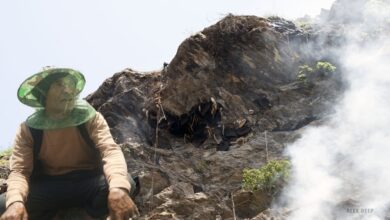
    PIC: Nandalal assisting his son Buddiman in carrying the bamboo ladder up the cliff, continuing a cherished family tradition.

    The Future of Honey Hunting in Nepal

    The revival of honey hunting through global interest and economic benefits is a testament to how tradition can adapt to modern times. As young villagers like Buddiman embrace both their heritage and the opportunities presented by the international market, there is hope that the ancient practice of honey hunting will continue to thrive.

    The increasing number of tourists interested in witnessing the dramatic honey hunting expeditions also supports the local economy and creates a renewed sense of pride among the villagers. This cultural exchange fosters a deeper appreciation for the tradition and ensures its preservation for future generations.

    In conclusion, while concerns about the end of honey hunting were once prevalent, the current trends suggest a promising future. Through global recognition and economic benefits, the tradition of honey hunting is being revitalized, bridging the gap between past and present and ensuring that the art of honey hunting endures.

  • Why is women’s labor not valued in Pakistan’s economy?

    Why is women’s labor not valued in Pakistan’s economy?

    Why is women's labor not valued in Pakistan's economy?

    There is a Chinese proverb—women hold up half the sky. But women can only do this if they are not harassed – so said the founder of socialist China, Mao Tse-tung. That is, if women work, it is possible to revolutionize the economic development of a country.

    World development is possible through women empowerment. The more women are educated and participate in the workforce, the faster the world will move forward. Recently there has been an economic boom in India, Bangladesh and China through the inclusion of women in the economic mainstream. Meanwhile, women’s participation in economic sectors is decreasing in Pakistan.

    It has been found that countries where women work side by side with their men have poverty rates that have almost disappeared or are falling much faster.

    Pakistan is yet to realize their true potential. As a result, only 50 percent of the country’s adult population is engaged in economic activities, while the remaining 50 percent of the population, women, remain mostly outside the economic mainstream. This is why when growth accelerates to a certain level in the country, there is a shortage of workers in factories and commercial centers.

    Most households in Pakistan depend on male breadwinners. There the role of women is limited to household work. In this situation, if the sole breadwinner is sick or seriously injured, a family has to face poverty.

    There is a silent revolution around us where women are making a significant impact on their economy. In China and India, there are thousands of success stories of women workers who are driving the economies of these countries, leading to growth.

    Bangladesh has become a role model in poverty alleviation after empowering women to finance through microcredit and large-scale employment in the value-added garment sector.

    Women in India get a real taste of equality as they are equally participating in the prosperity of the family. This process has just started in Pakistan but is mostly confined to Karachi and Lahore. For the rest there is significant gender inequality, limited access to education, low formal labor-participation rates and low wages. In Pakistan, although a large number of urban educated women are economically active, most of them are teachers, doctors or personal assistants.

    Very few women have climbed the ladder in Pakistan’s corporate sector. There are still thousands of women who have completed their masters or professional degrees in medicine or engineering who are not working in the formal sector and stay at home.

    The economic well-being of Pakistan is inextricably linked with the role that the women of this country will play in the next 10-20 years. If Pakistan continues to ignore the productive workforce needed by the country’s economy, it will fall far behind other countries.

    The survey found that women make up more than 50 percent of the workforce in the apparel industry worldwide. However, the number of women workers in Pakistan is 10 percent in this sector.

    Anne Shanali Weerasuriya, one of the Better Work coaches, said that unlike other garment manufacturing centers around the world, around 80% of the people formally employed in Pakistan’s garment factories are men. Women workers in Pakistan are active in the informal sector, working in their homes through middlemen or factory subcontractors.

    According to the World Bank, women’s labor force participation in urban Pakistan is the lowest in the world, at around 10 percent over the past two decades. Many women had to drop out of school due to safety or financial constraints, while others feared resistance from their families and communities when working outside the home.

  • Tourism Boom Continues: Maldives Welcomes Over 879,000 Visitors

    Tourism Boom Continues: Maldives Welcomes Over 879,000 Visitors

    Data released by the Tourism Ministry indicates a notable surge in tourist arrivals, marking a 10.8 percent increase compared to the same period last year, when 794,061 visitors were recorded.
    Data released by the Tourism Ministry indicates a notable surge in tourist arrivals, marking a 10.8 percent increase compared to the same period last year, when 794,061 visitors were recorded.

    Male:  The Maldives continues to be a hotspot for travelers, as statistics reveal a significant influx of over 879,000 tourists so far this year.

    Data released by the Tourism Ministry indicates a notable surge in tourist arrivals, marking a 10.8 percent increase compared to the same period last year, when 794,061 visitors were recorded.

    Leading the charge in contributing to this surge is China, with 98,908 tourists making their way to the picturesque islands, comprising 11.2 percent of the total arrivals. Following closely behind is Russia, with 88,585 tourists accounting for 10.1 percent of the total. Italy, Germany, and India also prominently feature on the list of top contributing countries, with 74,805, 71,473, and 51,945 arrivals respectively.

    The Maldives continues to captivate global travelers with its stunning natural beauty and luxury offerings, solidifying its position as a premier destination for discerning tourists worldwide.

  • ‘Why should we vote?’ India’s jute workers blame politicians for woes

    ‘Why should we vote?’ India’s jute workers blame politicians for woes

    Asma Khatun says politicians don't care about the workers or their problems [Gurvinder Singh/Al Jazeera]
    Asma Khatun says politicians don’t care about the workers or their problems [Gurvinder Singh/Al Jazeera]

    By Gurvinder Singh

    Kolkata, India — Amirul Laskar has been out of a job for the past three months, since the jute mill where he was employed shut operations citing losses.

    The 40-year-old worked at the Delta Jute Mill in Manikpur village, about 20km (12 miles) from Kolkata, the capital of West Bengal state.

    Since he lost his job, he has struggled to run his household and pay for food as well as the other needs of his parents, wife and 18-month-old daughter, he told Al Jazeera.

    “Such disruptions had happened three to four times last year also, when work was suspended for a few months before resuming again,” Laskar said, adding that things have not improved this year. “The financial situation is pathetic and I am trying to migrate to another state to find work to feed my family.”

    Laskar is one of the 4,000 workers of the Delta Jute Mill who have been out of a job, and income, since the mill stopped operations in February.

    Jute, known as the golden fibre, is one of Bengal’s largest industries. It provides income to approximately 4.8 million people, including four million farmers, and fulfils 95 percent of India’s jute demand. India is the world’s largest jute producer and its second-largest exporter, after neighbouring Bangladesh.

    The farmers, mill workers and their families also constitute a major voting bloc, with most politicians remembering them mostly only during the election season, the locals complain.

    Amirul Laskar says he is trying to migrate to another state to find work [Gurvinder Singh/Al Jazeera]
    Amirul Laskar says he is trying to migrate to another state to find work [Gurvinder Singh/Al Jazeera]

    Polls in the jute belt of West Bengal state are scheduled for May 20 as part of the fifth phase of the ongoing weeks-long national election, which pits Prime Minister Narendra Modi and his Bharatiya Janata Party (BJP) against the Indian National Developmental Inclusive Alliance (INDIA), a coalition of 26 parties led by the main opposition party, Rahul Gandhi’s Indian National Congress.

    In a recent address in Barrackpore, a jute hub in the state, Modi blamed the opposition Trinamool Congress (TMC) – the governing party in the state – for the demise of the once-thriving industry and the misery of its workers. He reminded workers that the federal government has made it mandatory for grains to be packed in jute bags, a guaranteed boost to business.

    But workers in Laskar’s area, at least, are not buying that argument and blame both the TMC and the BJP for their run-down state.

    Laskar says none of the politicians had ever visited them to inquire about their conditions after votes were cast. He says the last time a politician checked in on them was more than a decade ago when the Communist Party of India (Marxist), CPIM, was in power in the state. He plans to vote for the CPIM this time.

    “The management of [the] Delta Jute Mill has stopped sending [cleaning staff] to staff quarters after the work suspension. We are living in the middle of overflowing drains, with water containing human waste entering our houses during heavy rains. The putrid smell makes it difficult to even stand there for a minute,” Asma Khatun, 25, who is married to another mill worker, told Al Jazeera as she held her daughter in her arms who, she said, frequently falls ill in the unhygienic conditions.

    “Yet no politician has ever come to see us. Why should we vote?”

    Local leaders claim the poor living conditions are the same in most jute mills.

    Delta Jute Mill closed in February, leaving workers without any income [Gurvinder Singh/Al Jazeera]
    Delta Jute Mill closed in February, leaving workers without any income [Gurvinder Singh/Al Jazeera]

    “The owners of the mills pay scant regard to hygiene. Leaking drain pipes, overflowing drainages and garbage are a common scene everywhere. The management even doesn’t hesitate to snap the power lines after mills shut operations,” Kayum Sheikh, a CPIM leader in the region, said.

    Workers say none of the mainstream candidates has come to seek their vote this time, maybe fearing the workers’ anger. But the CPIM candidate in the area has promised to sort out their problems, they said.

    Mills in crisis

    West Bengal has the distinction of housing India’s first jute mill, started in 1855 by a British entrepreneur in the Hooghly district, who brought jute spinning machinery from Dundee in Scotland.

    West Bengal was chosen to be the home of the Indian jute industry due to the abundant supply of labour coupled with ample availability of coal and river connectivity. Coal was used as fuel to generate steam for the machines, and the finished products were transported via river to the ports.

    The industry, currently pegged at about $1.8bn, primarily manufactures jute bags for packing food grains by the Indian government, and some other items like jute floor covering and raw jute, which is exported to places like the United States, the United Kingdom, the European Union and the Gulf nations.

    In the financial year ending March 2023, India exported jute items worth $442m, as per data from the Indian Jute Mills Association (IJMA), an umbrella organisation of jute mill owners. From April 2023 to February 2024, according to the latest data available, it exported goods worth $322m.

    Staff quarters at the Delta Jute Mills have been mired in filth since it stopped operations [Gurvinder Singh/Al Jazeera]
    Staff quarters at the Delta Jute Mills have been mired in filth since it stopped operations [Gurvinder Singh/Al Jazeera]

    Despite its contributions to the national and the state’s economies, the jute industry is in a crisis, resulting in mills closing or operating with reduced capacity.

    West Bengal has about 85 jute mills, out of which eight have been shut down on account of losses, shortage of raw material and a manpower crisis, while the rest are running at just about 60 percent capacity.

    The Indian government is the sole and biggest customer of the sector and procured about 3.6 million bales of jute bags (one bale is 500 bags) in 2023-24 for use by the Food Corporation of India (FCI) to pack grains.

    In December, the federal government passed an order making it mandatory for all grains and 20 percent of sugar to be packed in jute bags.

    But mill owners told Al Jazeera that despite that, there have been few supply orders from the federal government.

    A letter sent to the federal government by IJMA and accessed by Al Jazeera dated May 14 shows that there had been fewer orders of jute bags from the government in April and no orders till mid-May.

    “We received [207,000] bales order in April against the usual order of [216,000] bales during the same period. While in May, the industry gets orders of [303,000] bales every year, there has been no orders, till yet,” said a source privy to the issue.

    As a result, mills are working at 60 percent of their capacity and the owners have laid off workers to cut back on costs.

    This is in addition to other challenges in the sector in the last few years, including a cyclone in 2020 and the COVID-19 pandemic, both of which brought business to a standstill. The sector had barely started to recover, but output was once again hit in 2022 on account of poor rains. There is also “stiff competition” from Bangladesh with the mills there offering jute products at low prices on the back of high government subsidies, Rishav Kajaria, the deputy chairman of the IJMA, told Al Jazeera laying out the industry’s woes.

    Pending gratuities

    The crisis in the mills has badly affected the workers, who are dependent on them for livelihood.

    As per the latest agreement between mill workers and owners signed earlier this year in January, newly recruited permanent workers are entitled to 485 rupees ($5.82) per day and liable for statutory benefits like provident fund, gratuity and staff quarters while contractual workers get 450 rupees ($5.40) and no benefits.

    But permanent workers complain that their statutory benefits have been pending for a long time.

    “Our main demand is the clearance of provident fund and gratuities that has been pending for the past several years. Several workers have died waiting for it but the mill owners simply refuse to pay citing financial losses. Workers who raise their voices against the dues are also threatened with dire consequences like forcing them out of staff quarters and snapping their power lines. It is a complete exploitation,” said Rakesh Jaiswal, secretary of the West Bengal Jute Permanent Workers Union.

    Mill owners prefer hiring contractors over full-time workers to keep their costs low. As a result, at least 60 percent of the workforce today is made up of contract workers, he added.

    Biswajit Mukherjee, a lawyer who has been fighting cases of the retired jute mill workers for outstanding gratuities in various labour courts and the Calcutta High Court, refuses to believe that mills are running in losses.

    “It is difficult for any business to run at a loss for a long time. It is actually a ploy to evade income tax and other duties,” he said.

    As per Mukherjee’s math, mill owners owe 4 billion rupees ($47.9m) in gratuity, of which only 600 million rupees ($7.2m) have been paid. But they mostly manage to evade the law as they have appointed proxies on the companies’ boards, he said.

    The jute workers whom Al Jazeera spoke with said they were fed up with these tactics.

    Mohasin Laskar, 62, a retired worker of the Delta Jute Mill, told Al Jazeera that this time he will vote for the CPIM candidate.

    “The situation was not so bad during the Left rule as the local administration used to come for cleaning, even after the suspension of work. We at least had a hygienic place to live in. But things have become horrible now. We would like to again cast a vote in favour of the Left candidate this time,” he said.

    But with the TMC’s majority in the state and the BJP trying hard to increase its vote share, did the CPIM candidate even stand a chance, Al Jazeera asked Laskar. He smiled and said, “You don’t know when the fortune can turn in politics. Let’s wait and watch.”

    SOURCE: AL JAZEERA

  • Nepal’s Political Landscape Shifts as PM ‘Prachanda’ Forms New Alliance with Oli’s Party

    Nepal’s Political Landscape Shifts as PM ‘Prachanda’ Forms New Alliance with Oli’s Party

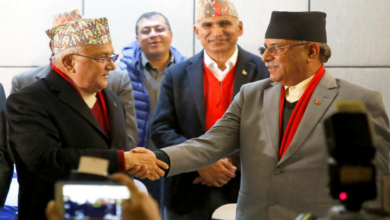
    In a significant political development, Nepal’s Prime Minister Pushpa Kamal Dahal ‘Prachanda’ has announced the formation of a new alliance with former premier K.P. Sharma Oli’s party. This move comes after the termination of the nearly 15-month partnership between the Communist Party of Nepal (Maoist Centre) led by Prachanda and the Sher Bahadur Deuba-led Nepali Congress.

    The alliance between the Maoist Centre and Nepali Congress unraveled due to growing differences between the top leadership, culminating in the termination of their partnership. Ganesh Shah, Secretary of the CPN-Maoist, stated, “As (the) Nepali Congress did not cooperate with the Prime Minister, we are forced to look for (a) new alliance.”

    Prachanda, who secured his third term as Prime Minister with the support of the Nepali Congress in December 2022, has now joined forces with the Communist Party of Nepal (Unified Marxist–Leninist), led by Oli, despite their previous differences. Last year, the CPN-UML withdrew support for Prachanda’s government following a dispute over endorsing the main opposition party’s candidate for the Presidential poll.

    The formation of a new cabinet is expected on Monday afternoon, with the cabinet size anticipated to be smaller, according to Surendra Pandey, Vice-chairman of the CPN-UML.

    The rift between the Maoist Centre and Nepali Congress intensified over disagreements, particularly regarding budget allocations for specific projects. Tensions escalated further when Nepali Congress President Deuba and Prachanda clashed over the appointment of the Chairman of the National Assembly.

    To solidify the new alliance, Oli met with Prachanda at the Prime Minister’s quarters, discussing matters related to the formation of the government and possible leftist alliances. Following the meeting, leaders of three political parties, including Prachanda, Oli, and Rastriya Swatantra Party’s (RSP) Ravi Lamichhane, convened at Baluwatar to deliberate on the modality of the alliance and the formation of the new government.

    The emerging political landscape in Nepal underscores the fluidity of alliances and the evolving dynamics among key political players. With the Nepali Congress as the largest party in the House of Representatives, securing 89 seats in the November 2022 general election, the new alliance signals a potential shift in power dynamics as the Prachanda-led government seeks stability through collaboration with the CPN-UML.


  • UN Security Council Majority Urges Taliban to Revoke Repressive Measures Against Women and Girls

    UN Security Council Majority Urges Taliban to Revoke Repressive Measures Against Women and Girls

    UN Security Council Majority Urges Taliban to Revoke Repressive Measures Against Women and Girls

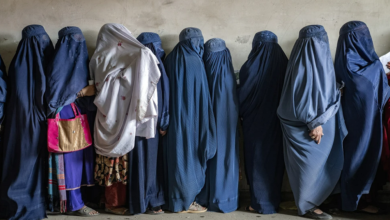
    March 5, 2024 – A significant majority of the United Nations Security Council (UNSC) called on Monday for the Taliban to immediately reverse all policies and decrees that oppress and discriminate against women and girls. The demand specifically highlighted issues such as the ban on girls’ education beyond the sixth grade and restrictions on women’s rights to work and move freely.

    In a joint statement issued by 11 out of the 15 council members, the UNSC condemned the Taliban’s ongoing repression of women and girls since assuming power in August 2021. The statement emphasized the importance of ensuring the equal participation of women in public, political, economic, cultural, and social life, particularly at all decision-making levels involved in international engagement with Afghanistan’s de facto rulers.

    Guyana’s U.N. Ambassador Carolyn Rodrigues-Birkett delivered the statement, surrounded by ambassadors from the other 10 nations, ahead of a closed council meeting discussing U.N. Secretary-General Antonio Guterres’ conference with over 25 envoys to Afghanistan on February 18-19 in Doha, Qatar.

    The Doha meeting, which included the participation of Afghan civil society representatives, including women, received positive acknowledgment from the council members. The Taliban, however, refused to attend, with its Foreign Ministry stating that their involvement would only be considered “beneficial” if they were recognized as the sole and official representative for the country at the talks.

    The UNSC’s unified call for the Taliban to revoke repressive measures against women and girls underscores the international community’s concern and commitment to upholding human rights and gender equality in Afghanistan. The situation remains fluid, with diplomatic efforts ongoing to address these critical issues and engage with the Taliban on a global stage.

  • PM Modi Contributes Rs 2,000 to BJP Fund, Calls for Nationwide Support in Nation Building Efforts

    PM Modi Contributes Rs 2,000 to BJP Fund, Calls for Nationwide Support in Nation Building Efforts

    PM Modi Contributes Rs 2,000 to BJP Fund, Calls for Nationwide Support in Nation Building Efforts

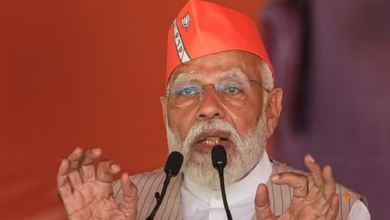
                                                                        Prime Minister Narendra Modi

    New Delhi, March 4, 2024 Prime Minister Narendra Modi demonstrated his commitment to the Bharatiya Janata Party’s (BJP) cause by contributing Rs 2,000 to the party fund on Sunday. Through a post on the social media platform X, PM Modi shared his contribution and encouraged citizens to join the #DonationForNationBuilding initiative through the NaMoApp.

    In his post, PM Modi expressed his happiness in supporting the BJP’s endeavors to build a “Viksit Bharat” (Developed India) ahead of the upcoming Lok Sabha elections. The call for donations comes as the BJP gears up for the electoral battle, emphasizing the collective responsibility in shaping the nation’s future.

    Party President Jagat Prakash Nadda had earlier shown solidarity by contributing Rs 1,000 to the party fund on March 1, aligning with PM Modi’s vision for a “Viksit Bharat.”

    The BJP, in its first list of 195 candidates for the Lok Sabha polls, announced that PM Modi would contest again from Varanasi, while Amit Shah would contest from Gandhinagar.

    Notably, the BJP reported donations of nearly Rs 720 crore in the fiscal year 2022-23, a figure that surpassed the combined contributions received by four other national parties – the Congress, AAP, CPI-M, and National People’s Party, as revealed by the Association for Democratic Reforms (ADR).

    The Supreme Court, on February 15, invalidated the Modi government’s 2018 electoral bonds scheme, which allowed anonymous political funding. The bench, led by Chief Justice of India D Y Chandrachud, underscored the importance of transparency in political funding, stating that voters need information about funding for effective decision-making. The ruling declared the changes made in the laws to implement the scheme as unconstitutional. As a result, the political landscape is witnessing a renewed focus on financial transparency and accountability.

  • Shehbaz Sharif Secures Second Term as Pakistan PM Amid Controversial Election Fallout

    Shehbaz Sharif Secures Second Term as Pakistan PM Amid Controversial Election Fallout

    Shehbaz Sharif Secures Second Term as Pakistan PM Amid Controversial Election Fallout

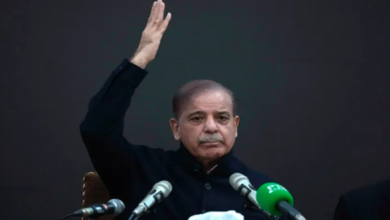
                                                                              Shehbaz Sharif

    Islamabad, March 4, 2024 In the wake of a tumultuous electoral process marred by allegations of rigging, Shehbaz Sharif has been elected as Pakistan’s Prime Minister for a second term. The National Assembly convened on Sunday to finalize the appointment, where Shehbaz secured 201 votes out of the 336-member assembly.

    The February 8 elections were shrouded in controversy, with accusations of widespread rigging and delayed results casting a shadow over the democratic process. The opposition, led by Omar Ayub Khan, alleged foul play, echoing concerns of electoral misconduct.

    Shehbaz Sharif, 72, a three-time Prime Minister’s younger brother, overcame the challenge posed by Omar Ayub Khan, securing a comfortable victory with 201 votes against Khan’s 92. The need for at least 169 votes to win was surpassed, solidifying Sharif’s position.

    Omar Ayub Khan, backed by the Sunni Ittehad Council (SIC), a political group formed by legislators from Imran Khan’s Pakistan Tehreek-e-Insaf (PTI) party, contested the elections after PTI was barred from participating due to alleged election law violations.

    The PTI, which emerged as the largest group with 93 seats, contested the legitimacy of the election results, claiming their mandate was stolen. This has led to street protests by PTI supporters.

    The National Assembly session on Sunday was marked by chaos as PTI-backed SIC legislators raised slogans accusing Shehbaz Sharif of attaining power through electoral malpractice. Despite the ruckus, National Assembly Speaker Ayaz Sadiq officially declared Shehbaz Sharif as the elected Prime Minister.

    In his victory speech, Shehbaz Sharif expressed gratitude to his elder brother, Nawaz Sharif, and allies for their support. He pledged to work towards political stability, emphasizing collaboration with all four provinces to address the nation’s challenges.

    However, the leader of the opposition, Omar Ayub Khan, defended his incarcerated leader, Imran Khan, accusing Shehbaz Sharif of disregarding the law. Khan vowed resilience in the face of adversity, claiming the nation had rejected the charges of election misconduct.

    As Pakistan grapples with a declining economy and deteriorating security conditions, Shehbaz Sharif’s second term begins against a backdrop of political instability, challenging the government’s resolve to address pressing national issues.