Category: Diplomacy

  • February election: UN says won’t send observers to Bangladesh

    February election: UN says won’t send observers to Bangladesh

    Dhaka : The United Nations has said it will not deploy election observers to Bangladesh’s upcoming parliamentary polls, citing the absence of a mandate from its principal decision-making bodies.

    Responding to questions during the UN’s daily press briefing in New York yesterday (5 January), UN secretary-general’s spokesperson Stéphane Dujarric said the organisation no longer sends election observers unless authorised by either the UN General Assembly or the Security Council.

    The UN had last sent volunteers to observe the electoral process in Bangladesh ahead of the eight parliamentary elections in 2001.

    Asked whether the UN would send observers to Bangladesh’s national parliamentary election scheduled for 12 February, Dujarric replied, “No. We do not… the UN itself doesn’t send observers unless there is a mandate from the General Assembly or the Security Council. So that’s no longer something that we do.”

    He added that the UN could consider other forms of engagement.

    “I can check for you whether the UN country office is offering any technical support, which is something that we often do in terms of the elections,” he said.

    The spokesperson was also asked to comment on the return of BNP Acting Chairman Tarique Rahman to the country after 17 years and how it might relate to Bangladesh’s democratic transition.

    “I’m not an assessor of news. Journalists assess news,” Dujarric said. “So, we will support in any way we can elections and the free expression by the Bangladeshi people of their political vision for their country.”

    In response to a question on the death of former prime minister Khaleda Zia, Dujarric expressed condolences on behalf of the organisation.

    “We obviously send condolences to her family and to the people of Bangladesh on her passing,” he said.

    Khaleda Zia was Bangladesh’s first female prime minister and served three terms in office.

  • Indian Army Chief to visit Sri Lanka to strengthen defence ties

    Indian Army Chief to visit Sri Lanka to strengthen defence ties

    The Statesman – General Upendra Dwivedi, Chief of the Army Staff (COAS), will visit the United Arab Emirates (UAE) and Sri Lanka from January 5 to 8 as part of India’s continued engagement to strengthen defence cooperation and military-to-military ties with friendly foreign countries.

    “The visit of the Chief of the Army Staff to the UAE and Sri Lanka reaffirms India’s commitment to strengthening defence cooperation, fostering mutual trust, and enhancing interoperability with friendly nations in the Indian Ocean Region and West Asia,” the Ministry of Defence said on Sunday.

    The visit will begin with the COAS’s engagements in the United Arab Emirates from January 5 to 6. On arrival, General Dwivedi will be accorded a Guard of Honour by the UAE Land Forces.

    During his stay, the COAS will call on the senior leadership of the UAE Armed Forces, including the Commander of the UAE Land Forces, and receive briefings on the structure, roles, and capabilities of the UAE Army.

    He will also visit key military establishments and interact with officers and troops, underscoring the growing defence partnership between India and the UAE.

    As part of the visit, General Dwivedi will visit the UAE National Defence College, where he will address officers. These engagements are aimed at further enhancing bilateral defence cooperation, professional military exchanges, and strategic understanding between the two armed forces.

    Following the UAE visit, the COAS will travel to Sri Lanka from January 7 to 8, 2026. On arrival, he will be accorded a Guard of Honour by the Sri Lanka Army.

    During his visit, he will engage with senior military and civil leadership, including the Commander of the Sri Lanka Army, the Deputy Minister of Defence, and the Defence Secretary. He will hold detailed discussions on matters of mutual interest, including training cooperation, capacity building, and regional security.

    During the visit, General Dwivedi will address officers at the Defence Services Command and Staff College (DSCSC) and interact with officers and trainees at the Army War College, Buttala, reflecting India’s strong commitment to defence education and professional military exchanges with Sri Lanka.

    General Dwivedi will also pay homage at the Indian Peace Keeping Force (IPKF) War Memorial, honouring the supreme sacrifice of Indian soldiers.

  • Maldives to host first-ever Model United Nations conference

    Maldives to host first-ever Model United Nations conference

    By Shazma Thaufeeq

    Male: For the first time, the Asia Youth International Model United Nations (AYIMUN) conference is set to be held in the Maldives.

    The event is organized by the International Global Network, an organization that has previously hosted similar events in Malaysia, Thailand, Singapore, Indonesia, and Vietnam, the conference will take place from May 15–16, 2026, at Kurumba Maldives resort, with the closing ceremony scheduled at CROSSROADS Maldives.

    This conference simulates United Nations debates and resolution-drafting processes, and applications are now open for interested students. While the event is open to international participants, a total of 50 slots have been reserved specifically for Maldivian students.

    Mohamed Saleem, the coordinator appointed by MUN to oversee the event in the Maldives, told Mihaaru that they expect 250 students from various countries to participate.

    “A delegation along with the President of IGN (International Global Network) visited the Maldives regarding the organization of this conference. They departed after meeting with government officials, MATI (Maldives Association of Tourism Industry), industry stakeholders they wished to consult, and school principals. Discussions were also held concerning the venue, dates, room accommodations, and catering rates for the conference,” Saleem said.

    Previously, Maldivian students had to travel abroad to attend such conferences, but this local edition offers a special discounted rate of USD 799 per student, which includes pre-conference training.

    Saleem noted that the Maldives has historically missed out on hosting such large-scale conferences due to a lack of specialized facilities for “conference tourism” and high-capacity venues.

    “One reason was the lack of someone to take the lead on this. The other reason is that the Maldives lacks the facilities required to host such large-scale conferences. In Malaysia, they held a conference with a capacity for 1,500 people. There, they would be seated at round tables, but in the Maldives, neither Nasandhura nor Kurumba, where most such events are held, has that kind of capacity,” Saleem said.

    “The Maldives is not primarily prepared for this type of conference tourism. It is quite rare in the Maldives to host conferences of this scale because of the lack of space and capacity,” Saleem added.

    The upcoming conference will feature specific councils tailored to different age groups:

    WHO Council (Ages 14–16): Focusing on “Stopping the spread of communicable diseases in public places.”
    UNDP Council (Ages 15–25): Addressing the theme of “Ensuring a smooth and inclusive transition to a green economy.”
    Applicants will undergo an interview process, and the final 50 Maldivian participants will be selected based on their performance.

    Saleem expressed his gratitude to the government and tourism industry leaders for their support in bringing this prestigious youth event to the Maldives.

  • Bangladeshi, Indian engineers monitor water flows under Ganges Water Sharing Treaty

    Bangladeshi, Indian engineers monitor water flows under Ganges Water Sharing Treaty

    Dhaka: Bangladeshi and Indian engineers are currently monitoring water flows at key points to ensure compliance with the 1996 Ganges Water Sharing Treaty.

    Four Bangladeshi engineers are stationed at Farakka in India to measure river discharge, while two Indian engineers are in Bangladesh at the Hardinge Bridge to verify that allocated water reaches the country.

    Joint River Commission sources said representatives from both countries have been present at the monitoring points since 1 January and will continue until 31 May.

    “Every year, engineers from both countries measure flows at Farakka and Hardinge Bridge. This is routine work,” said Mohammad Abu Sayed, director of the Bangladesh Joint River Commission.

    “At Farakka, we check whether water is being released for Bangladesh as agreed. At Hardinge Bridge, we verify that the released water actually reaches Bangladesh.”

    The agreement, signed on 12 December 1996 in New Delhi by then Indian prime minister HD Deve Gowda and then Bangladeshi prime minister Sheikh Hasina, is valid for 30 years.

    Under the treaty, from 1 January to 31 May each year, water from the Ganges at Farakka in West Bengal is shared between the two countries.

    The agreement stipulates that if the river flow at Farakka is up to 70,000 cusecs, the water is split equally. If flow exceeds 70,000 cusecs but is below 75,000 cusecs, Bangladesh receives a maximum of 36,000 cusecs, with the remainder going to India.

    If flow surpasses 75,000 cusecs, India retains 40,000 cusecs, and the rest is allocated to Bangladesh. Allocation is calculated in ten-day intervals.

    A guaranteed flow of 35,000 cusecs is ensured for each country in alternating ten-day periods from 11 March to 10 May, when river flow is typically lower. The current treaty expires in December 2026.

    Bangladesh and India share 54 rivers, but only the Ganges has a formal water-sharing agreement. Negotiations over Teesta River water have long stalled due to objections from West Bengal’s Chief Minister Mamata Banerjee.

    Relations between the two countries have heated up since the fall of Hasina’s government in August 2024. However, Joint River Commission meetings have continued, including two in Dhaka, one in Delhi, and one in Kolkata, most recently on 9 September in New Delhi.

    Commission sources said both countries have agreed in principle to renew the Ganga water-sharing treaty. Formal negotiations are expected to begin once the elected Bangladeshi government assumes office.

  • Pakistan Speaker meets Prof Yunus, expresses sorrow over Khaleda Zia’s demise

    Pakistan Speaker meets Prof Yunus, expresses sorrow over Khaleda Zia’s demise

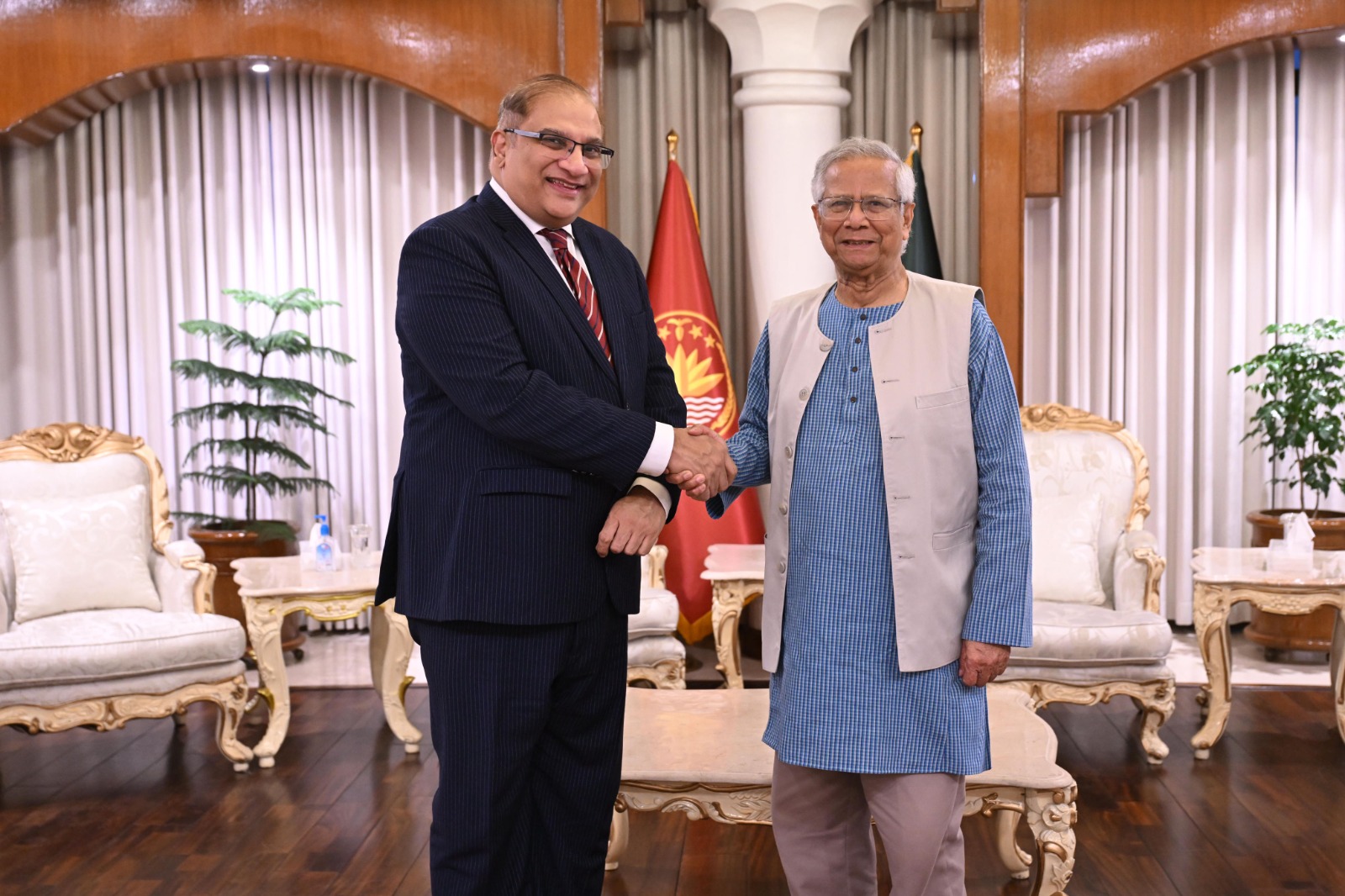
    Dhaka : Pakistan’s National Assembly Speaker Sardar Ayaz Sadiq called on Chief Adviser Professor Muhammad Yunus at the State Guest House Jamuna on Wednesday evening and conveyed heartfelt condolences to the brotherly people and government of Bangladesh on the demise of former Prime Minister Begum Khaleda Zia.

    The two leaders recalled her stature as a distinguished political leader whose resilience and contributions to the democratic evolution of Bangladesh are recognised and appreciated across the world.

    They lauded her dedication to public service, which changed the lives of millions of Bangladeshis for good, recalling her vision for peace, progress and connectivity of the region.

    Thanking the speaker for visiting and expressing solidarity with the people of Bangladesh at this juncture, the chief adviser profoundly recalled his meetings with Prime Minister Muhammad Shehbaz Sharif and DPM/FM Ishaq Dar and appreciated their messages of condolences.

    The speaker arrived in Dhaka on Wednesday to offer condolences on the sad demise of Begum Khaleda Zia.

    On arrival, senior officers of the Ministry of Foreign Affairs of Bangladesh and High Commissioner of Pakistan received him.

    Before the funeral prayer, he had a meeting with Tarique Rahman, son of Begum Zia and Acting Chairman of BNP at the Parliament building.

    On behalf of the President Asif Ali Zardari, Prime Minister Muhammad Shehbaz Sharif, Deputy Prime Minister and Foreign Minister Muhammad Ishaq Dar, Field Marshal Syed Asim Munir, Parliament and people of Pakistan, as well as on his own behalf, the Speaker expressed heartfelt condolences and profound sorrow at the passing away of Begum Zia.

    He reaffirmed that people of Pakistan stand with Tarique Rahman, the bereaved family, members and leaders of BNP and brotherly people of Bangladesh in this moment of deep sorrow.

    He also handed over a condolence letter from Prime Minister Muhammad Shehbaz Sharif to Tarique Rahman, who appreciated the sympathy and solidarity expressed by the Government, Parliament and people of Pakistan in this hour of grief.

    The speaker paid tribute to Begum Khaleda Zia noting the special bond she shared with Pakistan and her commitment towards revitalising historical ties, mutual respect and bilateral cooperation between the two nations.

    Both sides recalled the historical affinities between the two countries and noted that her vision may guide future engagements.

    Afterwards, the speaker offered the funeral prayer of Begum Khaleda Zia.

  • India FM Jaishankar, Pakistan’s Ishaq Dar to attend Khaleda’s funeral

    India FM Jaishankar, Pakistan’s Ishaq Dar to attend Khaleda’s funeral

    By Masum Billah

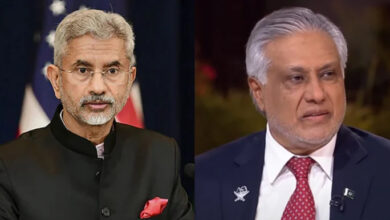
    Dhaka : Indian External Affairs Minister S Jaishankar and Pakistan Deputy Prime Minister and Foreign Minister Ishaq Dar and are set to arrive in Dhaka to attend the namaz-e-janaza of BNP chairperson and former prime minister Khaleda Zia.

    “The External Affairs Minister, Dr S Jaishankar will represent the government and people of India at the funeral of Begum Khaleda Zia, former prime minister of Bangladesh and Chairperson of the Bangladesh Nationalist Party. He will accordingly visit Dhaka on 31 December,” India’s Ministry of External Affairs said in a statement today (30 December).

    Meanwhile, officials at the Pakistan High Commission in Dhaka and the Bangladesh High Commission in Islamabad have confirmed to The Business Standard that Ishaq Dar is expected to attend the funeral prayers scheduled for tomorrow.

    Khaleda Zia passed away at around 6am today while undergoing treatment at Evercare Hospital in Dhaka at the age of 79.

    Born on 15 August 1946, Khaleda Zia led the BNP for decades, navigating periods of political upheaval, imprisonment and political comeback.

    She served as prime minister for three terms, from 1991 to 1996, a few weeks after February 1996 and again from 2001 to 2006.

    The late BNP chairperson is recognised as the first female prime minister of Bangladesh and the second elected woman prime minister in the Muslim world.

    Following her death, leaders and heads of government from different countries around the world have expressed deep shock and condolences.

  • Muhammad Yunus welcomes growing Bangladesh-Pakistan engagement

    Muhammad Yunus welcomes growing Bangladesh-Pakistan engagement

    Pakistan High Commissioner Imran Haider pays a courtesy call on Chief Adviser Muhammad Yunus at the State Guest House Jamuna in Dhaka on 28 December 2025. Photo: CA Press Wing
    Pakistan High Commissioner Imran Haider pays a courtesy call on Chief Adviser Muhammad Yunus at the State Guest House Jamuna in Dhaka on 28 December 2025. Photo: CA Press Wing

    Dhaka: Bangladesh’s Chief Adviser Muhammad Yunus today (28 December) welcomed the growing interactions between Bangladesh and Pakistan, and emphasised the importance of increased visits as well as cultural, educational and people-to-people exchanges among South Asian Association for Regional Cooperation (Saarc) member states.

    He highlighted the need for boosting Bangladesh-Pakistan trade and hoped that both countries would find new opportunities for investment and joint ventures during Pakistan High Commissioner Imran Haider’s tenure.

    The chief adviser made the remarks when Imran Haider paid a courtesy call on Yunus at the State Guest House Jamuna in Dhaka, reads a press release.

    During the meeting, both sides discussed ways to expand cooperation in trade, investment, and aviation, as well as scaling up cultural, educational and medical exchanges to further strengthen bilateral relations between the two South Asian nations, said Chief Adviser’s Deputy Press Secretary Abul Kalam Azad Majumder.

    The Pakistani high commissioner pointed out that bilateral trade has recorded a 20% growth compared to last year, with business communities from both countries actively exploring new investment opportunities.

    He also highlighted a significant increase in cultural exchanges, adding that Bangladeshi students have shown strong interest in higher education opportunities in Pakistan, particularly in medical sciences, nanotechnology and artificial intelligence.

    Haider said Pakistan has witnessed a rise in patients traveling to its leading hospitals for liver and kidney transplants, and noted that Pakistan is ready to offer training and academic opportunities in transplantation-related medical fields.

    The Pakistan high commissioner said that Dhaka-Karachi direct flights are expected to start in January.

    SDGs Affairs Principal Coordinator and Senior Secretary Lamiya Morshed was also present at the meeting.

  • India signs trade pact with Oman as it expands Middle East ties

    India signs trade pact with Oman as it expands Middle East ties

    Indian Prime Minister Narendra Modi meets with Oman's Deputy Prime Minister for Defence Affairs Sayyid Shihab bin Tariq Al Said in Muscat, Oman, December 17, 2025. Photo: Reuters
    Indian Prime Minister Narendra Modi meets with Oman’s Deputy Prime Minister for Defence Affairs Sayyid Shihab bin Tariq Al Said in Muscat, Oman, December 17, 2025. Photo: Reuters

    New Delhi : India signed an economic partnership agreement with Oman on Thursday to boost bilateral trade and investment as it seeks to expand Middle East ties and diversify trade to beat steep US tariffs.

    Oman has offered zero-duty access on over 98% of its tariff lines, covering nearly all Indian exports, including gems and jewellery, textiles, pharmaceuticals and automobiles, the Indian trade ministry said in a statement.

    India, in turn, will cut tariffs on about 78% of its tariff lines, covering nearly 95% of imports from Oman by value.

    India and Oman have annual trade of more than $10 billion.

    The relationship is important for New Delhi as the Gulf nation is a gateway to the narrow Strait of Hormuz between Oman and Iran, a major transit point for global oil shipments.

    “This (pact) will set a new pace of our trade, add new trust to our investments and open doors to new opportunities in many sectors,” Indian Prime Minister Narendra Modi said in an address in Oman today.

    The pact, India’s second after one with the United Kingdom this year, will help Indian goods enter new markets as exporters intensify diversification efforts to defy US President Donald Trump’s punishing tariffs.

    Oman’s first bilateral agreement since 2006

    This is Oman’s first bilateral agreement since its 2006 deal with the United States.

    After talks fell apart, Trump doubled duties on Indian goods to 50% in late August, the highest in the world. The hike included a 25% levy that was in retaliation for India’s purchases of Russian oil.

    Despite negotiations, New Delhi has been unable to close a deal with the U.S. or the European Union this year, as initially intended.

    The deal is “as much about geopolitics and regional presence as it is about tariffs,” said Ajay Srivastava, founder of the Global Trade Research Initiative.

    The pact will boost gem and jewellery exports which could rise from $35 million to about $150 million over the next three years, said Kirit Bhansali, chairman of Gems & Jewellery Export Promotion Council.

    Sensitive items including dairy, tea, coffee, rubber and tobacco have been kept out of the pact. The pact also offers an opportunity in Oman’s $12.5 billion services import market, in which India currently holds just a 5.3% share, the statement said.

  • Dhaka summons Indian envoy over ‘anti-election activities’ by fugitive political figures

    Dhaka summons Indian envoy over ‘anti-election activities’ by fugitive political figures

    Indian High Commissioner to Bangladesh Pranay Verma enters the Ministry of Foreign Affairs. File Photo: UNB
    Indian High Commissioner to Bangladesh Pranay Verma enters the Ministry of Foreign Affairs. File Photo: UNB

    Dhaka : The Ministry of Foreign Affairs today (14 December) summoned the Indian High Commissioner Pranay Verma to convey Bangladesh’s concerns over what it described as anti-election activities involving fugitive political figures currently staying in India.

    According to a press release issued by the ministry, Bangladesh expressed serious concern over former prime minister Sheikh Hasina’s continued public statements, which the government said were encouraging her supporters to engage in violent activities aimed at disrupting the upcoming parliamentary elections.

    During the meeting, Bangladesh reiterated its request for the extradition of Sheikh Hasina and former home minister Asaduzzaman Khan Kamal to face sentences issued by judicial authorities in Bangladesh.

    The ministry also drew the envoy’s attention to the activities of fugitive Awami League members residing in India, alleging that they were involved in planning, organising and facilitating violent acts inside Bangladesh to obstruct the election process.

    It urged the Indian government to take prompt steps to stop such activities and to extradite those involved.

    Arrest suspected attackers of Hadi if they enter India, says ministry

    In addition, Dhaka sought Delhi’s cooperation in preventing the escape to India of suspects linked to the recent attempted assassination of Sharif Osman Hadi, an aspiring independent candidate for the Dhaka-8 constituency.

    The ministry requested that, if any suspects enter Indian territory, they be apprehended immediately and extradited to Bangladesh.

    The ministry said that, as a neighbouring country, India was expected to support the people of Bangladesh in upholding justice and protecting democratic processes.

    In response, the Indian high commissioner said India looked forward to peaceful elections in Bangladesh and expressed his country’s willingness to extend cooperation in this regard.

  • Chinese delegation visits Sri Lanka to enhance friendship

    Chinese delegation visits Sri Lanka to enhance friendship

    COLOMBO, Dec. 13 (Xinhua) — A delegation led by Yang Wanming, president of the Chinese People’s Association for Friendship with Foreign Countries (CPAFFC), concluded a three-day visit to Sri Lanka on Saturday at the invitation of the Sri Lankan side.

    During the visit, Yang met respectively with Bimal Rathnayake, member of the Politburo of the Janatha Vimukthi Peramuna (JVP), chair of the Sri Lanka-China Parliamentary Friendship Association, and minister of transport, highways and urban development, and Vijitha Herath, minister of foreign affairs, foreign employment and tourism. He also met with Sunil Kumara Gamage, minister of youth affairs and sports, and Vraie Cally Balthazaar, mayor of Colombo.

    Yang held a group discussion with Indrananda Abeysekera, president of the Association for Sri Lanka-China Social and Cultural Cooperation, and heads of other Sri Lankan organizations committed to friendship with China, on deepening people-to-people exchanges between the two countries.

    Yang said CPAFFC will provide assistance within its capacity to friendly organizations and support Sri Lanka’s efforts in flood relief and post-disaster reconstruction.

    All parties expressed their willingness to jointly implement the important consensus reached by leaders of the two countries, promote exchanges in people-to-people, local, cultural, and youth fields, and advance the strategic cooperative partnership based on sincere mutual assistance and everlasting friendship. ■