
Category: Bhutan

  • Dorji Lopen presides over National Kurim in Gelephu for smooth progress of GMC

    Dorji Lopen presides over National Kurim in Gelephu for smooth progress of GMC

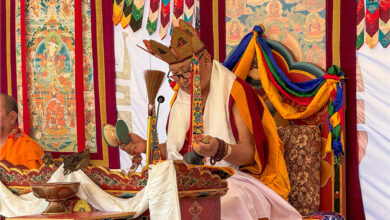
    Thimphu : The Dorji Lopen of the Central Monastic Body is presiding over the National Kurim in Gelephu for the successful completion of the Gelephu Mindfulness City project. The rituals, which began today, are being conducted to remove obstacles and to invite auspicious conditions for the smooth, timely, and harmonious implementation of the project.

    According to the Central Monastic Body, the National Kurim will be performed throughout the entire duration of the Gelephu Mindfulness City project to create auspicious conditions and ensure its smooth and timely implementation.

    The first round of the National Kurim began today and will continue for five days. The rituals started with the Duekhor Jinsed ceremony at Phulhari, the site where the Gelephu Dzong will be constructed as part of the GMC project.

    “Along with the Dorji Lopen, Lam Netens of 20 districts and over seven hundred monks from various Dratshangs and Rabdeys are here to perform the rituals for the success of the GMC project and the Shambhala Dzong,” said Sangay Dorji, Laytshog Lopen of the Central Monastic Body.

    In addition to the ongoing Kurim, the Central Monastic Body will also carry out voluntary works alongside the rituals.

    “The Kurim will continue for the next three days, followed by additional prayers dedicated to Choechong Yeshey Gonpo. Likewise, we also have plans to engage everyone who came for this ritual to involve them in voluntary work for the project,” added Sangay Dorji, Laytshog Lopen of the Central Monastic Body.

    For now, upon the command of His Majesty The King, the Central Monastic Body is carrying out three major projects in GMC. These include constructing the Jarong Khashor Stupa, the Gyenyen Nyekhang at Phulhari, and the Gelephu Dzong.

  • November inflation surges to 3.5%, almost double 2024 rate

    November inflation surges to 3.5%, almost double 2024 rate

    In this photograph taken on January 10, 2024, a woman carrying a child buys grains from a stall at a market in Bhutan’s capital Thimphu. (Photo by Money SHARMA / AFP)

    Thimphu: Inflation in November last year surged past 3.5 per cent, nearly double the rate recorded in the same month in 2024. This is according to the Consumer Price Index report released on Wednesday. The report shows increases in both food and non-food prices.

    The Consumer Price Index, or CPI, tracks changes in the prices of goods and services over time, based on household spending patterns.

    In November 2024, inflation stood at 1.8 per cent. It rose steadily throughout last year, peaking in October, before easing slightly in November. The average inflation rate from January to November last year stood at 3.53 per cent.

    Food prices emerged as the main driver of inflation in November last year, with food inflation rising to 4.67 per cent. Within the food category, prices of food and non-alcoholic beverages increased by 4.72 per cent on a year-on-year basis. Prices of alcoholic beverages and betel nuts also rose by 4.05 per cent.

    In the non-food category, inflation stood at 2.75 per cent.

    Among non-food items, clothing and footwear recorded the highest increase at 5.01 per cent. This was followed by health services at 3.95 per cent, and restaurants and hotels at 3.81 per cent.

    Transport prices rose by 2.64 per cent, further contributing to inflationary pressure. However, communication prices declined marginally during the same period.

    The report also shows a decline in the purchasing power of ngultrum. As measured by the CPI, the purchasing power stood at Nu 53.8 in November 2025.

    This means that Nu 100 in November last year was worth only Nu 53.8 when compared to prices in December 2012.

  • Trade Fair in Samtse showcases Bhutanese and regional products

    Trade Fair in Samtse showcases Bhutanese and regional products

    Thimphu : Samtse is hosting its first-ever Winter Trade Fair, drawing thousands of visitors over the past five days. The trade fair brought together nearly 60 exhibitors from Bhutan and India, showcasing a wide range of local and regional products.

    Among the participants is the Aggregators Network of Chhukha, a regular exhibitor at such events. The network highlighted locally produced items such as honey, noodles, flour, pickles, and other value-added products, using the platform to expand market access and build business networks.

    Several Bhutanese stalls also showcase traditional bamboo and wooden products, earthen pots, and items made from recycled materials. According to the Bhutan Chamber of Commerce and Industry, trade fairs serve multiple purposes.

    Kelzang, Regional Secretary of BCCI, Phuentshogling said, “The primary objective of a trade fair is to build strong networks with traders from outside Bhutan, from India, and within the country. Secondly, it serves as an important marketing platform for our business community. And for Samtse, in particular, it aims to bring vibrancy by developing the district as an economic hub and enhancing overall economic activities.”

    Minjur Dorji, Samtse Dzongda said, “This is the first winter trade fair in Samtse. Earlier, such events could not be organised as the presence of buyers is equally important. This time, we are taking advantage of the large number of people gathered in Samtse for the Peling Choekhor Wanglung.”

    From handcrafted goods to homegrown enterprises, the trade fair is providing local entrepreneurs with a valuable platform to promote their products, connect with buyers, and strengthen cross-border trade ties.

  • Businesses seek transitional relief ahead of GST rollout

    Businesses seek transitional relief ahead of GST rollout

    Thimphu: With the Goods and Services Tax (GST) and Excise Tax set to come into force in January next year, business communities are urging the government to provide transitional relief. Many businesses are holding large volumes of stock taxed under the current system and fear they could face double taxation and financial losses under the new tax regime.

    Some of the hardest-hit sectors include automobile, handicrafts, ICT and hardware businesses.

    Many businesses are still holding goods purchased years ago, for which taxes have already been paid. They worry that during the transition to GST, their older and more expensive stock may have to be sold at higher prices, while newly imported goods under the GST system could be cheaper. This, they say, would put them at a competitive disadvantage.

    Thinley Dorji, the president of the Bhutan Hardware Association said, “Some businesses have inventory worth between Nu 50 M and 70 M. Once the new tax comes into effect, we will have to pay an additional five per cent GST on goods that have already been taxed. This will make it difficult to sell existing stock, as there will be a big price difference compared to newly imported goods.”

    “We have been informed that GST will be charged on old stock. We have already paid different forms of sales tax under the previous system. Adding GST on these goods will result in double taxation and push prices up,” said Tshering Gyeltshen, the general secretary of the Traders Association of Bhutan.

    Businesses have also raised concerns about paying taxes at the point of entry, saying it uses up their money before any sales are made. They argue that paying tax at the point of sale would improve cash flow and make the new GST system easier to manage.

    “At the point of entry, we have to pay both input GST and excise tax, which blocks a huge amount of our funds. If the government allows payment at the point of sale instead, it would greatly benefit us,” said Pema Dorji, the general manager of the Samden Vehicles Pvt. Ltd.

    For vehicle dealers such as Samden Vehicles, the bonded warehouse facility introduced in October has helped ease the transition. Under this arrangement, GST and excise tax are levied only after the sale of vehicles imported before January next year. However, the facility will be discontinued from next month.

    “We are currently exempt from tax when we declare our goods at the warehouse, paying only at the point of sale. From 2026, under the new GST, we will have to pay tax at the point of entry and again after selling the goods,” added Pema Dorji.

    However, the Department of Revenue and Customs said no transitional relief is permissible under the GST Framework.

    Around fifty representatives met with the Bhutan Chamber of Commerce and Industry to raise their concerns on Friday.

    The BCCI says it will compile the concerns and present them to the Prime Minister, seeking a solution that balances government revenue and business sustainability.

    “I will compile all the issues and personally pursue them with the Honourable Prime Minister. The government has previously considered our genuine concerns, and we hope there will be consideration this time as well,” said Tandy Wangchuk, the president of the BCCI.

    While businesses acknowledge the challenges of transitioning to a new tax system, they remain hopeful that the government will address their concerns and provide relief measures.

  • NA’s Women, Children and Youth Committee calls for stricter alcohol laws

    NA’s Women, Children and Youth Committee calls for stricter alcohol laws

    Thimphu : As proposed by the Health Ministry, the Women, Children and Youth Committee of the National Assembly has recommended lowering the Blood Alcohol Content, or BAC, for drivers. BAC refers to the amount of alcohol present in a person’s body. The committee says the change will reduce accidents and improve road safety.

    The Blood Alcohol Content limit in Bhutan is 0.08 per cent for drivers, which is higher than international standards. The Women, Children and Youth Committee now recommends reducing it to 0.05 per cent.

    Between 2020 and 2024, the country recorded nearly 5,000 traffic accidents, with close to 800 linked to alcohol. The country is estimated to spend about 6.5 billion ngultrum every year on alcohol-related issues.

    Dr Tek Bdr Rai, the Chairperson of the Women, Children and Youth Committee said, “The Blood Alcohol Content in some of the developed countries like Norway, Sweden, and Poland are just 0.02 per cent. Whereas, in countries like Czechoslovakia, Hungary and Romania the Blood Alcohol Content is zero. There is zero tolerance.”

    He added that zero tolerance should apply to professional drivers.

    As alcohol remains one of the serious public health and social challenges, the committee has called for stronger laws and consistent enforcement.

    The committee highlighted that alcohol levels in some local brews, such as ara, exceed permissible limits. It has recommended developing guidelines for the production and sale of locally brewed alcohol, led by the Health Ministry.

    Health Minister Tandin Wangchuk said, “My concern is about ara production and sale. It varies from household to household in rural areas. The recommendation says the alcohol content in ara should not exceed 40 per cent, but I am sceptical about how far we can regulate and maintain that.”

    The committee also recommended prohibiting the subleasing of bar licences and called for inspections before licence renewal. Currently, over 10,000 individuals have bar licences.

    Dr Tek Bdr Rai added that “Currently, we also issue bar licences online, and anyone above 18 can obtain one. We need to review the requirements and make them more stringent.”

    The Health Ministry will lead the implementation of the recommendation and has been instructed to report the actions taken in the next session.

  • National Council recommends delinking health workforce to address rising attrition

    National Council recommends delinking health workforce to address rising attrition

    Thimphu: Could separating health workforce from the civil service reverse the trend of professionals leaving the system? The professionals are said to be resigning at an alarming rate undermining the quality of service. As the health sector faces a growing crisis, the council’s economic affairs committee is recommending delinking the workforce from the civil service.

    Nearly 1000 health professionals left the system over the last five years.

    And most of them are nurses, who are the backbone of the system, providing direct patient care. Even worse, specialists are also resigning. According to the National Medical Services, the attrition rate among doctors including specialists was 2.3 per cent, nurses 6.4 per cent and other health workers 4.7 per cent until September this year.

    Law makers are now treating it as a serious concern that needs to be addressed soon.

    Tshewang Rinchen, the Chairperson of the Economic Affairs committee said, “Among doctors, pharmacists and medical technologists along with many others, there is 26.4 per cent shortage. In numbers, we are short of 1,576 staff. It looks critical. We all know the reason for the shortage. Firstly, there are issues in recruitment and secondly, many people are quitting.”

    Some council members suggested for more proper research to understand the shortage.

    Phuntsho Rapten, Eminent Member of National Council said, “In the review report, there should be a value addition. Otherwise, there is no extra information as it is already there in annual health bulletin.”

    Namgay Dorji, Punakha MP of National Council said, “There are colleges such as Apollo, Khesar Gyalpo University of Medical Sciences, Aurora and RTC for training health professionals. Yearly, many students graduate from these colleges. After graduation, most of them go overseas. They go there because they get PR and the income is better. Has the committee talked with the Royal Civil Service Commission about such issues?”

    The review report on the health care system recommended that to frame and implement a differentiated and motivated health workforce strategy, the management of human resources must first be de-linked from the general civil service structure or provide an autonomy. This function should be assigned to a dedicated agency or a specialised unit within the health ministry, allowing it to design and implement a distinct human resource framework for the health sector. In partnership with relevant agencies, this body would establish specialised career progression pathways, introduce workload and specialty-based remuneration, redesign the performance-based forced-ranking system, and develop a robust retention package with substantial incentives.

    This is expected to create a conducive and dynamic work environment to retain the health workers.

    The Chairperson of Economic Affairs committee said, “Unlike the general civil service, the healthcare workers should have different policies. Everyone from doctors to the ESP and GSP workers should have different facilities or different time. Therefore provide different incentive according to the time. Moreover, if their capacity and career development is made flexible, they will come to work with interest.”

  • National Council ratifies BIMSTEC Convention on Mutual Legal Assistance in Criminal Matters

    National Council ratifies BIMSTEC Convention on Mutual Legal Assistance in Criminal Matters

    Thimphu: The National Council unanimously ratified the BIMSTEC Convention on Mutual Legal Assistance in Criminal Matters today. The convention aims to strengthen regional cooperation by enabling member states to support each other in tackling terrorism, organised crime, and drug trafficking.

    The deputy chairperson of the Natural Resources and Environment Committee said the agreement can strengthen ties among member countries, particularly in the exchange of information and documents related to criminal matters.

    “Being part of this BIMSTEC convention can help reduce criminal activities in the country. If we are a member country, it will be easier to access any support we request, which will be difficult if we are not a member,” said Birendra Chimoria, Dy. Chairperson, Natural Resources and Environment Committee, NC.

    He added that the only challenge that remains after ratifying the convention is the lack of human resources and budget. According to the MP, the mutual legal assistance process may incur expenses while transmitting evidence to foreign countries and entail expenses for the installation of equipment to carry out the required functions.

    Several other members expressed concerns.

    “Article 1, Section 3 says that a country must help the requesting country investigate an offender from that country, even if the act isn’t a crime in the country providing the assistance,” said Ugyen Tshering, Eminent Member, NC.“

    “The MLA requires the establishment of a separate central agency or office. This will increase costs not only financial expenses, but also additional human resource requirements, especially in terms of expertise,” said Tshewang Rinchen, Samdrup Jongkhar MP, NC.

    The house will formally adopt the convention on Friday. The Department of Law and Order will serve as the central authority responsible for receiving and executing requests for assistance.

    The agreement was formally signed at the 5th BIMSTEC Summit in 2022, and Bhutan is among the last two countries to ratify it.

  • Bhutan hosts first ANTAM meeting to boost farm machinery standards

    Bhutan hosts first ANTAM meeting to boost farm machinery standards

    Thimphu : The use of agricultural machinery has transformed traditional farming. In Bhutan, where farmers work on steep terrains and fragile ecosystems, using safe, efficient, and environmentally friendly machines is important. To support this, Bhutan is hosting a three-day annual meeting of the Asian and Pacific Network for Testing of Agricultural Machinery or ANTAM, for the first time. The meeting brings together 15 member countries to standardise testing and improve the safety and quality of farm machinery across the region.

    The Asian and Pacific Network for Testing of Agricultural Machinery (ANTAM), led by the United Nations Economic and Social Commission for Asia and the Pacific, is a regional network that promotes safe, sustainable and high-quality agricultural machinery through standardised testing. Bhutan became a member of the regional network in 2019.

    Adopting ANTAM testing codes ensures that farm machines are tested the same way in different countries. This makes safe, efficient and eco-friendly agricultural machinery easier to trade, more available and more affordable for farmers.

    “If a manufacturer of machinery tests the machine here in Bhutan or in another testing station that participates in this, the test report is the same. It’s consistent. So, this facilitates the trade of machinery that is safe, efficient, and has with low environmental impact. If the trade is easier, this means that it becomes more available for the smallholder farmers. And if the trade is easier, it becomes also more affordable for the smallholder farmers,” said Marco Silvestri, Programme Officer/Deputy Head, Centre for Sustainable Agriculture Mechanisation, UN ESCAP.

    There are more than 10 private companies in the country that import and sell farm machinery. The Agriculture Machinery and Technology Centre in Paro, staffed with five people, tests these companies’ machinery.

    Bhutan has a national standard that tests over 20 types of farm machinery, but only a few have been aligned with ANTAM standards.

    Officials said this meeting is an opportunity to access improved technologies and strengthen national testing capacity.

    “Aligning standards is not a big task. So, it is just to adopt, it’s just to follow. And it’s just about getting the systems in place. So, in that way, I think definitely we can use ANTAM standards here in Bhutan. So, if you look at ANTAM, ANTAM is a group of countries trying to promote farm machinery and keep the farm machinery equipment in better shape or have efficient and good quality equipment for the farmers,” said Karma Tshetrim, Head of Standard Division. Bhutan Standard Bureau, MoICE.

    “If I need training for certain machine testing, they give us such capacity-building training. They call us from a different country, such as Thailand. Thailand use a combine harvester, but it is not feasible in Bhutan considering our mountainous geography. However, they call us and teach us how to test. These standards and test code are something we made together. They even take our feedback,” said Pema Wangmo, Agriculture Engineer, Agriculture Machinery Technology Centre, Paro.

    By aligning with global testing standards, Bhutan is paving the way for a future where quality farm machinery becomes the norm rather than the exception.

  • First international flight takes off from Gelephu

    First international flight takes off from Gelephu

    Dr Lotay Tshering, Governor, GMC
    Dr Lotay Tshering, Governor, GMC

    Thimphu: Bhutan marked a historic milestone today as the first international flight departed from the Gelephu International Airport, officially opening the country’s southern gateway to regional aviation. The inaugural Gelephu–Kolkata–Gelephu service, operated by Drukair, signals the beginning of Gelephu’s emergence as Bhutan’s newest international aviation hub. Prime Minister Tshering Tobgay inaugurated the launch in Gelephu today.

    A delegation led by the Prime Minister, the Governor of the Gelephu Mindfulness City (GMC), and senior government and Drukair officials flew on the inaugural morning flight to Kolkata, returning to Gelephu in the afternoon, symbolising the airport’s readiness for full international operations.

    The inaugural flight signals greater regional connectivity, opening doors for investors, travellers, and visitors while boosting opportunities in tourism, logistics, trade, and services.

    Beginning December 12, Drukair will operate two scheduled commercial flights a week, every Monday and Friday.

    “Henceforth, Drukair will have a twice-a-week flight between Gelephu and Calcutta. And we hope this flight will enhance the visibility of Gelephu Mindfulness City and also increase activities related to the further development of GMC,” said Tandi Wangchuk, CEO, Drukair.

    Echoing this, the Governor of the Gelephu Mindfulness City highlighted the broader significance of international connectivity for the city’s long-term vision.

    “From today onward, we hope to see more of our aircraft landing in different countries, and flights from across the region arriving at Gelephu—day and night. With work now officially underway, this is a proud and joyful moment for every Bhutanese, at home and abroad. I humbly ask everyone to continue offering prayers for the success of this important project,” said Dr Lotay Tshering, Governor, GMC.

    This inaugural service follows the airport’s receipt of its Aerodrome Certificate in September 2023 from the Bhutan Civil Aviation Authority, confirming that the facility meets international safety and operational standards.

    According to Drukair’s latest airfare details, the cheapest one-way ticket in the Bhutanese Economy Class starts at Nu 5,500, while the highest fare, Business Class round trip, can go up to Nu 35,022, equivalent to about USD 390.

    As the inaugural aircraft disappeared into the clouds on its historic journey, it carried a clear message that Gelephu is ready, ready to welcome the world, and ready to take Bhutan’s story further than ever before.

  • Bhutan Amplifies Call For Global Peace At Prayer Festival

    Bhutan Amplifies Call For Global Peace At Prayer Festival

    Thimphu: Amid the towering Himalayas and cascades of fluttering prayer flags, Bhutan turned into a radiant sanctuary of devotion as thousands gathered for the Global Peace Prayer Festival, one of the most spiritually defining moments for the Buddhist world.

    Central to this year’s festival was the Kalachakra empowerment ceremony, a powerful and ancient Buddhist ritual invoking universal harmony and inner balance.

    Chorten Dorji, Secretary of the Central Monastic Body, highlighted the profound depth of this moment: “The Kalachakra empowerment ceremony inaugurated by the Honourable Prime Minister of India alongside His Majesty the King holds deep spiritual significance. The rituals and traditions of Kalachakra harmonise both physical and subtle elements within us, fostering universal peace and harmony. During the Global Peace Prayer Festival, this empowerment made the profound practices of Kalachakra accessible to international practitioners, strengthening our collective aspirations for global peace.”

    The festival’s spiritual magnitude was further elevated by a historic milestone, the ordination of nearly 270 nuns at Tshalumaphey in a landmark Gelongma ceremony.

    This long-awaited revival restored the highest monastic vows for women, an ancient practice absent for centuries across much of the Buddhist world.

    Adding to the sanctity of the moment was the ceremonial display of rare and revered Buddha relics, which drew pilgrims from Bhutan, India, Nepal, Southeast Asia and beyond.

    Karma from Bhutan’s Department of Culture emphasised the significance of this moment for the nation: “It is a very auspicious and historic event for us in Bhutan. This is the first time that the sacred Buddha relics have been brought to our country. We received them with a grand procession, equivalent to welcoming a head of state. Since opening the relics for public viewing, there has been a continuous stream of people coming to offer prayers. This has been made possible thanks to the warm and friendly relations between our two countries and the collaboration between the International Buddhist Confederation and the National Museum of India, the custodians of the relics.”

    The festival also carried diplomatic significance, with Prime Minister Narendra Modi, who joined the congregation, further strengthening the deep cultural and spiritual ties shared between India and Bhutan and amplifying the festival’s global message of peace and unity.

    In its entirety, the Global Peace Prayer Festival became more than an event. It marked a spiritual renaissance.