
Category: Society

  • Abdul Awal Mintoo awarded 2025 Top Agri-food Pioneer (TAP) by the World Food Prize Foundation

    Abdul Awal Mintoo awarded 2025 Top Agri-food Pioneer (TAP) by the World Food Prize Foundation

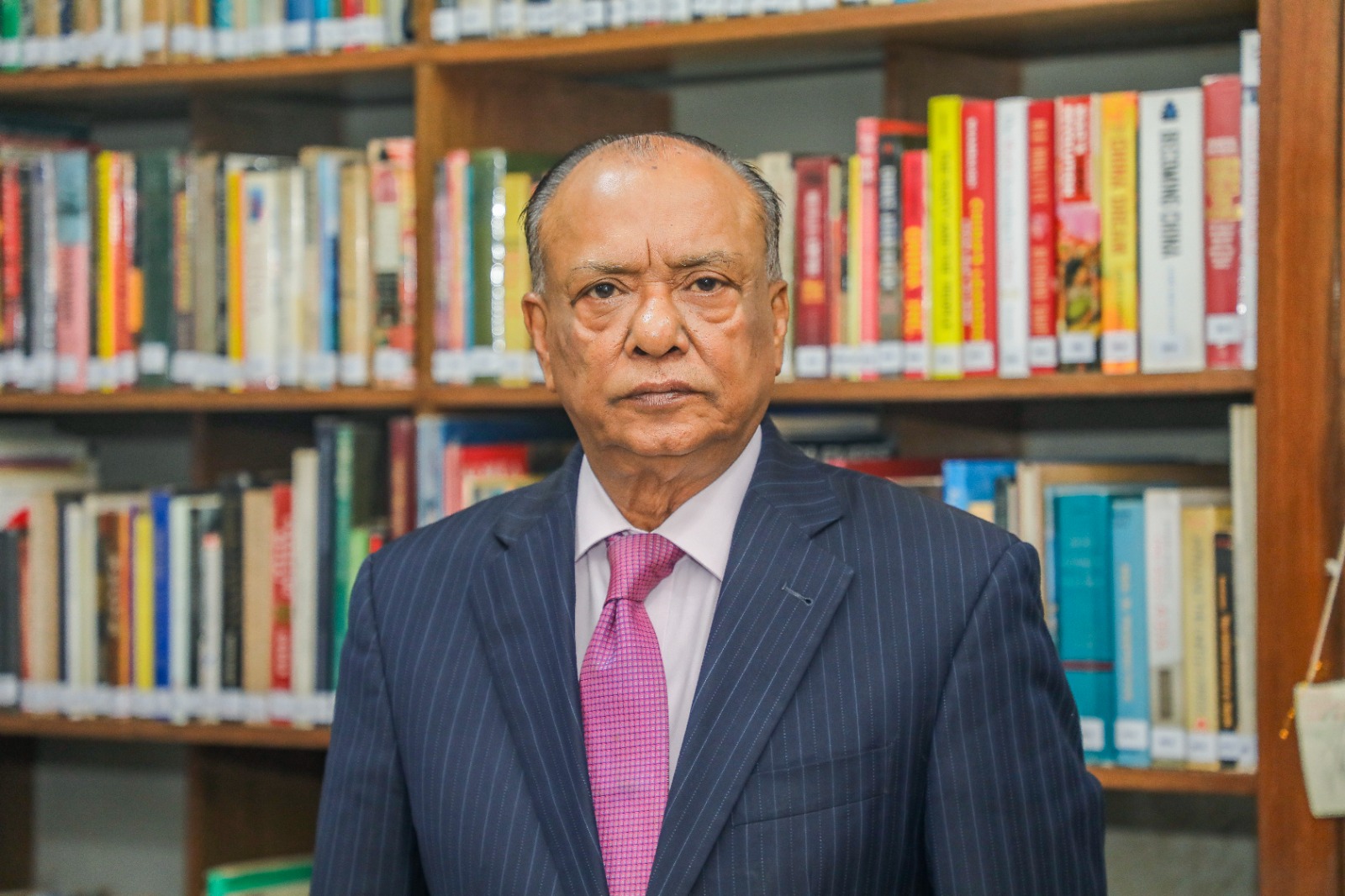
    Abdul Awal Mintoo, the founder of Lal Teer Seed Ltd and Lal Teer Livestock Development (BD) Ltd
    Abdul Awal Mintoo, the founder of Lal Teer Seed Ltd and Lal Teer Livestock Development (BD) Ltd

    Dhaka: The World Food Prize Foundation has awarded Mr. Abdul Awal Mintoo, the founder of Lal Teer Seed Ltd and Lal Teer Livestock Development (BD) Ltd, the Top Agri-Food Pioneer (TAP), 2025. This prestigious recognition, coinciding with the Foundation’s 39th anniversary, celebrates Mr. Mintoo’s outstanding contributions to transforming food systems and strengthening global food security. Lal Teer Seed Ltd and Lal Teer Livestock Development (BD) Ltd are concerns of Multimode Group founded by Abdul Awal Mintoo in 1981.

    The World Food Prize Foundation, based in Iowa, USA, honors individuals who have made exceptional achievements in improving the quality, quantity, and availability of food worldwide. The Foundation’s Council of Advisors, comprising former Heads of State, Ministers and global Leaders in agricultural science, education, and policy oversees the selection of Laureates whose work has significantly advanced human development and food sustainability. The award celebrates individuals whose work had a profound impact on the global system, reflecting innovative science, leadership and dedication to addressing critical issues in agriculture and food security. The selection of the Laureates is announced in Washington D.C., in the spring of the year. The World Food Prize are awarded in partnership with the U.S. Department of State. The Laureates were honored at the prestigious Laureate Award Ceremony, held at the historic State Capitol in Des Moines, Iowa, during the annual Borlaug Dialogue on October 22, 2025.

    “The 2025 TAP list showcases the extraordinary diversity, talent and resolve of individuals working across borders and disciplines to build a more sustainable and just global food system,” said Mashal Husain, President, World Food Prize Foundation. “In a world facing urgent and interwoven crises, these honorees are fearless change-makers driving impact where it matters most and offering real hope for the future.

    Abdul Awal Mintoo, the founder of Lal Teer Seed Ltd and Lal Teer Livestock Development (BD) Ltd
    . Abdul Awal Mintoo, the founder of Lal Teer Seed Ltd and Lal Teer Livestock Development (BD) Ltd, the Top Agri-Food Pioneer (TAP), 2025

    Transforming Bangladesh’s Food Landscape

    In the 1990s, Bangladesh struggled with poor seed production and low crop productivity. Recognizing the urgent need for quality seeds, Mr. Mintoo, the Chairman of Multimode Group founded Lal Teer Seed Ltd in 1995, pioneering the country’s first research-based seed company. Today, Lal Teer is Bangladesh’s largest ISO-certified seed producer, supplying nearly 20% of the national seed demand. Lal Teer engaged about 14,000 contract growers for seed production and approximately 15 million farmers are beneficiary of Lal Teer Seed.

    To promote nutrition and income diversification, Mr. Mintoo championed the development and introduction of hybrid vegetables in Bangladesh. He introduced vegetables into rice-based farming systems, enabling smallholder farmers and homestead gardeners to increase yields and earnings. Under his leadership, Lal Teer now exports high-quality seeds to Europe, North America, the Middle East, South Asia, and Southeast Asia.

    Lal Teer’s MNT Seed Testing Laboratory holds ISTA and Bangladesh Accreditation Board (BAB) accreditations, while its biotechnology lab continues to develop disease- and climate-resilient crop varieties. In recognition of its R&D excellence, seed production locally, meet up domestic demand, export and international presence, Lal Teer ranked 7th in South and Southeast Asia in the Access to Seed Index 2021.

    Expanding into Livestock Development

    In 2011, Mr. Mintoo expanded Lal Teer, establishing Lal Teer Livestock Development (BD) Ltd to improve meat and milk production, producing quality semen from genetically superior bulls for sustainable artificial insemination. Mr. Mintoo’s extensive interactions with the farmers through gatherings and knowledge sharing programs has improved livestock productivity in Bangladesh. His relentless efforts to enhance food and nutrition security have made him an iconic figure in Bangladesh agriculture sector.

    “Food security begins with empowering farmers,” Mr. Mintoo said at the award giving ceremony. “Our mission is to provide them with the tools and knowledge to break the cycle of poverty while contributing to global food resilience.” He also emphasized on developing resilient varieties to battle the climate change and global warming.

  • Hospital fire kills at least six patients in India’s Jaipur: officials

    Hospital fire kills at least six patients in India’s Jaipur: officials

    New Delhi : At least six patients were killed after a fire broke out in the trauma centre of the main government-run hospital in the northwestern Indian city of Jaipur, officials said on Monday.

    The blaze, suspected to have been caused by a short circuit, started in the intensive care unit (ICU) of the Sawai Man Singh Hospital and quickly spread to a nearby ward at the sprawling medical complex, “releasing toxic gases”, hospital official Anurag Dhakad told ANI news agency.

    “Five patients are still critical,” he said, while 13 others have been safely evacuated from the two wards at the largest government-run medical facility in Rajasthan, which serves as a major referral centre for patients from across the state.

    Jaipur Police Commissioner Biju George Joseph said an investigation by the forensic science laboratory would determine the exact cause of the fire.

    The government of Rajasthan state, where Jaipur is located, has also formed a committee to probe the causes of the fire, ANI reported.

    The subjects of investigation will include the hospital management’s response to the blaze, the firefighting arrangements at the hospital, and the measures in place to prevent the same situation in future, the agency said.

    India has seen similar fires at hospitals in the past, some of which have been blamed on short circuits in electronic equipment.

    Ten newborn babies died from burns and suffocation after a fire broke out at a neonatal intensive care unit in the northern Uttar Pradesh state in November.

    Six newborn babies similarly died in a fire at a baby care hospital in New Delhi last May.

  • Thousands gather for Thimphu Lhamoi Domchoe, 318 years on

    Thousands gather for Thimphu Lhamoi Domchoe, 318 years on

    The highlight is Lhamoi Tshomi Kuncham, which dates back to 1707 and was instituted by Je Kuenga Gyaltshen, the first reincarnation of Jampel Dorji, son of Zhabdrung Ngawang Namgyel.
    The highlight is Lhamoi Tshomi Kuncham, which dates back to 1707 and was instituted by Je Kuenga Gyaltshen, the first reincarnation of Jampel Dorji, son of Zhabdrung Ngawang Namgyel.

    Thimphu : The Thimphu Lhamoi Domchoe is an annual tradition for the capital’s residents, drawing thousands of devotees each year. Today, once again, crowds dressed in their finest attire gathered at the courtyard of Trashichhodzong to witness the sacred Lhamoi Tshomi Kuncham, including around 600 tourists.

    The Dorji Lopen of the Central Monastic Body presided over the Domchoe.

    The highlight is Lhamoi Tshomi Kuncham, which dates back to 1707 and was instituted by Je Kuenga Gyaltshen, the first reincarnation of Jampel Dorji, son of Zhabdrung Ngawang Namgyel.

    Dedicated to Pelden Lhamo, the protecting deity of Bhutan, the sacred dance is believed to bless and purify misfortunes and negative deeds for an entire year.

    Vice Principal of Dodeydra Buddhist Institute, Pema Namgyel said, “The monks wake up around 9 pm and have been conducting the Lhawang Drupchhoe for about 15 days. The Kuncham is an expression of divine generosity and compassionate blessings. The sacred Lhamoi Tshomi mask is kept inside the kilkhor and revealed to the public only after the prayers.”

    Throughout the day, monks from the Central Monastic Body and artists from the Traditional Performing Arts and Music Division performed sacred mask dances and songs, attracting hundreds of tourists.

    Ticketing records from the Department of Culture and Dzongkha Development show that more than 470 international and 100 regional tourists attended this year’s Domchoe.

    Among them was Greg Bernstein from the United States, a computer systems professional at the global media company Reuters. Greg arrived yesterday and plans to trek the Snowman Trail. It is his first visit to Bhutan.

    Greg Bernstein said, “I am in Bhutan to exchange culture and to learn more about the Bhutanese people and their culture and their religions and to see the countryside. I am extremely fascinated by the way people live and the things that we do here. This example of a festival has been amazing to see with the masks and the clowns. I have loved every minute of it.”

    Another visitor, Torben Buhl from Denmark, said attending the Domchoe was an unexpected highlight of his journey.

    Torben Buhl said, “We are here to do the second part of the snowman trek, and we were so lucky to have the chance to go and see the festival here. And the festival here has been very, very entertaining for us and very interesting.”

    This year marks 318 years since Bhutan began observing the Lhamoi Domchoe, one of the country’s most significant annual religious events. The Domchoe will be followed next week by the three-day Thimphu Tshechu.

  • 353 medias, some of them inactive, eligible to elect new commission

    353 medias, some of them inactive, eligible to elect new commission

    Journalists protest against the media control bill outside the Parliament building on August 27, 2025. (Sun Photo/Maaniu Mohamed)
    Journalists protest against the media control bill outside the Parliament building on August 27, 2025. (Sun Photo/Maaniu Mohamed)

    Male: The Elections Commission (EC) has announced that 353 media outlets are eligible to vote in the election of four of seven members of the Maldives Media and Broadcasting Commission (MMBC) – a new commission created under a contentious new law that replaced a self-regulatory system.

    The EC released the voter’s list for the October 11 election on Sunday morning.

    The list names 353 media outlets; 335 online medias and 18 broadcasters.

    The list includes the names of newspapers and magazines that have not been active for a long time.

    The deadline for submission of complaints to the list is set to close at 03:00 pm on Monday, giving just a 27-hour window for complaints.

    According to the EC, complaint forms are available from the commission’s website and office, and must be emailed to registration@elections.gov.mv

    The new media law was passed by the Parliament on September 16, and ratified by President Dr. Mohamed Muizzu on September 18, despite appeals from both local and international organizations urging against enacting the new legislature over its potential implications for press freedom and free speech in the Maldives.

    The seven-member MMBC is composed of three members appointed by the Parliament and four elected by registered medias. The legislative assembly is also empowered to appoint the commission’s chairperson. And all members, including those elected by medias, can be dismissed by the Parliament, in which the ruling People’s National Congress (PNC) enjoys a supermajority.

    The four seats up for the October 11 election are two seats for a representative for online medias and two for broadcasters.

    Candidacy is open until 02:00 pm October 4.

    While journalists protest against the new law as a direct threat to press freedom and a crackdown on dissent, President Muizzu’s administration touts it as important legislature that protects people from defamation, disinformation and misinformation, and paves the path for accountability in the media field.

  • Karur tragedy: What we know so far about Thalapathy Vijay’s rally and the deadly stampede

    Karur tragedy: What we know so far about Thalapathy Vijay’s rally and the deadly stampede

    The Tamil Nadu government announced compensation of Rs10 lakh per affected family.
    The Tamil Nadu government announced compensation of Rs10 lakh per affected family.

    New Delhi : At least 39 people were killed and 95 others injured yesterday (27 September) in a stampede at a political rally in Karur, Tamil Nadu, organised by actor-turned-politician Thalapathy Vijay and his ‘Tamilaga Vettri Kalagam (TVK)’ party, according to Hindustan Times.

    Thousands had gathered to see the film star, raising serious questions about crowd safety and putting Vijay’s political debut under scrutiny.

    What was the rally about?

    The Karur rally was part of TVK’s “Velicham Veliyeru” (Let There Be Light) campaign, aimed at building support and strengthening grassroots networks ahead of the 2026 Tamil Nadu state elections.

    The party is trying to challenge both DMK and BJP. Thousands attended to see Vijay, but the massive crowd overwhelmed the venue.

    As people surged towards the stage, a stampede broke out, leaving many trampled before authorities could intervene.

    Will these deaths prove costly for Vijay?

    Vijay expressed deep sorrow over the tragedy and pledged support for the victims’ families.

    Tamil Nadu chief minister MK Stalin announced a compensation of ₹10 lakh each to the families of the victims, an aid of ₹1 lakh each to those undergoing medical treatment, and set up a judicial commission to investigate the incident.

    The disaster raises questions about crowd management and whether it could affect Vijay’s political image ahead of the elections.

    Tamil Nadu police have filed a criminal case against senior TVK leaders Bussy Anand, Nirmal Kumar, and VP Mathiyalagan following the stampede. The case marks the first step toward potential charges, with investigations currently underway. Authorities noted that the party had sought permission for a gathering of 10,000 people, but the actual crowd exceeded that number, contributing to the chaos.

    From films to politics

    Joseph Vijay Chandrasekhar, popularly known as Thalapathy Vijay, is one of South India’s biggest film stars. Born on 22 June 1974 in Chennai, he is the son of film director SA Chandrasekhar and playback singer Shoba Chandrasekhar.

    He began acting as a child artist at age 10 in the 1984 Tamil film Vetri and later appeared in Nan Sigappu Manithan alongside superstar Rajinikanth.

    Vijay made his debut as a lead actor at 18 with Naalaiya Theerpu (1992) and went on to star in hits like Senthurapandi, Rasigan, Deva and Coimbatore Mappillai.

    Over three decades, he acted in 68 films, often portraying characters who stood for social justice and courage. He became the first Indian actor to charge Rs200 crore for a single film.

    In February 2024, Vijay retired from acting to focus on politics, founding the TVK party. He described politics as a deep aspiration and said he wanted to fully dedicate himself to serving the people of Tamil Nadu.

  • Sri Lankan passport almost in par with North Korea, Palestine

    Sri Lankan passport almost in par with North Korea, Palestine

    Sri Lankan passport
    Sri Lankan passport

    By Huzefa Aliasger

    Colombo, Sept. 18 (Daily Mirror) – The Sri Lankan passport which ranked at 91 among 105 countries dropped a further 6 spots since March this year to 97, further weakening the standing of Sri Lankan passport holders to travel to other countries.

    Sri Lanka currently shares the 97th position with Iran which is currently facing sanctions from the United States. Just below at the 99th position is Palestine which is currently under a humanitarian crisis, and North Korea run by dictatorship.

    According to the latest Henley Passport Index 2025 Global Ranking, Sri Lanka showed progress as it climbed the previous rank of 96 to 91 earlier this year, showing an improvement in the ranking from 2024. Decline in ranking indicates lower recognition for Sri Lankan passport holders during international travel.

    However in the latest update, within six months, the country has slipped to 97th, one place lower than its 2024 position, with a visa-free score of 41, compared to 42 destinations previously.

    Throughout its history Sri Lanka ranked highest in 2006 with a passport ranking of 74.

    The current 91st position has been taken by Djibouti, a country in East Africa. Currently the countries that Sri Lanka ranks above are Sudan, Bangladesh, Eritrea, Libya, North Korea, Palestinian, Nepal, Somalia, Pakistan, Yemen, Iraq, Syria and Afghanistan.

    Singapore continues to hold the top spot as the world’s most powerful passport, followed by South Korea and Japan. Singapore has visa free access to 84 percent of the world and faces little to no difficulty in obtaining visas for countries that require them too.

    The Henley Passport Index evaluates passports worldwide based on the number of destinations their holders can enter without a prior visa. The Henley Passport Index, widely recognized as the most authoritative ranking of global mobility, assesses 199 passports against 227 destinations.

    Another measure of passport power is the Henley passport power index combining Henley Passport Index data and World Bank GDP data which shows the link between passport strength and economic power shows Sri Lanka currently is at 173 out of 179 countries, with countries like North Korea, Palestine and Iraq above in the scale.

  • Private sector calls for revival of Group Guarantee Lending Scheme and Savings Scheme

    Private sector calls for revival of Group Guarantee Lending Scheme and Savings Scheme

    The Bhutan Chamber of Commerce and Industry or BCCI say the scheme has been suspended in several districts amid rising non-performing loans.
    The Bhutan Chamber of Commerce and Industry or BCCI say the scheme has been suspended in several districts amid rising non-performing loans.

    Thimphu : The private sector is pushing for a comeback of the Group Guarantee Lending and Savings Scheme. The Bhutan Chamber of Commerce and Industry or BCCI say the scheme has been suspended in several districts amid rising non-performing loans. The BCCI say that reviving the scheme could boost small businesses and rural enterprises, giving a much-needed lift to the private sector.

    The Group Guarantee Lending and Savings is a collateral-free loan given to groups of three to seven members who are jointly liable for their loans. The scheme also aims at encouraging saving habits, strengthening communities, and improving borrowers’ financial literacy.

    Some of the scheme’s eligibility criteria include lack of access to credit through the formal lending system, being enterprising and willing to work in groups to improve livelihoods, among others.

    During the Annual General Meeting of the private sector yesterday, the district business representatives raised issues about having no access to the Group Guarantee Lending Scheme.

    Tandy Wangchuk, the president of Bhutan Chamber of Commerce and Industry said, “The issue is that, initially, people had access to the group scheme loan, which was provided in collaboration with BDBL and BCCI. We used to have the group scheme loan of Nu 300,000 per person. That scheme was closed two years ago, but they are still pursuing the possibility of having it reintroduced.”

    He added that the organisation plans to propose an alternative window for the scheme under the Economic Stimulus Programme, coordinating with the government to implement it through the Bhutan Development Bank or BDBL.

    Meanwhile, the BDBL told BBS that the Group Guarantee Lending and Savings scheme has never been suspended and has been implemented nationwide since 1998. The bank also said that it revised the scheme last year to make it more inclusive, customer-friendly, and effective in today’s context.

    The bank, however, explained that their partnership with BCCI was discontinued after the MoU expired, and considering that similar group loan features are already available through banks.

    The private sector is now seeking to renew their MoU with BDBL.

  • Nepal Rastra Bank rolls out framework to identify systemically important payment systems

    Nepal Rastra Bank rolls out framework to identify systemically important payment systems

    al Rastra Bank rolls out framework to identify systemically important payment systems
    al Rastra Bank rolls out framework to identify systemically important payment systems

    Kathmandu : Nepal’s central bank has introduced a new framework for identifying Systemically Important Payment Systems (SIPS), a move aimed at strengthening oversight of the country’s payment ecosystem and ensuring that it meets international best practices while contributing to financial stability and economic growth.

    According to the framework issued on Monday, designating certain payment systems as SIPS and reinforcing regulatory supervision will help enhance the resilience of Nepal’s payment infrastructure. This, the central bank says, will enable the systems to withstand potential disruptions while at the same time promoting innovation, financial inclusion, and sustainable development.

    The framework has been designed to safeguard financial stability by identifying payment systems whose disruption could generate and spread risks across the wider financial sector. It seeks to ensure the resilience and continuity of critical payment systems during periods of financial stress or operational disturbances.

    By focusing on risk identification, assessment, and mitigation, the framework aims to better understand how vulnerabilities arise and are transmitted within the system. It then proposes mechanisms for monitoring, managing, and controlling those risks effectively.

    Kiran Pandit, spokesperson for Nepal Rastra Bank, said that through the framework, the central bank intends to identify the most widely used payment tools by studying their features and usage patterns, and then formulate regulations to make them more resilient.

    “For instance, if we find that the quick response (QR) code-based payment system has become systemically important due to its high usage, then we will prepare regulations to make it more robust so that problems do not arise,” said Pandit. “This is also an international practice.”

    As part of the process, the central bank will conduct market assessments of payment tools introduced by payment service providers and system operators. The evaluation will be based on factors such as usage, market size, market share, and interconnectedness. This assessment will help determine which systems qualify as designated payment systems.

    The framework also provisions specific responsibilities for these designated systems, and additional regulations will be developed if required, Pandit added.

    Globally, central banks designate SIPS because deficiencies or failures in such systems can trigger widespread disruptions among participants, or even systemic interruptions across the entire financial sector. In Nepal, these designated systems may be state-owned or privately operated.

    The purpose of designating SIPS is to manage the contagion of risks associated with the operation of critical payment systems. According to the central bank, systems that mainly handle time-critical and large-value transactions are considered systemically important. Likewise, the sole or dominant payment system in the country that underpins the financial market infrastructure is also recognised as systemically important.

    Other systems may also qualify. For example, a payment system that accounts for the largest aggregate value of payments, or that holds more than a third of the retail market in terms of transaction value, or two thirds in terms of transaction volume, will also be considered systemically important.

    The framework outlines clear criteria for identifying SIPS and defines the responsibilities of designated systems. It applies both to payment systems operated directly by the central bank and to those operated by licensed financial institutions.

    SIPS are critical components of the financial system as they handle large-value and time-sensitive transactions. Any disruption in their operation could cause systemic shocks with far-reaching consequences for financial stability. Poorly designed systems can amplify risks, disrupt markets, and erode confidence in the economy. Ensuring their safety, efficiency, and resilience is therefore essential for the stability of Nepal’s financial ecosystem.

    Under the Payment and Settlement Act, 2019, Nepal Rastra Bank is mandated to oversee, regulate, and develop the country’s payment systems. The act requires that Nepal’s frameworks align with international standards such as the Principles for Financial Market Infrastructures (PFMIs).

  • Lone elephant leaves a family homeless in Bhutan

    Lone elephant leaves a family homeless in Bhutan

    The impact of the elephant attack is painfully evident. Large portions of two sides of a room have been damaged, and the walls cracked. Kitchen utensils are broken, and the television shattered. PHOTOS PROVIDED BY KUENSEL
    The impact of the elephant attack is painfully evident. Large portions of two sides of a room have been damaged, and the walls cracked. Kitchen utensils are broken, and the television shattered. PHOTOS PROVIDED BY KUENSEL

    GELEPHU – It was close to midnight on August 27 when 60-year-old Namgay Tshomo was jolted awake by the rumbling noise of a lone elephant hitting the walls of her room. For the past two years, she has rented two rooms in a single-storey bungalow at Tashiling, Gelephu town, alongside three other families.

    Namgay Tshomo sleeps alone in the sitting room, which also functions as the kitchen and bedroom. After she yelled, her high-school-going daughter stirred in the other room, and a neighbour rushed to drive the elephant away.

    “At first, I thought it was the ceiling fan on that rainy night,” Namgay Tshomo says, her voice still trembling with fear. “I was too scared to even stand up and could barely get out of the room.”

    “He (a neighbour) threw stones at the elephant to chase it away. Finally, it left after almost an hour,” she recalled. “I was fortunate to have remained safe that night.”

    As the single mother walks through the ruins, the impact of the elephant attack is painfully evident. Large portions of two sides of her room have been damaged, and the walls are cracked. Kitchen utensils are broken, and the television shattered.

    While she prepares to move into an affordable home, her kitchen has been temporarily relocated to the walkway veranda, and the refrigerator plugged into a neighbour’s room. Namgay Tshomo shares the smaller room with her daughter, which is used as an altar and a space dedicated to studying and homework.

    “It is frightening, and I can no longer live here,” she says, adding that this will be the case even for the next three months until her daughter completes her board exams.

    A monthly rent of Nu 2,000, reduced from Nu 3,000 after she pleaded with her landlord for a concession due to her financial constraints, still remains a burden as she has no source of income.

    Her two children and their spouses arrived the following day, stayed with her for three days, and helped with the essential rations. “We reported the incident to the forest office, but there is no support for the elephant damage,” said her son.

    For months, residents say, the lone elephant has been loitering in the area. Its presence has left many on edge, but for Namgay Tshomo, the danger became all too real that night.

    The threat extends beyond homes. On the night of August 29, a herd of 10 elephants damaged over 30 decimals of paddy spread across 25 large terraces at Dawathang in Chhuzagang. The field belongs to a farmer in Nimaling.

    Nimaling Tshogpa Nima Dorji said that farmers are at the receiving end of elephant damage in the settlements along the borders. “A herd has damaged several areca nut trees in recent months,” he added.

    The incidents were reported to the Gewog administration, which then submits a report to the Dzongkhag Administration for the official record. Without sustainable solutions, farmers say human-elephant conflict will continue to leave them devastated.

  • Spending on SOEs surpasses budgeted figure by MVR 865mn

    Spending on SOEs surpasses budgeted figure by MVR 865mn

    President Dr. Mohamed Muizzu attends the opening of Velana International Airport's new international passenger terminal on July 26, 2025. (Photo/President's Office)
    President Dr. Mohamed Muizzu attends the opening of Velana International Airport’s new international passenger terminal on July 26, 2025. (Photo/President’s Office)

    Male: Government spending on state-owned enterprises has surpassed the budgeted figure by MVR 865 million, according to the latest weekly fiscal development report released by the Finance Ministry.

    The budget allocation for state investments on SOEs this year is MVR 378 million.

    But the fiscal development report released on Tuesday night shows the government has already spent MVR 1.24 billion as of August 28 – marking an excess of MVR 865 million or 229 percent.

    Spending on SOEs had also exceeded the budgeted figure last year, hitting MVR 1.23 billion as of August 28, 2024.

    Persistently high spending by SOEs, as well as mounting debt and unnecessary appointments for political purposes, have become a huge burden on the state budget over the years. The incumbent People’s National Congress (PNC) administration had included reforms to address the issue in the 2025 budget, including the merger of some SOEs and the dissolution of others. However, some of these plans were later dropped.

    The administration had also dropped plans to reform subsidies and pension – two other areas which have become an increasingly huge burden on the state over the years. In May, President Dr. Mohamed Muizzu said his administration now plans to cut costs by changing how projects are run and awarding government contracts to SOEs instead of private contractors.

    The government later awarded hundreds of contracts to SOEs, including ones that do not fall under the mandate of the companies. This includes the award of hospital construction projects to the Road Development Corporation (RDC), school construction projects to Fahi Dhiriulhun Corporation (FDC), and outdoor gyms to Maldives Airports Company Limited (MACL).

    While the government has been touting a drop in overall government expenditure, numbers released by the Finance Ministry shows this is mainly due to a significant drop in spending on infrastructure development projects, with capital expenditure down at MVR 3.12 billion – which is just a quarter of the budgeted MVR 12.6 billion.

    As Maldives struggles with staggering external debt obligations, the numbers also show the government has already spent beyond the budgeted figure on loan repayments. The government has already spent MVR 3.95 billion on loan repayments, which is beyond the budgeted figure of MVR 3.87 billion.

    Meanwhile, the country has only received eight percent of projected grants.

    The Maldives has been receiving urgent appeals by international financial agencies – including the International Monetary Fund (IMF) and the World Bank – to cut down costs and expedite the implementation of fiscal reforms, especially those targeting salaries, pension, and subsidies. However, these costs continue to increase.

    The government has repeatedly expressed confidence in being able to cut down costs in other ways and overcome the current economic crisis.