Category: Economic Diplomacy

  • Pakistan Names Representatives To Afghanistan Border Management Committee

    Pakistan Names Representatives To Afghanistan Border Management Committee

    Kabul: Pakistan’s leading business body has named its representatives to a newly formed committee aimed at managing border affairs with Afghanistan and addressing ongoing disruptions to cross-border trade.

    The Federation of Pakistan Chambers of Commerce and Industry said in a statement that the Pakistan–Afghanistan Border Management Committee will be tasked with resolving border-related issues, improving coordination and facilitating dialogue and trade between the two countries.

    In a letter issued on Monday, the federation announced the appointment of seven Pakistani members to the committee. It said the body would review border management challenges and propose practical solutions.

    According to the letter, the committee will maintain regular communication with relevant Pakistani authorities, Afghan chambers of commerce and other stakeholders to ensure effective coordination.

    Sources familiar with the matter said the Taliban have not yet named their representatives to the committee.

    Pakistan–Afghanistan border crossings have remained closed since October 2025 following deadly clashes between Taliban forces and Pakistani security personnel. The prolonged closure and suspension of trade have caused losses estimated at millions of dollars each day for traders on both sides of the border, according to business groups.

    The Taliban said its courts publicly flogged nine people in western and eastern Afghanistan this week, continuing the use of corporal punishment under the group’s rule.

    According to statements issued on Tuesday by the Taliban Supreme Court, a primary court in Herat province flogged eight people on Monday, January 5, on charges of producing, buying and selling alcoholic beverages.

    In a separate case, a Taliban court in Ahmad Khel district of Paktia province publicly flogged one person on charges of currency counterfeiting.

    The court said each of the accused received between 30 and 39 lashes, carried out in public and in the presence of Taliban officials and local residents.

    The announcement follows a statement issued a day earlier in which the Taliban Supreme Court said lower courts had publicly flogged 16 people in the provinces of Parwan, Kabul, Kunar and Balkh.

    Since returning to power in August 2021, the Taliban have reinstated public corporal punishment, including floggings and executions, a practice that has drawn repeated condemnation from international human rights organisations and the United Nations.

    The Taliban say the punishments are carried out in accordance with their interpretation of Islamic sharia law.

  • As India claims fourth-largest economy spot, what it means on the ground

    As India claims fourth-largest economy spot, what it means on the ground

    NEW DELHI: When Ramesh Chandra Biswal left his job as a space scientist in the US, he returned to eastern India and ran an agriculture startup on a promise of his country’s rapid economic growth.

    Nine years on, as India positions itself as the world’s fourth largest economy, he is still waiting for the promise to come true.

    India’s economy was the sixth largest in the world, valued at about $2.6 trillion in 2017, when Biswal launched his Villamart project in his home village in Odisha.

    According to calculations in the Indian government’s end-of-year economic review, it has now grown to $4.19 trillion, overtaking Japan’s economy in terms of nominal Gross Domestic Product.

    The review also projects that India will overtake Germany to become the world’s third-largest economy within the next three years, trailing only the US and China in economic weight.

    But on the ground, Biswal was not sure what the projections meant because they had no impact on his life or business.

    “The hype around India becoming the fourth largest economy is not grounded. People cannot relate to that,” he said.

    “The number of people here in India is much more than Japan … We have to improve the per capita income instead of telling the story of being the fourth largest economy.”

    Over the years that he has been running his company, Biswal has not noticed much change, but hoped that the news of the country’s growth would at least create a positive hype and motivate everyone.

    “People are trying. As an entrepreneur, we are also trying, struggling every day, trying to do something new,” he said.

    “I’m getting some respect in society. That way, it is giving me the driving force.”

    But not everyone was immediately optimistic. For Sarvesh Sau, a fruit seller in Delhi, it has been increasingly difficult to keep his family afloat.

    “Rich people are getting rich, those who have resources … but a low-income group person like me finds it difficult to manage a decent living despite putting in more than 12 hours of work every day.

    “We are a big nation, and we will look big compared to others. Are we able to match Japan?”

    The world’s most populous nation, India has about 1.46 billion people and a GDP per capita estimated by the World Bank to be about $2,700. It is about 12 times lower than Japan’s.

    Yogendra Kumar, a plumber in Noida, said his income has been rising, but it is consistently outpaced by the cost of living, leaving him feeling poorer over time.

    “I have heard that India has become the fourth largest economy, but I don’t know how to react to that. It does not make any difference to our lives. It sounds good that India is growing, but the matter of fact is that for people like me the struggle for survival is more acute now than before,” he said.

    “Today I earn more but the inflation takes away all the money, and it makes it difficult to have a comfortable life,” he told Arab News. “Mustard oil was 50 rupees 10 years ago. It is now 200 rupees. A cooking gas cylinder used to cost 500 rupees — now it costs more than double. Everything is so expensive.”

    While India’s claim of being the fourth-largest economy is still awaiting review by the International Monetary Fund, Prof. Arun Kumar, a development economist, does not expect it to be confirmed.

    “Our GDP data, as the IMF has said, is suspect because it doesn’t include the informal sector … According to my estimate, we are still the seventh largest economy, just ahead of Italy,” he told Arab News, also estimating India’s actual growth to be much lower than the government’s projection.

    “Even though official data shows a 7 percent to 8 percent rate of growth, people realize that it’s not growing so well,” Prof. Kumar said.

    “The rate of growth is only of the organized sector, not of the unorganized sector … The unorganized sector is declining and that is where 94 percent of the employment is.”

  • ‘It was important to make me happy,’ says Trump as he warns India of higher tariffs

    ‘It was important to make me happy,’ says Trump as he warns India of higher tariffs

    The United States could raise tariffs on India if New Delhi does not meet Washington’s demand to curb purchases of Russian oil, President Donald Trump said on Sunday, escalating pressure on the South Asian country as trade talks remain inconclusive.

    “[Prime Minister Narendra] Modi is a good guy. He knew I was not happy, and it was important to make me happy,” Trump told reporters aboard Air Force One.

    “They do trade, and we can raise tariffs on them very quickly,” Trump said in response to a question on India’s Russian oil purchases.

    India’s commerce ministry did not immediately respond to a request for comment.

    Trump’s comments follow months of trade negotiations after the US doubled import tariffs on Indian goods to 50% last year as punishment for its heavy buying of Russian oil.

    Indian markets reacted on Monday, with the information technology stock index falling about 2.5% to its lowest in more than a month, as investors worried that strained trade relations could further delay a US-India trade deal.

    Republican Senator Lindsey Graham, a close Trump ally travelling with him, said US sanctions on Russian oil companies and higher tariffs on India had helped curb Indian oil imports.

    Graham is backing legislation to impose tariffs of up to 500% on countries such as India that continue to buy Russian oil.

    “If you are buying cheap Russian oil, [you] keep Putin’s war machine going,” he said, adding that “we are trying to give the President ability to make that a hard choice by tariffs.”

    Trump’s actions were the main reasons India was now buying “substantially less Russian oil,” Graham said.

    Trade experts warn, however, that New Delhi’s cautious approach risks weakening its position.

    Ajay Srivastava, founder of trade think tank Global Trade Research Initiative, said Indian exports already face a 50% US tariff, with 25% linked to purchases of Russian crude.

    While Indian refiners have cut imports after sanctions, he said, buying has not stopped entirely, leaving India in a “strategic grey zone.”

    “Ambiguity no longer works,” Srivastava said, urging India to clearly state its stance on Russian oil. He warned that even a complete halt may not end US pressure, which could shift to other trade demands, and that higher tariffs risk deeper export losses.

    Separately, India struck a cautious diplomatic stance after the United States captured Venezuela’s President Nicolas Maduro on Saturday, urging dialogue without explicitly naming Washington.

    Despite steep tariffs, India’s exports to the US leapt in November, though shipments fell more than 20% between May and November 2025. As New Delhi seeks to clinch a trade deal with Washington, the government has asked refiners for weekly disclosures of Russian and US oil purchases to address US concerns.

    Modi has spoken to Trump at least three times since the tariffs were imposed. India’s commerce secretary met US trade officials last month, but talks remain unresolved.

  • India’s transparency body refuses to disclose exporter-wise limestone trade data with Bangladesh

    India’s transparency body refuses to disclose exporter-wise limestone trade data with Bangladesh

    Dhaka: India’s transparency watchdog has upheld a decision not to disclose exporter-wise details of limestone shipments to Bangladesh from the northeastern state of Meghalaya, ruling that the information is protected under the commercial confidence provisions of the Right to Information (RTI) Act.

    The Central Information Commission (CIC) said there was no overriding public interest in making the data public and that disclosure could potentially harm the competitive position of the exporters concerned.

    Meghalaya, a mineral resource-rich state sharing a 443km international border with Bangladesh, regularly exports limestone and boulders to the neighbouring country, making cross-border mineral trade a significant economic activity.

    In its order, the CIC said releasing the information would contravene Section 8(1)(d) of the RTI Act, which exempts disclosure of commercial information that could harm the competitive position of third parties.

    RTI applicant W Mathew Mawdkhap had sought “the name and address of the exporters who exported limestone to Bangladesh through Bholaganj Land Customs Station in East Khasi Hills, bordering Bangladesh, during the financial year 2023–24” from the office of the Deputy Commissioner, Shillong Customs Division.

    The request was denied, citing Section 8(1)(d) of the RTI Act.

    Mawdkhap’s first appeal was also dismissed, prompting him to move the Central Information Commission with a second appeal challenging both earlier decisions.

    Rejecting the appeal, Information Commissioner Vinod Kumar Tiwari said the information sought related to the names and addresses of exporters and the quantity of limestone exported to Bangladesh during the 2023–24 financial year.

    Such exporter-wise trade data, the Commission held, “constitutes commercial information that is ordinarily treated as confidential within commercial and regulatory frameworks”.

    The CIC noted that disclosure of exporter-specific trade volumes could “provide their competitors with strategic insight into their commercial activities” and thereby harm their competitive position.

    The Commission further observed that regulatory authorities receive commercial information from private entities in a fiduciary capacity as part of statutory compliance. “Releasing such information indiscriminately in the public domain would undermine the trust and confidentiality expected in such interactions,” it said.

    During the hearing, the appellant did not appear before the Commission and failed to place any material on record to establish an overriding public interest, Tiwari noted.

    “In the absence of any such justification, the Commission finds no reason to disturb the concurrent findings of the Central Public Information Officer (CPIO) and the First Appellate Authority (FAA),” the order said.

    The customs department had argued that exporter-wise limestone export data to Bangladesh is not meant for public dissemination unless required by law or disclosed with the consent of the concerned third parties.

    Finding no infirmity in the denial of information, the CIC ruled that the exemption invoked was “legally sustainable” and dismissed the appeal.

  • UNHCR welcomes China’s USD 2.5 million support for Rohingya refugees in Bangladesh

    UNHCR welcomes China’s USD 2.5 million support for Rohingya refugees in Bangladesh

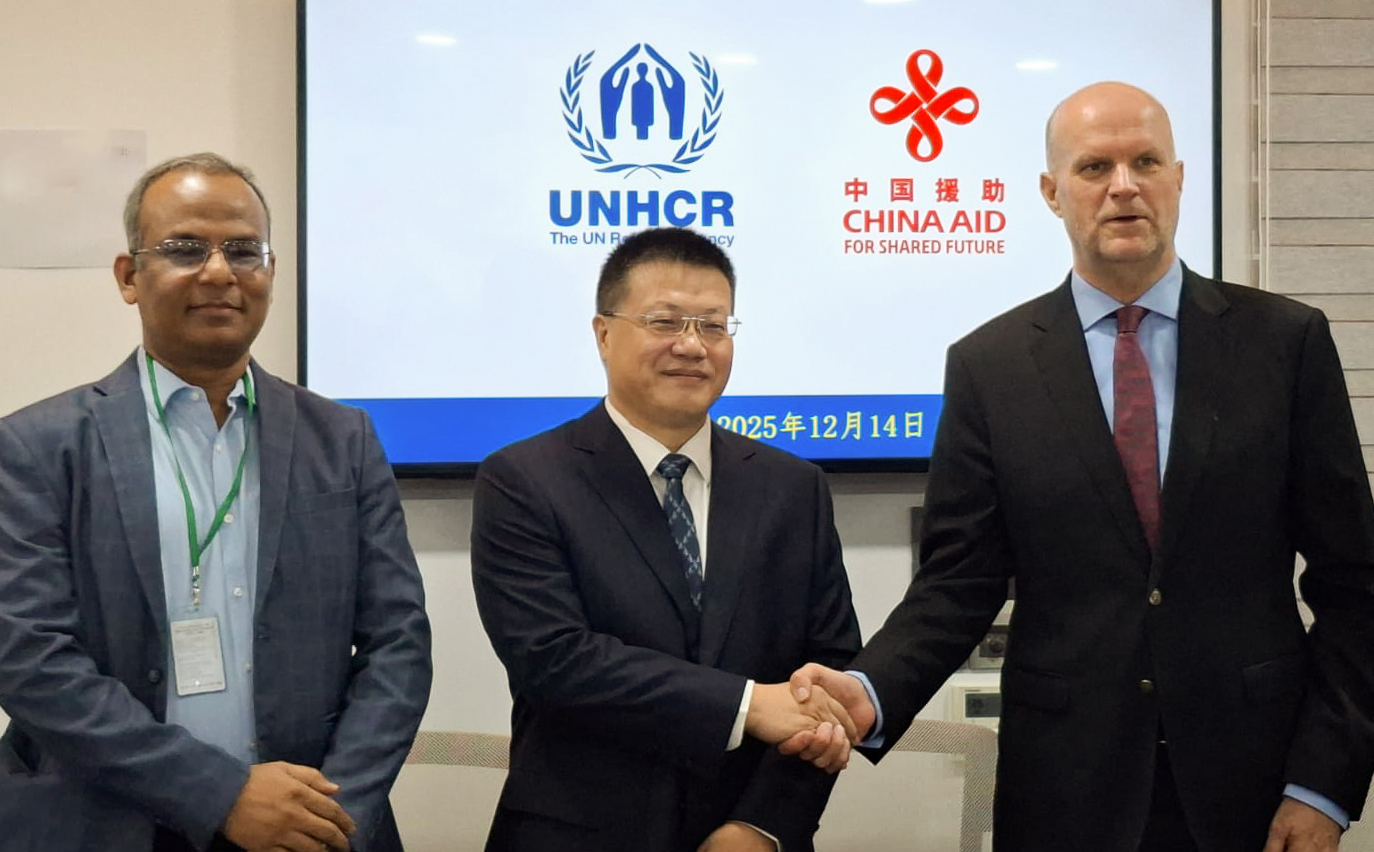
    Dhaka: UNHCR, the UN Refugee Agency, welcomes the People’s Republic of China’s USD 2.5 million contribution to provide liquified petroleum gas (LPG) to meet the cooking needs of Rohingya refugees in Bangladesh.

    The contribution from the Global Development and South-South Cooperation Fund will enable UNHCR to supply cleaner cooking energy to approximately 458,000 refugees, or 94,000 households, until October 2026 — offering vital relief and protection in one of the world’s most densely populated refugee settings.

    “This generous support from China comes at a crucial time, as resources shrink globally and many life-saving programmes risk being scaled back,” said Ivo Frejsen, UNHCR Representative in Bangladesh. “We are deeply grateful for China’s solidarity. Their contribution does much more than provide cooking gas — it helps restore dignity, ensures safety, and reaffirms that refugees are not forgotten.”

    “At a time when global humanitarian resources are shrinking and some countries are significantly reducing their commitments, the situation of vulnerable groups has become increasingly difficult. China, as Bangladesh’s steadfast development partner and true friend, has continued to expand its support,” said H.E. Yao Wen, Ambassador of China to Bangladesh. “China will work closely with UNHCR and the Government of Bangladesh to ensure the effective implementation of this project so that the displaced people from Rakhine State in Bangladesh can benefit at the earliest possible,” he added.

    Eight years into the Rohingya refugee crisis, Bangladesh continues to host 1.16 million Rohingya refugees, who remain dependent on humanitarian assistance to meet their daily needs. The Chinese funding will secure refugees’ continued access to LPG—reducing dependence on firewood, improving safety, health and nutrition, and protecting the forests around the camps.

    “Rohingya refugees regularly tell me how essential LPG is to their daily lives,” said Ivo Freijsen. “Since its introduction in 2018, they no longer have to venture out to collect firewood—avoiding significant risks. Women and girls face fewer protection challenges, and children can spend more time in schools. The use of LPG is also key in halting environmental degradation, regreening camps and surrounding areas.”

    UNHCR continues to work closely with Government of Bangladesh and all partners committed to enhancing the well-being of Rohingya refugees. Sustained international solidarity is essential for both refugees and hosting communities. The LPG initiative shows the tangible impact of such support on families who fled conflict and persecution, and the generous assistance of countries, including China, remains vital to bolstering Bangladesh’s humanitarian response to the Rohingya refugee situation.

  • After US, Mexico announces up to 50% tariffs on India

    After US, Mexico announces up to 50% tariffs on India

    New Delhi : Mexico has imposed steep new tariffs on a wide range of Asian imports, marking a sharp break from its long-standing pro-free-trade approach — and putting India among the key exporting nations affected by the move.

    In a significant policy shift, Mexico’s Senate has approved a new tariff regime that raises duties, in some cases up to 50%, on more than 1,400 products imported from countries that do not have a formal trade agreement with Mexico, Reuters reported.

    The list of targeted nations includes China, India, South Korea, Thailand and Indonesia.

    The upper house cleared the bill with 76 votes in favour, five against and 35 abstentions, brushing aside protests from domestic industry bodies and strong objections from China. The lower house had already approved the measure.

    Beginning next year and expanding through 2026, the new rates will apply to a wide swath of industrial inputs and consumer goods, including automobiles and parts, textiles, apparel, plastics, metals and footwear.

    While select items will face the maximum 50 per cent duty, most products are expected to fall under the 35 per cent bracket.

    Why it matters for India

    India, which has sought to boost exports of textiles, auto components and engineering goods to Latin America, now faces a significantly more challenging entry into the Mexican market, the second-largest economy in the region and a key North American gateway.

    Indian exporters have long leveraged Mexico as a stepping stone to the US, thanks to its integration in North American supply chains.

    The tariff hikes threaten to hamper that advantage.

    Several Mexican import-dependent manufacturers have warned the government that higher duties on goods from India and other Asian nations will push up production costs and stoke inflation, according to agency reports.

    Implications for India and the region

    For Indian exporters, the tariff shift could:

    Reduce competitiveness in industries such as textiles, leather goods, auto parts and steel.
    Push companies to reconsider supply-chain routing through Mexico.
    Increase landed costs for Indian firms operating in or supplying to North American value chains via Mexico.
    India’s commerce Ministry has not issued a statement yet.

    Washington’s shadow over Mexico’s move

    Analysts, including those in India tracking Latin American markets, believe Mexico’s sudden protectionist turn is closely tied to pressure from the United States ahead of next year’s USMCA (United States-Mexico-Canada Agreement) review.

    President Claudia Sheinbaum’s government is understood to be signalling alignment with Washington’s tougher stance on Chinese goods, hoping this might help ease the sweeping US tariffs that have hit Mexico’s own exports such as steel and aluminium.

    Although Sheinbaum denied the tariffs are linked to US demands, the structure of the new duties strongly mirrors American trade actions, a Bloomberg report noted.

    The version passed this week is milder than an earlier proposal, which had sought strict duties across nearly 1,400 tariff lines.

    Lawmakers have now reduced the severity of tariffs on about two-thirds of those categories.

    Even so, the Mexican finance ministry expects the new levies to bring in nearly 52 billion pesos (₹19,000 crore) in additional revenue next year, money the government says it needs to narrow its fiscal deficit.

    Mixed reactions within Mexico

    Mario Vazquez, an opposition PAN senator, said that although the tariffs may help certain sectors overwhelmed by cheaper Chinese imports, “they also act as a tax on consumers,” and he questioned how the government intends to use the extra revenue.

    Emmanuel Reyes of the ruling Morena party defended the bill, arguing that the measure will “strengthen Mexican products in global supply chains and protect jobs in priority sectors.”

    Local auto groups especially supported the move, warning that China’s rapid rise — now accounting for 20 per cent of Mexico’s auto market, up from almost nothing six years ago — could threaten Mexico’s domestic manufacturing base.

    Under the new rules, imported Chinese cars will face the steepest duty at 50 per cent.

    More changes ahead

    The legislation also gives Mexico’s Economy Ministry sweeping authority to revise tariffs on non-FTA countries at will, enabling rapid adjustments ahead of the USMCA review.

    This new flexibility could mean more fluctuations in duty structures for Indian exporters.

    With the US and Canada both tightening scrutiny on Chinese supply-chain routing, Mexico’s move underscores a broader North American shift toward protectionism.

  • Trade aspirations and security concerns bringing Central Asia and Pakistan closer together

    Trade aspirations and security concerns bringing Central Asia and Pakistan closer together

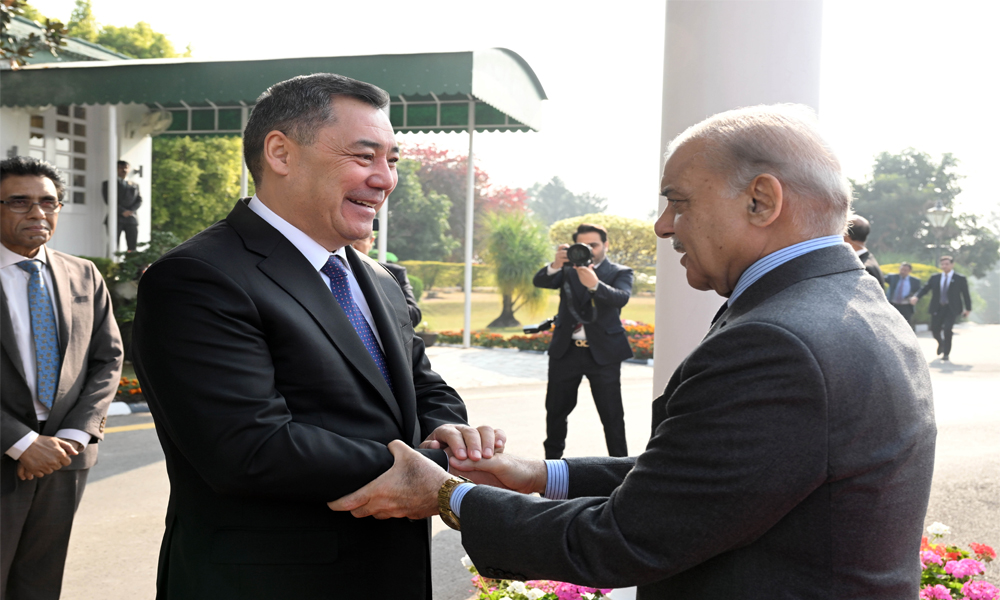
    Pakistani Prime Minister Shehbaz Sharif (right) greets Kyrgyz President Sadyr Japarov in Islamabad on December 3. (Photo: gov.kg)
    Pakistani Prime Minister Shehbaz Sharif (right) greets Kyrgyz President Sadyr Japarov in Islamabad on December 3. (Photo: gov.kg)

    Islamabad: Central Asian states are cultivating growing connections to Pakistan, as decades of suspicion and hostility give way to a mutual desire to expand trade and strengthen regional security.

    A trip by Kyrgyzstan’s president, Sadyr Japarov, to Islamabad on December 3-4 highlights the rapid expansion of engagement. The visit, the first such visit by a Kyrgyz leader in over two decades, yielded a variety of agreements covering such areas as trade, education, tourism, energy and agriculture.

    A business forum held in conjunction with the presidential trip attracted sizable interest from the Pakikistani business sector. Bilateral trade turnover in 2024 stood at a meager $16 million in 2024 and has remained flat during the first three quarters of this year. Officials from both countries, however, set a target of boosting the annual trade volume to $200 million by 2027-28.

    Security was also a major point of discussion, Afghanistan being the primary topic of interest. The Taliban presence in Kabul has suddenly shifted from being a source of division to a factor fostering collaboration.

    For decades, Kyrgyzstan and other Central Asian states found themselves on the opposite strategic side of Pakistan, which incubated the rise of the Taliban radical Islamic movement and supported its eventual takeover in the late 1990s of most of Afghanistan. Central Asian states were strong backers of militia groups that successfully opposed the Taliban in northern Afghanistan at that time.

    After the radical Islamic movement was driven from power following the 9/11 terrorism tragedy, Pakistan provided crucial support for the ultimately successful Taliban insurgency, which toppled the US-backed republican Afghan government in 2021.

    But now, amid a rapid deterioration of Pakistani-Taliban relations, Central Asian states are finding common cause with Islamabad.

    In Islamabad, Japarov and Prime Minister Muhammad Shehbaz Sharif “reaffirmed their commitment to a peaceful and stable Afghanistan and a sustainable future for its people,” according to a Pakistani Foreign Ministry statement. “They agreed that the Afghan Taliban regime must honor its commitments to the international community.”

    Japarov’s press service said the two states would expand cooperation to contain extremism and transnational crime relating to Afghanistan.

    Tajikistan, which has seen two cross-border attacks by Afghan militants reportedly operating beyond Taliban control in recent weeks, also has engaged Pakistan in recent months on enhancing security cooperation and information sharing.

    Uzbekistan, Central Asia’s largest current trade partner with Pakistan, is a prime driver of the region’s expanding commercial ties with Islamabad. Business contacts have rapidly increased during the second half of 2025. Uzbek and Pakistani officials aim to increase bilateral turnover to $2 billion over the mid-term.

    Kazakhstan is also expressing growing interest in Pakistan. Trade volume more than doubled during the first seven months of 2025 compared to the same period the previous year, but still only stood at a comparatively modest $90 million. President Kassym-Jomart Tokayev’s scheduled trip to Pakistan in January is widely expected to catalyze trade; officials in both countries have expressed a desire to see annual turnover reach $1 billion in “the near future.”

    A key to developing commerce between Central Asia and Pakistan is the establishment of efficient land and rail connections. A major consideration for landlocked Central Asian states is gaining access to Pakistani seaports, potentially enabling a significant expansion of global trade.

    In November, Uzbek Railways and the International Road Transport Chamber of Pakistan signed a cooperation agreement to develop trade via two major land routes: Pakistan-China-Tajikistan-Uzbekistan and Pakistan-China-Kyrgyzstan-Uzbekistan. While viable, those routes are dotted with potential bottlenecks.

    A much more direct and efficient rail route would traverse Afghanistan. Uzbek Railways and a Pakistani firm have discussed the costs and engineering challenges of constructing a trans-Afghan railway. But security concerns appear to be keeping the project on the drawing board.

  • Afghanistan shifts trade to Iran route to avoid Pakistan closures

    Afghanistan shifts trade to Iran route to avoid Pakistan closures

    KABUL, Nov 14 (Reuters) – Landlocked Afghanistan is leaning more heavily on trade routes through Iran and Central Asia to reduce dependence on Pakistan, officials said, as tension between the neighbours escalates, with their border closed in recent weeks.

    Afghanistan’s reliance on Pakistan’s ports has long given Islamabad leverage to press Kabul over Pakistani militants sheltering across the border.

    But Afghanistan is increasingly making use of Iran’s concessions to shift freight to its Indian-backed port of Chabahar, bypassing Pakistan and avoiding recurring border and transit disruptions.

    “In the past six months, our trade with Iran has reached $1.6 billion, higher than the $1.1 billion exchanged with Pakistan,” Abdul Salam Jawad Akhundzada, a spokesman for the commerce ministry, told Reuters.

    “The facilities at Chabahar have reduced delays and given traders confidence that shipments will not stop when borders close.”

    THREE-MONTH DEADLINE

    Traders have three months to settle contracts in Pakistan and shift to other routes, said Mullah Abdul Ghani Baradar, Afghanistan’s deputy prime minister for economic affairs.

    Accusing Islamabad of using “commercial and humanitarian matters as political leverage”, he said Afghanistan would not mediate disputes after the deadline and ordered ministries to stop clearing Pakistani medicines, citing “low-quality” imports.

    The biggest shift is to Chabahar, used since 2017 under a transit pact with Iran and India. Afghan officials say incentives from tariff cuts and discounted storage to faster handling are drawing more cargo south.
    Iran has installed updated equipment and X-ray scanners, while offering Afghan cargo a 30% cut in port tariffs, 75% off storage fees and 55% off docking charges, said Akhundzada, the commerce ministry spokesman.

    PAKISTAN SEES NO HARM FROM AFGHAN DECISION

    Afghanistan’s decision would cause no economic harm to Pakistan, Defence Minister Khawaja Asif told Geo News.

    “Afghanistan can trade through any port or country,” he said.
    However, Commerce Minister Jam Kamal Khan told Reuters, “We cannot compromise on security.”

    India has stepped up engagement with Afghanistan’s ruling Taliban, hosting acting foreign minister Amir Khan Muttaqi and broadening humanitarian assistance.

    CENTRAL ASIA CORRIDORS EXPAND

    Afghanistan has boosted shipments through Turkmenistan, Uzbekistan and Tajikistan, routes it says are growing faster than Pakistan’s.

    As advantages Akhundzada cited new transit deals, lower border costs and offices at Milak and Zahedan, Iran’s main border crossing points for Afghan trade.

    But Pakistan is still the fastest route to the sea, with trucks reaching its southern port of Karachi in three days. Its exports to Afghanistan neared $1.5 billion in 2024.

    Islamabad says closures curb militant movement; Kabul denies providing safe haven to the militants.

  • Japan keen to boost imports of high-value apparel from Bangladesh while logistics a key hurdle

    Japan keen to boost imports of high-value apparel from Bangladesh while logistics a key hurdle

    Dhaka : Japanese apparel importers are now considering Bangladesh as a key sourcing destination for high-value and fashionable garments, as the country’s capacity in producing such items continues to improve.

    Representatives of the Japan Textile Importers Association (JTIA) expressed its interest during a meeting with BGMEA leaders yesterday in the capital’s Uttara, according to a press release by the Bangladesh Garment Manufacturers and Exporters Association (BGMEA).

    “With Bangladesh’s remarkable progress in producing high-quality products, Japanese buyers now have confidence in Bangladesh as a sourcing hub for high-value and fashionable apparel,” the BGMEA quoted the delegation as saying in the release.

    Despite the positive outlook, the JTIA delegation identified logistical bottlenecks as a major concern in expanding apparel imports from Bangladesh.

    “Japanese buyers prioritise imports within the shortest possible lead time. To reduce lead time, they suggested further simplifying Bangladesh’s customs procedures and improving operational efficiency at Chattogram Port,” the release said.

    The delegation also praised Bangladesh’s apparel industry for its growth and ongoing efforts to ensure social and environmental compliance, as well as workers’ safety and welfare.

    Representatives from MN Inter-Fashion Limited, Kowa Company, AIT Corporation, and several other Japan-based companies, along with JTIA officials, were also present at the meeting.

    Mahmud Hasan Khan Babu, president of BGMEA, said, “Bangladesh’s garment industry is now strategically focusing on market diversification, and Japan is a highly important and promising market for us.”

    “The industry is working with dedication to shift its product range from basic cotton-based items to synthetic and technical textiles, thereby moving into the high-value apparel segment,” he added.

    The BGMEA president also urged the Japanese government, through JTIA, to continue Bangladesh’s duty-free market access even after its graduation from Least Developed Country (LDC) status in 2026 to sustain Bangladesh’s export competitiveness in that market.

    He expressed the view that such trade benefits could be ensured through a mutually beneficial framework, such as an Economic Partnership Agreement (EPA) or a Preferential Trade Agreement (PTA).

  • Indo-Lanka FTA – bilateral trade grown, but Sri Lanka lags behind: Ravi K

    Indo-Lanka FTA – bilateral trade grown, but Sri Lanka lags behind: Ravi K

    Colombo, Nov 8. (Daily Mirror) – The Indo-Lanka bilateral trade volume has grown exponentially, but Sri Lanka appears to be a loser with a trade gap heavily in favour of India, Parliament was informed today.

    Raising a question under Standing Order 27 (2), National Democratic Front (NDF) MP Ravi Karunanayake said that the Free Trade Agreement between the two countries entered into force 25 years ago and that both sides completed tariff liberalisation by 2008.

    He said Sri Lanka’s exports to the Indian market amounted to only USD 884 million last year, whereas imports stood at USD 3.76 billion during the period.

    Asserting that the FTA is now outdated and non-tariff barriers stand in the way of realising the full potential of trade, he said the proposed Economic and Technology Cooperation Agreement (ETCA) is the solution. He recalled that India had asked for the appointment of a chief negotiator to resume talks on ETCA.

    “We cannot ignore the global context. India is well on track to become the world’s third largest economy by 2027. As transformation unfolds, Sri Lanka should position itself as a partner, influencer and facilitator in India’s supply chains, logistics corridors and services integration,” he said.

    He asked the government to declare its position in this regard.

    Trade Minister Wasantha Samarasinghe said he will provide his answer in a week.