Category: Afghanistan

  • Pakistan Names Representatives To Afghanistan Border Management Committee

    Pakistan Names Representatives To Afghanistan Border Management Committee

    Kabul: Pakistan’s leading business body has named its representatives to a newly formed committee aimed at managing border affairs with Afghanistan and addressing ongoing disruptions to cross-border trade.

    The Federation of Pakistan Chambers of Commerce and Industry said in a statement that the Pakistan–Afghanistan Border Management Committee will be tasked with resolving border-related issues, improving coordination and facilitating dialogue and trade between the two countries.

    In a letter issued on Monday, the federation announced the appointment of seven Pakistani members to the committee. It said the body would review border management challenges and propose practical solutions.

    According to the letter, the committee will maintain regular communication with relevant Pakistani authorities, Afghan chambers of commerce and other stakeholders to ensure effective coordination.

    Sources familiar with the matter said the Taliban have not yet named their representatives to the committee.

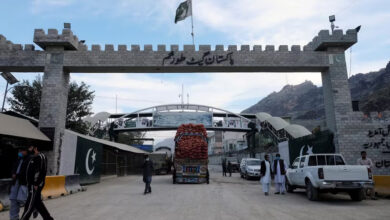
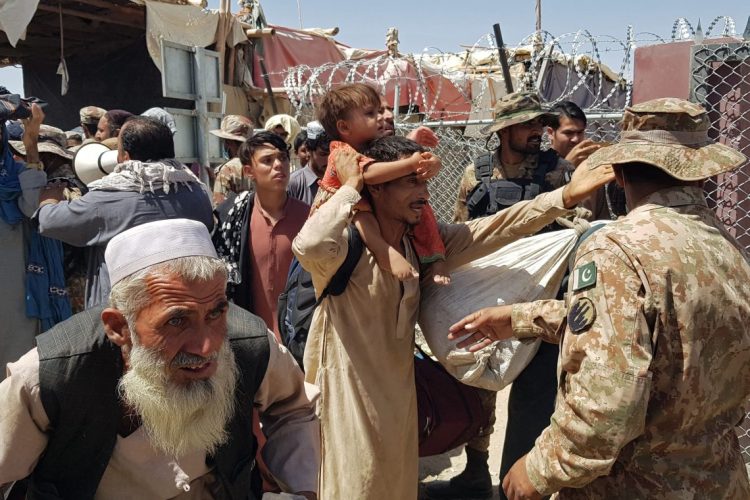
    Pakistan–Afghanistan border crossings have remained closed since October 2025 following deadly clashes between Taliban forces and Pakistani security personnel. The prolonged closure and suspension of trade have caused losses estimated at millions of dollars each day for traders on both sides of the border, according to business groups.

    The Taliban said its courts publicly flogged nine people in western and eastern Afghanistan this week, continuing the use of corporal punishment under the group’s rule.

    According to statements issued on Tuesday by the Taliban Supreme Court, a primary court in Herat province flogged eight people on Monday, January 5, on charges of producing, buying and selling alcoholic beverages.

    In a separate case, a Taliban court in Ahmad Khel district of Paktia province publicly flogged one person on charges of currency counterfeiting.

    The court said each of the accused received between 30 and 39 lashes, carried out in public and in the presence of Taliban officials and local residents.

    The announcement follows a statement issued a day earlier in which the Taliban Supreme Court said lower courts had publicly flogged 16 people in the provinces of Parwan, Kabul, Kunar and Balkh.

    Since returning to power in August 2021, the Taliban have reinstated public corporal punishment, including floggings and executions, a practice that has drawn repeated condemnation from international human rights organisations and the United Nations.

    The Taliban say the punishments are carried out in accordance with their interpretation of Islamic sharia law.

  • Pakistanis stuck in Afghanistan want border to finally reopen after clashes

    Pakistanis stuck in Afghanistan want border to finally reopen after clashes

    kabul; Nearly three months since border clashes prompted the closure of land crossings between Pakistan and Afghanistan, university students, merchants and families are left hanging with no way of getting back.

    “We miss our parents and relatives,” said Shah Faisal, 25, who studies medicine in an Afghan university and was hoping to visit his family back in Pakistan during winter break.

    But the border has been shut since 12 October, leaving many like him with no viable option of making it home.

    Flights are prohibitively expensive, and smuggling routes come at too great a risk.

    A student representative said there were around 500 to 600 Pakistanis at universities in one Afghan province alone, Nangarhar, who were looking for a way back.

    Shah Fahad Amjad, 22, who attends medical school in the provincial capital Jalalabad, called on “both countries to open the road” and let students visit their families.

    As the border closure drags on, some are also concerned about their visa status or financial situation.

    The crisis has caused problems “for us, who are students in Afghanistan, but also for Afghans who are students in Pakistan”, said 23-year-old Barkat Ullah Wazir, who studies in Jalalabad.

    The colonial-era border between the South Asian neighbours stretches more than 2,600 kilometres (1,600 miles) across mountainous terrain.

    Known as the Durand Line, it is normally a conduit between the Pakistanis and Afghans who live near it and share deep cultural, economic and even family ties.

    It also divides Pashtun communities who live on either side – the ethnic group from which the Taliban, which returned to power in Kabul in 2021, draws much of its support.

    ‘We are displaced’

    The border has remained largely closed since the October clashes that killed more than 70 people, with the exception of Afghan refugees and migrants Pakistan has expelled.

    Islamabad accused Kabul of harbouring militant groups that launch attacks on Pakistani soil, allegations that the Afghan Taliban denies.

    Mediation efforts have failed to produce a lasting agreement, and both sides have warned fighting could still resume.

    Pakistani shopkeeper Ehsanullah Himmat, 21, had travelled to the southern Afghan city of Kandahar with his family to attend a relative’s wedding, but “now we cannot go back to our home”, he said.

    “Fighting broke out, the road was closed,” he told AFP, turning the planned two-day trip into a lengthy ordeal with no end in sight.

    “We cannot go via smuggling routes, and other routes exist but they are very long and cost a lot of money” that the family cannot afford, he said.

    Now “it is cold, it’s winter, and we are displaced with our children”, Himmat said.

    Relatives in Afghanistan have hosted the family, but he said he felt a sense of “embarrassment” for overstaying their welcome.

    ‘Standstill’

    Pakistan’s foreign ministry said on Thursday that nearly 1,200 people had approached its embassy in Kabul requesting assistance to return home, including 549 students.

    Just over 300 people had flown back by the end of December, according to the ministry.

    Neither government has given any clear signal about when or under what conditions the border could reopen.

    At the Spin Boldak crossing point, the road leading into Pakistan is blocked.

    Truck driver Khan Muhammad, 39, has been there for weeks on end, unable to work or return to his city of Quetta, about 100 kilometres (62 miles) from the border.

    “In these two-and-a-half months I haven’t loaded even a single kilo of cargo. Work has come to a standstill,” he said.

    “All our livelihoods depend on this gate,” he said, hoping the border would reopen soon.

    When it does, “everyone will be able to return to their homes”, he said.

  • Afghanistan says working with Tajikistan to investigate deadly border clash

    Afghanistan says working with Tajikistan to investigate deadly border clash

    KABUL: Afghanistan’s Taliban authorities said Saturday they were working with neighboring Tajikistan to investigate a border clash earlier this week that killed five people, including two Tajik guards.

    Tajikistan announced on Thursday that three members of a “terrorist” group had crossed into the Central Asian country “illegally” at Khatlon province, which borders Afghanistan.

    Tajik security forces killed the trio, but two border guards also died in the clash, the Tajik national security committee said.

    Afghan Foreign Minister Amir Khan Muttaqi said on Saturday that “we have started serious investigations into” the recent “incidents” on Tajik soil.

    “I spoke to the foreign minister of Tajikistan and we are working together to prevent such incidents,” he told an event in Kabul.

    “We are worried that some malicious circles want to destroy the relations between two neighboring countries,” the minister added, without elaborating.

    Tajikistan shares a mountainous border of about 1,350 kilometers (839 miles) with Afghanistan and has had tense relations with Kabul’s Taliban authorities, who returned to power in 2021.

    Unlike other Central Asian leaders, Tajik President Emomali Rakhmon, who has been in power since 1992, has criticized the Taliban and urged them to respect the rights of ethnic Tajiks in Afghanistan.

    At least five Chinese nationals were killed and several wounded in two separate attacks along the border with Afghanistan in late November and early December, according to Tajik authorities.

    According to a UN report in December, the jihadist group Jamaat Ansarullah “has fighters spread across different regions of Afghanistan” with a primary goal “to destabilize the situation in Tajikistan.”

    Dushanbe is also concerned about the presence in Afghanistan of members of the terrorist organization Daesh in Khorasan.

  • Millions of Afghans face hunger as aid cuts deepen a humanitarian crisis

    Millions of Afghans face hunger as aid cuts deepen a humanitarian crisis

    KABUL: For 10 hours a day, Rahimullah sells socks from his cart in eastern Kabul, earning about $4.5 to $6 per day. It’s a pittance, but it’s all he has to feed his family of five.

    Rahimullah, who like many Afghans goes by only one name, is one of millions of Afghans who rely on humanitarian aid, both from the Afghan authorities and from international charity organizations, for survival. An estimated 22.9 million people — nearly half the population — required aid in 2025, the International Committee for the Red Cross said in an article on its website Monday.

    But severe cuts in international aid — including the halting of US aid to programs such as food distribution run by the United Nations’ World Food Program — have severed this lifeline.

    More than 17 million people in Afghanistan now face crisis levels of hunger in the winter, the World Food Program warned last week, 3 million more than were at risk more than a year ago.

    The slashing in aid has come as Afghanistan is battered by a struggling economy, recurrent droughts, two deadly earthquakes and the mass influx of Afghan refugees expelled from countries such as Iran and Pakistan. The resulting multiple shocks have severely pressured resources, including of housing and food.

    UN appeals for help

    Tom Fletcher, the UN humanitarian chief, told the Security Council in mid-December that the situation was compounded by “overlapping shocks,” including the recent earthquakes and increasing restrictions on humanitarian aid access and staff.

    While Fletcher said nearly 22 million Afghans will need UN assistance in 2026, his organization will focus on 3.9 million facing the most urgent need of lifesaving help due to reduced donor contributions.

    Fletcher said this winter was “the first in years with almost no international food distribution.”

    “As a result, only about 1 million of the most vulnerable people have received food assistance during the lean season in 2025,” compared to 5.6 million last year, he said.

    The year has been devastating for UN humanitarian organizations, which have had to cut thousands of jobs and spending in the wake of aid cuts.

    “We are grateful to all of you who have continued to support Afghanistan. But as we look toward 2026, we risk a further contraction of life-saving help — at a time when food insecurity, health needs, strain on basic services, and protection risks are all rising,” Fletcher said.

    Returning refugees

    The return of millions of refugees has added pressure on an already teetering system. Minister of Refugees and Repatriation Affairs Abdul Kabir said Sunday that 7.1 million Afghan refugees had returned to the country over the last four years, according to a statement on the ministry website.

    Rahimullah, 29, was one of them. The former Afghan Army soldier fled to neighboring Pakistan after the Taliban seized power in 2021. He was deported back to Afghanistan two years later, and initially received aid in the form of cash as well as food.

    “The assistance was helping me a lot,” he said. But without it, “now I don’t have enough money to live on. God forbid, if I were to face a serious illness or any other problem, it would be very difficult for me to handle because I don’t have any extra money for expenses.”

    The massive influx of former refugees has also sent rents skyrocketing. Rahimullah’s landlord has nearly doubled the rent of his tiny two-room home, with walls made half of concrete and half of mud and a homemade mud stove for cooking. Instead of 4,500 afghanis (about $67), he now wants 8,000 afghanis (about $120) – a sum Rahimullah cannot afford. So he, his wife, daughter and two young sons will have to move next month. They don’t know where to.

    Before the Taliban takeover, Rahimullah had a decent salary and his wife worked as a teacher. But the new government’s draconian restrictions on women and girls mean women are barred from nearly all jobs, and his wife is unemployed.

    “Now the situation is such that even if we find money for flour, we don’t have it for oil, and even if we find it for oil, we can’t pay the rent. And then there is the extra electricity bill,” Rahimullah said.

    Harsh winters compound the misery

    In Afghanistan’s northern province of Badakhshan, Sherin Gul is desperate. In 2023, her family of 12 got supplies of flour, oil, rice, beans, pulses, salt and biscuits. It was a lifesaver.

    But it only lasted six months. Now, there is nothing. Her husband is old and weak and cannot work, she said. With 10 children, seven girls and three boys between the ages of 7 and 27, the burden of providing for the family has fallen on her 23-year-old son – the only one old enough to work. But even he only finds occasional jobs.

    “There are 12 of us … and one person working cannot cover the expenses,” she said. “We are in great trouble.”

    Sometimes neighbors take pity on them and give them food. Often, they all go hungry.

  • Germany to take in more than 500 stranded Afghans from Pakistan

    Germany to take in more than 500 stranded Afghans from Pakistan

    BERLIN: The German government said Thursday it would take in 535 Afghans who had been promised refuge in Germany but have been stuck in limbo in Pakistan.

    Interior Minister Alexander Dobrindt told the RND media network Berlin wanted to complete the processing of the cases “in December, as far as possible” to allow them to enter Germany.

    The Afghans were accepted under a refugee scheme set up by the previous German government, but have been stuck in Pakistan since conservative Chancellor Friedrich Merz took office in May and froze the program.

    Those on the scheme either worked with German armed forces in Afghanistan during the war against the Taliban, or were judged to be at particular risk from the Taliban after its return to power in 2021 — for example, rights activists and journalists, as well as their families.

    Pakistan had set a deadline for the end of the year for the Afghans’ cases to be settled, after which they would be deported back to their homeland.

    Dobrindt said that “we are in touch with the Pakistani authorities about this,” adding: “It could be that there are a few cases which we will have to work on in the new year.”

    Last week, the interior ministry said it had informed 650 people on the program they would not be admitted, as the new government deemed it was no longer in Germany’s “interest.”

    The government has offered those still in Pakistan money to give up their claim of settling in Germany, but as of mid-November, only 62 people had taken up the offer.

    Earlier this month, more than 250 organizations in Germany, including Amnesty International, Save the Children and Human Rights Watch, said there were around 1,800 Afghans from the program in limbo in Pakistan, and urged the government to let them in.

  • Norwegian Refugee Council: Return of Migrants Has Worsened Afghanistan’s Food Crisis

    Norwegian Refugee Council: Return of Migrants Has Worsened Afghanistan’s Food Crisis

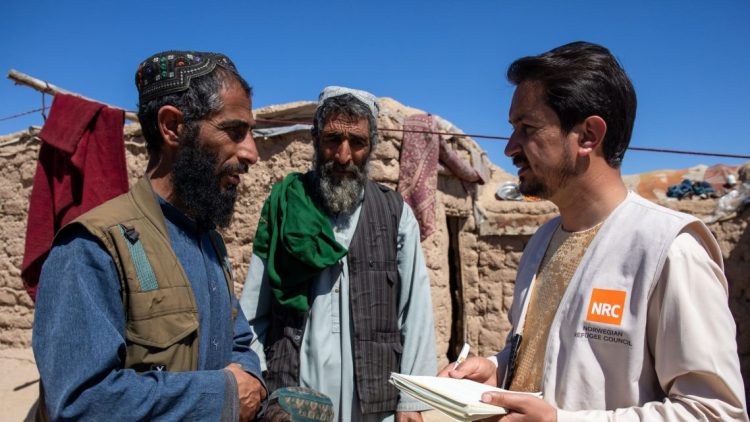
    Kabul : The Norwegian Refugee Council (NRC) has said that the forced return of tens of thousands of Afghan migrants from Iran and Pakistan, combined with severe droughts and recent earthquakes, has further aggravated Afghanistan’s humanitarian crisis.

    In a report released on Saturday, December 13, the council said that about 17.4 million people, nearly 36 percent of the country’s population, are facing acute food insecurity, with many families unable to meet their most basic living needs.

    The NRC added that the large-scale return of migrants to areas already struggling with extreme poverty and vulnerability has placed immense pressure on scarce local resources, putting the lives of millions at risk.

    The council also warned that successive droughts and recent devastating earthquakes in eastern and northern Afghanistan have destroyed people’s assets and agricultural land, further weakening their economic capacity.

    Emphasizing the approach of winter, the Norwegian Refugee Council called on the international community to deliver urgent assistance to Afghanistan to prevent widespread hunger.

  • More Than 800 Migrant Families Returned to Afghanistan Yesterday

    More Than 800 Migrant Families Returned to Afghanistan Yesterday

    Kabul : Media outlets under Taliban control reported that 830 migrant families returned to Afghanistan yesterday.

    The Taliban-run Bakhtar News Agency reported on Saturday, December 13, that 86 families returned via the Pul-e Abrasham crossing in Nimroz, 25 families via Islam Qala in Herat, 274 families via Spin Boldak in Kandahar, 375 families via Torkham in Nangarhar, and 70 families via Bahramcha in Helmand.

    Two days earlier, more than 1,000 migrant families had also returned to the country.

    Meanwhile, the governor of Iran’s Razavi Khorasan Province has said that 1.8 million Afghan migrants have returned to their country this year through the Islam Qala border crossing.

    In addition, Tom Fletcher, the United Nations Under-Secretary-General for Humanitarian Affairs, has said that more than two million migrants have returned to Afghanistan this year.

  • Urban Expansion and Climate Change Threaten Afghanistan’s Cultural Heritage : United Nations

    Urban Expansion and Climate Change Threaten Afghanistan’s Cultural Heritage : United Nations

    The United Nations Human Settlements Programme (UN-Habitat) says that climate change and urban expansion are threatening Afghanistan’s cultural and architectural heritage.

    In a message issued on Saturday, December 13, the UN programme said that preserving historic neighborhoods is essential to safeguarding the identity of cities.

    UN-Habitat has repeatedly warned about unregulated and non-standard urban expansion across Afghanistan.

    The programme also noted that the pace of urbanization in Afghanistan is rapidly increasing.

  • Will Afghanistan’s pledge against cross-border attacks ease tensions with Pakistan?

    Will Afghanistan’s pledge against cross-border attacks ease tensions with Pakistan?

    KABUL: As tensions flare up again between Afghanistan and Pakistan, the Afghan leadership has moved to reaffirm its commitment against cross-border militancy this week in what is seen as Kabul’s attempt to move the needle on peace negotiations, after multiple rounds of talks failed to produce a lasting truce.

    The neighboring countries have struggled to maintain a fragile ceasefire after border clashes killed dozens in October, the worst fighting since the Taliban took control of Afghanistan in 2021.

    While subsequent talks toward a permanent ceasefire yielded little progress, the temporary truce brokered by Qatar and Turkiye collapsed last Friday, with heavy firing along the Spin Boldak-Chaman border that killed at least five people.

    Over the years Pakistan has put much of the blame for the border clashes on the government in Kabul allowing Tehreek-e-Taliban Pakistan — an outlawed armed group, which is separate from the Afghan Taliban — to use Afghan territory for cross-border attacks — a claim that Afghanistan has repeatedly denied.

    Afghanistan again pledged to prevent its territory from being used to harm other countries on Thursday, with Taliban Foreign Minister Amir Khan Muttaqi highlighting it as a religious duty, as endorsed just a day earlier by around 1,000 Afghan clerics in a fatwa, or religious decree.

    “The fatwa was more political than religious,” Kabul University lecturer Abdullah Awwab told Arab News on Friday.

    “I think it was a smooth way out of the pressure put on them by Pakistan and mediators, who were asking for a fatwa against the TTP. The emirate couldn’t issue that, so instead they had scholars issue a fatwa for ordinary Afghans, banning them from jihad abroad.

    “The fatwa shows Pakistan that the Taliban can use a fatwa to stop Afghans from joining the war. It demonstrates Kabul’s power and control over its own soil and people — and, at the same time, it shows Pakistan’s weakness in needing to ask Kabul for a religious fatwa.”

    Addressing new graduates at a ceremony in Kabul, Muttaqi said the Taliban had not “permitted anyone to carry out military activities in other countries” and that the government had the right to take action against anyone who violated the directive.

    “The leaders and elders of this Islamic emirate have pledged that Afghan soil will not be used to harm anyone. All the scholars and religious leaders affirmed that obeying this commitment is necessary for all Muslims,” he said.

    “Just as this nation has historically acted upon the fatwas and advice of its scholars, so too will (it) act upon them now. This is our shared duty.”

    Asif Durrani, Pakistan’s former special envoy to Afghanistan, said the decree was a “very significant” development.

    “Hopefully, the TTP, which owes allegiance to the Taliban’s Supreme Leader Mullah Hibatullah Akhundzada, will now submit to the collective wisdom of the Afghan Taliban ulema and surrender arms,” he wrote on X.

    Though the decree answers one of Pakistan’s demands, Afghan political analyst Wasi Baheer said it had “no direct impact” in the conflict.

    “Pakistan’s harsh words and threats to Kabul don’t mean much, because the real issue is inside Pakistan,” he told Arab News.

    “They cannot simply force changes in Kabul. The main reason talks collapsed in Qatar, Istanbul, and Saudi Arabia is that Pakistan demanded the Taliban act harshly against the TTP — which makes no sense, because it is an internal Pakistani problem. Using force here in Afghanistan will not bring any relief to Pakistan’s security.”

  • Taliban detains 4 Afghan men for wearing Peaky Blinders-style outfits

    Taliban detains 4 Afghan men for wearing Peaky Blinders-style outfits

    Kabul: Four young men in Afghanistan were detained by the Taliban and put into a rehabilitation programme for walking around in public dressed as characters from the popular British drama ‘Peaky Blinders’.

    According to a report by CBS News, officials from the Taliban government’s Ministry for the Promotion of Virtue and Prevention of Vice said the men who had become popular in their local Jibrail township, in the southern province of Herat, for strolling through the streets in trench coats and flat caps, were retained for “promoting foreign culture”.

    Saif-ur-Islam Khyber, a spokesperson for the ministry, said in a social media post that the men were taken into custody and enrolled in a “rehabilitation program” for imitating Western film characters. “We are Muslims and Afghans; we have our own religion, culture and values. Through numerous sacrifices, we have protected this country from the spread of harmful cultures, and now we are also defending it,” he said.

    ‘Advised and released’

    However, Khyber later told CBS News that the four were not formally arrested but were “summoned and advised and released”. “We have our own religious and cultural values, and especially for clothing we have specific traditional styles,” Khyber told the outlet. “The clothing they wore has no Afghan identity at all and does not match our culture. Secondly, their actions were an imitation of actors from a British movie. Our society is Muslim; if we are to follow or imitate someone, we should follow our righteous religious predecessors in good and lawful matters,” he added.

    The men, identified as Asghar Husinai, Jalil Yaqoobi, Ashore Akbari and Daud Rasa, are all in their early 20s. Videos and photos of them walking together in coordinated outfits had circulated widely on Afghan social media before the detention.

    In the group interview posted online at the end of November by local YouTube channel Hirat Mic, they had recently said their style had drawn curiosity and admiration from many residents. Jalil Yaqoobi said people often stopped them on the streets to take photographs. “There were some negative comments, but we focused on the appreciation,” he said.

    ‘Peaky Blinders’ outfit deemed contrary to Islamic values

    Taliban authorities, however, deemed the outfits “contrary to Islamic values and Afghan culture”. A reportedly video released by the ministry included an audio clip purportedly featuring one of the men expressing regret for wearing Western clothing and for sharing such content online, saying he had stopped what he described as “sinful activities” after being advised.

    “I’m on Instagram and have five million followers. Without realizing it, I used to publish and spread things that were against Sharia,” says the voice in the audio recording. “I was summoned and advised, and from today onward I will no longer engage in such sinful activities — and I have stopped,” it added.