

The words dictator, dictator, and autocracy are almost close. If a state has a single leader or leader, that is, one person is everything, it is called an autocracy. In this case, the similarity between Russian President Vladimir Putin and Syrian fugitive President Bashar al-Assad can be seen. Former Prime Minister of Bangladesh Sheikh Hasina and former President of Sri Lanka Gotabaya Rajapaksa also introduced a dictatorial or autocratic regime. The similarity between Hasina, Gotabaya, and Bashar is that all three fled the country in the face of rebellion.
Over the years, in many countries, due to the need of the hour, the people have dragged dictators or autocracy out of power, unable to tolerate their arbitrary behavior. This time, Bashar al-Assad fell as a part of that. In the face of just 12 days of rebellion, Bashar’s military forces were defeated by the rebel group Hayat Tahrir al-Sham.
The best comparison with the events in Syria is the fall of Sheikh Hasina’s government in Bangladesh. There is no crime in the country that the autocratic Hasina government has not committed for 15 consecutive years. To suppress the opposition, the Awami League has thrown the entire country into darkness by resorting to political cases, imprisonment, torture in mirror rooms, bank looting, extortion, brutal killing of BDR members, and shutting down the internet. The party has committed genocide by imposing a curfew to stop the student movement.
Hasina’s ‘mirror room’, Bashar’s ‘prison’
Sheikh Hasina’s government is exactly similar to Bashar al-Assad’s government. Just as Hasina’s government used to brutally torture people in mirror rooms, Bashar’s government also used to oppress people in secret prisons. According to the information of the human rights organization Syrian Network for Human Rights, there were at least 136,614 prisoners in that prison.
An Al-Jazeera report has published the statement of a person who was released from Assad’s prison. He said that he was not even called by name, but by number. His name was ‘1100’. He said, he never thought that Bashar would fall, that he would see the light of day.
Hasina and Bashar fleeing for their lives
Bashar al-Assad fled the country for his life when the rebel group Hayat Tahrir al-Sham declared the capital Damascus ‘independent’. This similarity was also found between the two dictators.
However, the difference between Hasina and Bashar’s government is that Assad is running away and keeping quiet. However, Hasina did not run away and keep quiet. She has tried to call the interim government ‘illegitimate’ on various issues, including the resignation letter.
Safe haven, friendly country
Bashar al-Assad’s best friend was Vladimir Putin. When the rebel group started its campaign in Syria, the Putin government launched an attack to suppress them. Therefore, Bashar considered it safer to flee to Russia than to go anywhere else.
A day after the escape, Moscow announced that the family was staying in Russia. Although it was not clearly stated at first. This also happened in Hasina’s case. India was the safest place for Sheikh Hasina to go.
The identity of a friend in danger
Bashar al-Assad has taken refuge in Russia with his entire family. However, when journalists asked about the identity under which he took refuge, the Russian Foreign Ministry said that Putin personally gave shelter to Bashar. The country’s media report said that he was given shelter in Moscow for ‘humanitarian reasons’. However, senior Russian diplomat Mikhail Ulyanov said that Russia is not like America. They stand by their friends in times of danger. That is, Assad is in danger. Therefore, Russia has shown humanity by sheltering him. India may have done the same. However, it was first said that Hasina would be given shelter for a ‘temporary period’. But this ‘temporary’ period has not ended for the past four months.
Father worship
Bashar Assad’s party is the Baath Party. Assad’s father’s name is Hafez al-Assad. He came to power in Syria in 1971. He died in 2000. Then Bashar succeeded his father. One dictator replaced another dictator.
During his two-decade rule, Assad had created thousands of sculptures and portraits of his father in various places in Syria. Those portraits were smashed and destroyed by the angry crowd. This seems to be exactly the same as the destruction of Bangabandhu’s statues, murals, sculptures and portraits on August 5.
After the fall of Hasina’s government, about 1500 sculptures of Bangabandhu have been destroyed. Hasina’s government spent billions of taka on their construction.
Damascus is like Dhaka on August 5
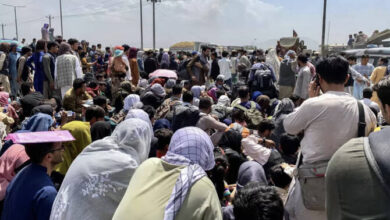
What happened in Dhaka on August 5 is exactly what happened in Syria. Hearing the news of Hasina’s escape, the general public came out of their homes. The entire capital, including Ganabhaban, Parliament House and the Prime Minister’s residence, was filled with the noise of people. People have happily distributed roses to the army.
Like Dhaka, the Syrian presidential palace has also been taken over by the general public. Bashar’s pictures have been removed from everywhere. Women have also come down on the streets with flowers. They have even been seen standing on army tanks and cheering. The Syrians are beating drums in triumph over the fall of the dictatorship. This is like the joy of Eid.


2 Comments