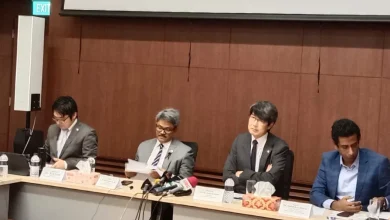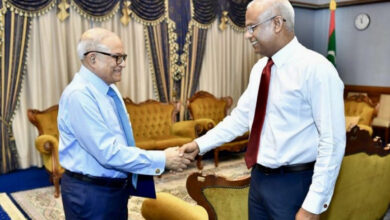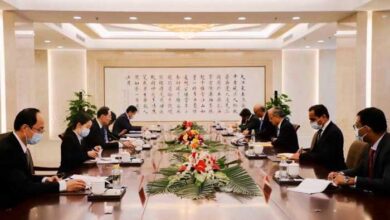
The image shows State Minister Md Shahriar Alam and Japanese Ambassador Iwama Kiminori at a roundtable meeting in Dhaka on Saturday, August 26, 2023. Photo: Nurul Islam Hasib/Dhaka Tribune
Dhaka: Japanese Ambassador to Bangladesh Iwama Kiminori on Saturday said Bangladesh was elected one of the four candidate countries of the newly established Official Security Assistance (OSA) to deepen military ties following Prime Minister Sheikh Hasina’s epoch-making visit to Tokyo in April.
“This shows how much importance Japan attaches to Bangladesh,” he said while speaking at a roundtable on materializing Japan-Bangladesh strategic partnership: diplomatic, economic, and people-to-people relations at the embassy in Dhaka.
The Pan-Asia Research Institute (PARI), a new Japan-based think tank, organized the roundtable with State Minister for Foreign Affairs Md Shahriar Alam as the chief guest.
Bangladesh and Japan relations witnessed a significant jump in the last decade. In 2014, during the visit of Japanese Prime Minister Shinzo Abe, it was elevated to a comprehensive partnership level. During Prime Minister Sheikh Hasina’s visit this April, the partnership was elevated further to strategic level.
Economic cooperation, cultural cooperation, and peace and stability are the main components of the strategic partnership.
The ambassador said for peace and stability, Japan established the cooperation framework styled OSA for the benefit of armed forces and the regional organizations of like-minded countries.
In addition to that, he said, they had started the negotiations with Bangladesh on an agreement concerning the ‘Transfer of Defence Equipment and Technology’. The discussion is going on in a positive manner, he said.
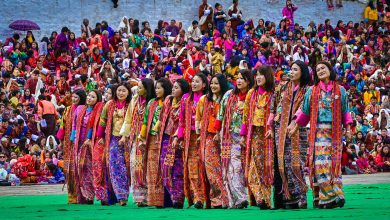
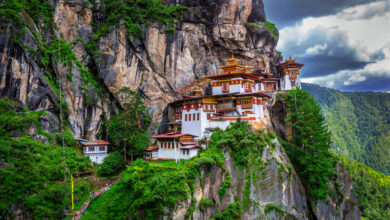
Thimphu: Bhutan is a country of festivals. In fact, it is our festivals that attract thousands of tourists every year, while maintaining a sustainable tourism model. And the figures are only expected to go up as Bhutan is welcoming tourists again after the lockdowns. Attending festivals are a great way to understand a country’s culture and history. In this article, we will explore some of the festivals you can attend while visiting Bhutan this summer
Haa Summer Festival: The Haa Summer Festival is a vibrant lively event with religious performances, unique Bhutanese local cuisine, local Bhutanese alcoholic drink Ara, and traditional sports. It gives insight into the lives and traditions of Bhutan’s nomadic herders. Expect a glimpse of Bhutanese culture through its songs, folk dances, artefacts, and religious performances. You can also see alpine flowers. a You can enjoy the hospitality of the local people of Haa Valley. This Festival takes place in July.
Paro Tshechu Festival
Paro Tshechu Festival: This is probably one of the most prominent festivals of Bhutan. Monks wear masks which represent the deities, re-enact and replay the scenes from legendary tales and historical anecdotes. But the showstopper of the festival is the moment when people get to see a glimpse of 350 years old Thangkha, which is one of the oldest Buddhist religious scrolls. It has narratives from history, celebrating the high deeds of Guru Rimpoche. This festival takes place in Paro, the city with an international airport, in the month of April.
Matsutake Festival
Matsutake Festival: This annual festival is one of the famous harvest festivals of Bhutan and is a celebration marked by the locals of Ura Valley during the mushroom season. This festival observes the celebration of this legendary mushroom harvesting. During this festival, the locals make delicious delicacies and the visitors can get a peek at the lifestyle of the locals which helps them form a deeper connection. This festival celebration includes a mushroom-picking excursion and getting a glimpse of the panoramic forests. This festival takes place in the month of August.
Sakteng Festival: The Sakteng Festival is an annual celebration which takes place in the Sakteng Valley located at an altitude of 3000 meters. This valley is located on the eastern side of Bhutan and it is home to semi-nomads who are known as the semi-nomads named ‘Brokpas.’ This valley has still not been touched by modernity, and sometimes it is really difficult to reach there. But this three-day festival is worth experiencing. Watching Yak dance can be a great experience.
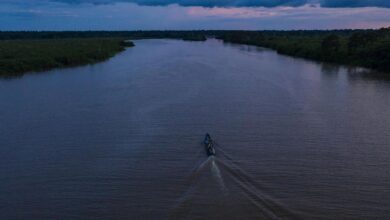
Datem del Marañon, located in northern Peru, is home to one of the largest and most biodiverse peatlands not only in Peru, but in the entire world. Spanning more than 3.8 million hectares, this remote province is home to a diverse ecosystem with more than 261 species of birds, unique marine life, and aguaje, one of the most abundant palm trees in South America.
For hundreds of years, the Amazonian people have understood that to live in kinship with nature, they must listen to it with respect and admiration. Climate change has caused profound impacts on the region, with frequent droughts, flooding, heatwaves, and changes in primary productivity, affecting indigenous people and their native land.
The Datem del Marañon project (hereafter Project) is currently being implemented by Profonanpe, the Environmental Fund of Peru, a GCF direct access entity, and the first organisation approved for funding by the GCF Board in 2015. This USD 9.1 million Project helps indigenous communities in this northern Peruvian province manage their wetland resources in ways that avoids deforestation and the large-scale release of greenhouse gases stored in local peatlands.
While peatlands cover only three to five per cent of the Earth’s surface, they are key in addressing climate change, estimating to hold more than 39 per cent of the planet’s carbon stocks.
Indigenous engagement and local support are core values of the project and necessary in mitigating the effects of climate change in the region. In Musa Karusha, a native community in the Datem del Marañon province, fishing is considered a traditional and ancestral communal activity, a sustainable means of living, and an essential protein of the native diet.
Gunter Yandari, President of the Association of Katinbaschi Artisanal Fishermen, leads the commercialisation of artisanal fresh fish, which requires ice to be frozen and transported to other parts of the region. Unpredictable weather, a lack of cooling facilities, and expensive transportation costs causes him to loose up to 30 per cent of his hard-earned production. In response to this, the Project supported the installation of 120 solar panels to power an ice production plant.
To reduce the effects of greenhouse gasses, ice is now being manufactured using solar energy, and the water used for ice is purified with a carbon filter. With 500 kilograms of ice produced every eight hours, families can preserve up to 500 kilograms of fish and then sell the ice produced. The fish are stored in isothermal boxes to keep the fish fresh while being transported by boat.
Thanks to this investment, Gunter and his community have increased their earnings without overexploiting their lakes, producing 133,400 kilos of ice and selling 123,000 kilos of fish valued at USD 17,000, to date.
The project also contributes to workshops focusing on the nutritional information of the fish, sustainable processes, and best practices. The training allows Gunter and other fisherman to better compete in the local market while complementing their traditional knowledge and conservation practices.
Gunter Yandari, President of the Association of Katinbaschi Artisanal Fishermen, stands between the 120 solar panels installed to power ice production. Photo: Profonanpe
In the native community of Puerto Díaz, the Project is enhancing the climate resilience and livelihoods of indigenous people by investing in sustainable methods of harvesting the aguaje palm tree.
The aguaje is home to a unique and complex fauna, most of its mammals and birds feed directly on their fruits and the water released by the roots transports nutrients to water bodies and fish. A single species plays a fundamental role in the structure of almost 4 million hectares of Amazon peatlands.
Segundo Chanchari, an aguaje palm tree escalation technician now uses safe, and internationally compliant climbing equipment to collect the fruit using a zero-waste approach. The technique allows Segundo and his community to harvest between 20 and 30 aguaje palm trees per day.
Segundo recounts that his ancestors used to cut down around 50 to 100 trees per day. However, now the project is directly helping local communities preserve the precious aguaje palm tree and its numerous benefits including removing carbon from the atmosphere and storing it in swamp soil. In helping to regulate the planet’s climate and to avoid catastrophe, these wetlands must be conserved and protected.
The sustainable harvesting of aguaje has led to a circular and economically viable bio-business as the oil is sold globally in food ingredients, hair and skin products. In the native community of Chapis, Apuapisem, an Awajún association has received an international organic certification to produce aguaje oils resulting in 385 kilograms of oil sold in 2022, earning the community more than USD 20,000.
The Project funding continues to support government departments, indigenous people, and community-based organisations in land-use planning, management of the region’s wetlands, and commercial bio-businesses.
In 13 December 2023, Bhutan will quit the club of world’s poorest countries, becoming only the seventh nation to graduate from the band of Least Developed Countries (LDC) set up by the United Nations (UN) in 1971.
“We are taking it with a lot of honour and pride. We are not nervous,” Bhutan’s Prime Minister Lotay Tshering told news agency AFP at the LDC summit that took place in Doha last week.
So, how did the Himalayan kingdom achieve this feat? And what will such a move mean for the country?
How Did Bhutan Graduate From the List?
According to local news reports, Bhutan first fulfilled the requirements for graduation eight years ago – in 2015, and then again in 2018. Bhutan was, therefore, scheduled to graduate in 2021.
However, the UN viewed Bhutan’s request to match the effective graduation date with the conclusion of the nation’s 12th national development plan in 2023 as a legitimate request, and thus, postponed the delisting.
Hydroelectric power production, forestry, and agriculture, are the primary sectors. According to the UN, the country saw a robust economic growth over the decade between 2010 and 2019 with more than 5 percent average annual GDP growth. This growth has also translated into substantial reductions in poverty.
Miuvaan, on Sunday, confirmed to Sun that President Solih and Maumoon will meet sometime today. However, he disclosed no further details.
President Solih’s plan is to contest this year’s election through a coalition comprising of many political parties. In this regard, he had extended an invitation to political parties in the incumbent government coalition to continue the existing coalition for this year’s election. Maumoon’s Maldives Reform Movement (MRM) has yet to make a decision regarding the invitation.
MRM, in an earlier statement regarding President Solih’s invitation, said a decision will be made upon Maumoon’s return to the Maldives. Maumoon returned to Maldives after approximately two months abroad last week.
So far, only Adhaalath Party, which is included in the current government coalition, and Maldives Development Alliance (MDA), which has previously been an opposition party, have only agreed to form coalitions with President Solih.
Jumhoory Party (JP), included in the current government coalition, last week decided to contest this year’s presidential election independently. The party, in this trajectory, has now opened applications for its presidential primary.
MDP’s leader, Parliament Speaker Mohamed Nasheed who lost the party’s presidential primary to President Solih, has stated he would not back President Solih in the election. He has been working to work alongside JP for the elections.
It their bid to review bilateral relations, Pakistan and China have agreed to expand and reinforce security and political cooperation, bilateral trade, economic and financial cooperation, tourism, cultural exchanges, and people-to-people ties, the Foreign Office said in a statement released on Sunday.
The development came when the two countries met during the third round of the Pakistan-China Bilateral Political Consultations (BPC) — which is a regular institutional mechanism between both countries — held in Beijing on March 18.
The Pakistani delegation was led by Foreign Secretary Dr Asad Majeed Khan, while Vice Foreign Minister Sun Weidong headed the Chinese side.
Pakistan and China, according to FO, will also enhance high-level engagements and dialogue mechanisms and make the channels of communication even more robust.
Noting the completion of a decade of the China-Pakistan Economic Corridor (CPEC), the two sides reaffirmed their commitment to CPEC which remains a major pillar of bilateral cooperation and a symbol of ever-deepening friendship between the two countries.
They also agreed to remain engaged in the expansion of CPEC including the participation of third parties to enhance regional connectivity and cooperation.
Dr Majeed thanked the Chinese side for its consistent and generous support for the economic stability of Pakistan and the humanitarian assistance provided to the country during last year’s devastating floods. Meanwhile, Sun reaffirmed China’s support for Pakistan’s sovereignty, territorial integrity and economic security.
“The two sides exchanged views on a range of regional and global issues of mutual interest and expressed satisfaction over their close cooperation and engagement on important regional developments including in Afghanistan,” the statement read.
It added that Pakistan and China will further strengthen dialogue and cooperation in multilateral platforms.
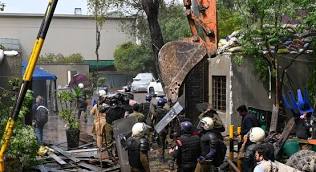
Pakistani police entered the property of the former prime minister Imran Khan in Lahore, officials from his political party said, as he was due to appear in court in the capital, Islamabad on Saturday.
The move followed days of standoff and clashes between police and his supporters around the property, where police had attempted to arrest Khan on Tuesday.
Khan was to address charges in the Islamabad court of unlawfully selling state gifts given to him by foreign dignitaries while in office.
Hours earlier at his home in Lahore, the former cricketer told Reuters he had formed a committee to lead his party if he was arrested.
He has led nationwide protests after he was ousted from power last year and a spate of cases have been registered against him.
Khan, who was shot and wounded while campaigning in November, said in an interview the threat to his life was greater than before and added – without providing evidence – that his political opponents and the military want to block him from standing in elections later this year.
The military and government did not immediately respond to requests for comment.
Security was tight around the judicial complex where Khan, 70, was heading in a motorcade surrounded by supporters.
The court previously issued arrest warrants for Khan in the case as he had failed to appear on previous hearings despite summons.
On his assurance that he would appear on Saturday, the court granted Khan protection against arrest, but he said he feared that the police and government planned to take him into custody.
“It is now clear that, despite my having gotten bail in all my cases, the [Pakistan Democratic Movement coalition] govt intends to arrest me. Despite knowing their malafide intentions, I am proceeding to Islamabad & the court [because] I believe in rule of law,” Khan tweeted.
“It is also obvious now that the entire siege of Lahore was not about ensuring I appear before the court in a case but was intended to take me away to prison so that I am unable to lead our election campaign.”
Pakistan’s information minister said this week the government had nothing to do with the police action and that the police were complying with court orders.
The case to be heard on Saturday pertains to charges that Khan sold luxury watches and other items given to the state during his 2018-22 term as prime minister.
There were reports of fresh clashes between police and supporters of Khan and his party, the Pakistan Tehreek-e-Insaf (PTI), in Lahore.
The Punjab information minister, Amir Mir, told Reuters that police had arrived outside Khan’s house to collect evidence about attacks on police and people wanted in various cases.
“When police arrived, the PTI activists tried to stop them by pelting stones and baton attacks. In retaliation, police arrested many of them. Police had already informed the PTI leadership about the evidence collection process,” Mir said.
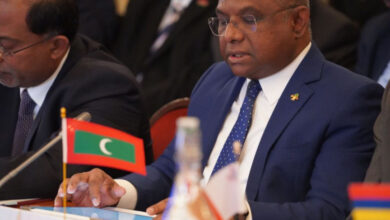
Maldivian Foreign Minister Abdulla Shahid has called for greater support within the Commonwealth towards areas including good governance.
He made the appeal while speaking at the 22nd Commonwealth Foreign Affairs Ministers Meeting held at Marlborough House, London, on Wednesday.
The meeting brought together foreign ministers from across the Commonwealth to deliberate on and hold an interactive discussion on three topics: “building resilience for peaceful, just and stable societies”, financing for climate-resilient and sustainable development”, and “leveraging intra-Commonwealth trade and digital connectivity”.
At the start of deliberations, Shahid took the opportunity to offer condolences on the passing of Queen Elizabeth II, Gambian Vice President Badara Alieu Joof, and Ghanian Foreign Minister Michael Moussa Adamo. He also expressed confidence in King Charles III’s commitment to further strengthening the Commonwealth.
Shahid called for strengthened support within the Commonwealth towards areas including good governance, rule of law, stability, economic recovery and relieving debt burdens.
He stressed the need to finalize the Multidimensional Vulnerability Index (MVI) and called on the Commonwealth to push international financial institutions to adopt the MVI.
Highlighting on the subject of climate change and environmental protection, Shahid acknowledged the role played by the various Commonwealth mechanisms in place to support its member states, including the Commonwealth Living Lands Charter, Commonwealth Blue Charter and the Commonwealth Climate Finance Access Hub.
He also called for the operationalization of the Loss and Damage Fund in the lead up to COP28.
Shahid also met and interacted with a number of Commonwealth foreign ministers on the sidelines of the meeting.
Shahid was accompanied by the Foreign Secretary, Ahmed Latheef; High Commissioner of Maldives to the UK, Dr. Farahanaz Faizal; Joint Secretary at the Foreign Ministry, Mariyam Midhfa Naeem; Counsellor at the High Commission of Maldives to the UK, Moosa Yameen Shahid; and Director at the Foreign Ministry, Ahmed Salman Zaki.
The Bhutanese government should revoke the convictions of several dozen political prisoners who have been jailed for decades following unfair trials and alleged torture and release them, Human Rights Watch said on Tuesday.
Bhutanese courts have convicted and imposed long sentences on peaceful political and anti-discrimination activists and others arrested for a range of alleged national security offenses.
While the total number of political prisoners in Bhutan remains unknown, Human Rights Watch said it collected information relating to 37 current prisoners who were first detained between 1990 and 2010.
Most of them are held separately from other inmates, in poor conditions, with many suffering physical or psychosocial (mental health) ailments, and are denied regular communication with their families.
The cases originate from before 2008, when Bhutan transitioned from an absolute monarchy to a constitutional one, the rights body noted, adding those still imprisoned face long sentences, including life in prison.
Bhutanese activists have appealed to King Jigme Khesar Namgyel Wangchuck to grant amnesty to these prisoners.
“Bhutan’s publicly promoted principle of ‘Gross National Happiness’ doesn’t account for these wrongfully convicted political prisoners who have been behind bars for decades,” said Meenakshi Ganguly, South Asia director at Human Rights Watch, in a statement. “The Bhutanese authorities should recognise the harm done to these long-serving prisoners and their families and urgently remedy the situation.”
The vast majority of this group—32 prisoners—belongs to Bhutan’s Nepali-speaking Lhotshampa community, which has faced decades of discrimination and abuse from the Bhutanese government.
In the early 1990s, over 90,000 Lhotshampas were forced to live as refugees in Nepal, following a crisis precipitated by discriminatory laws, disputed citizenship regulations, and widespread abuses by Bhutan’s security forces. Most of the refugees have since been resettled in the United States, Canada, and Australia.
“Most of these inmates, who are officially considered ‘political prisoners,’ were convicted under the draconian and vaguely worded 1992 National Security Act,” the HRW said. “The Bhutanese law defines a political prisoner as ‘any person convicted for conspiring, attempting, soliciting, abetting or committing offenses against the Tsa-Wa-Sum (king, country and people)’.”
In all 37 cases identified by Human Rights Watch, this is the primary allegation that led to their conviction. At least 24 are serving life sentences without the possibility of parole, while the remainder are serving terms of between 15 and 43 years.
Former and current prisoners, and relatives of prisoners, said that the authorities severely tortured detainees both to extract confessions and to punish them, and that they had no legal representation at their trials.
“The physical torture [in custody] was merciless, so we had no option but to present ourselves to the court based on their [security forces] demands and their statements,” the HRW quoted a prisoner convicted of treason and terrorism as saying. “Then the district court declared a sentence of life imprisonment for us. We weren’t given any legal help.”
Many families of prisoners said that they have not been provided with any official documentation and still do not know why their relatives were convicted. Former prisoners were also sometimes unable to describe in common or legal terms the offense for which they themselves were convicted and for which they had served long sentences.
Dambar Singh Pulami, for one, was arrested in 2001 when he returned to Bhutan from a refugee camp in Nepal to “see his property,” activists said.
He was sentenced to 43 years in prison for “extortion, kidnapping, murder and subversive activities.” He suffers from severe ill-health, which caused him to be hospitalised in May 2022.
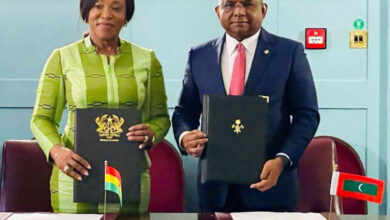
The governments of Maldives and Ghana, on Wednesday, has executed a Memorandum of Understanding (MoU) on mutual visa exemption. Two key agreements were executed between both governments during a special ceremony held at the Marlborough House in London on the sidelines of the Commonwealth Foreign Affairs Ministers Meeting in London. Maldives was represented by Maldivian Foreign Minister Abdulla Shahid during the signing while Ghana was represented by Ghanaian Foreign Minister Shirley Ayorkor Botchwey.
The details of the agreements are as follows;
Agreement between the Government of Maldives and the Government of Ghana on Mutual Exemption of Visa Requirements for their Respective Nationals
Memorandum of Understanding between the Maldivian Foreign Ministry and Ghanaian Foreign Minister on Political Consultation
Maldivian Foreign Ministry described the agreements executed on Wednesday as a step towards closer bilateral exchange between Ghana and Maldives through periodic consultations between the foreign ministries of both nations and increased people-to-people contact facilitated through mutual exemption of visa.
Maldives and Ghana established diplomatic relations on August 10, 1989.