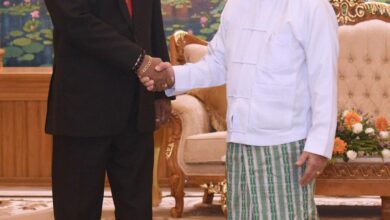
Sri Lanka’s Defence Secretary, General Kamal Gunaratne, called on Myanmar Prime Minister Min Aung Hlaing at the Prime Minister’s office, and requested assistance in rescuing the captive Sri Lankans
Colombo: Sri Lanka has urged Myanmar to facilitate the rescue of the group of Sri Lankans held captive for forced criminal activities at a camp in the cyber criminal area operated by a terrorist group in Myanmar.
In December last year, it was reported that a group of 56 Sri Lankans had been brought to Thailand for jobs related to the IT industry and instead they had been held captive in a camp in the cyber criminal area operated by a terrorist group in Myanmar. In April this year, eight Sri Lankans rescued from this cyber scam trafficking were safely repatriated to Sri Lanka.
Sri Lanka’s Defence Secretary, General Kamal Gunaratne, called on Myanmar Prime Minister Min Aung Hlaing at the Prime Minister’s office, and requested assistance in rescuing the captive Sri Lankans. The Prime Minister emphasized the Myanmar government’s commitment to cooperating with Sri Lankan officials and prioritising the resolution of this issue.
The Defence Secretary met the Myanmar Prime Minister on the sidelines of the 4th meeting of the BIMSTEC National Security Chiefs. During the meeting, they discussed friendly relations between the two countries, bilateral cooperation in diplomatic relations and religious affairs, the exchange of trainees and enhanced cooperation.
The Defence Secretary was accompanied by the Ambassador of Sri Lanka to Myanmar Ms. Prabashini Ponnamperuma and Wing Commander Nuwan Medagama from the Ministry of Defence, Sri Lanka.
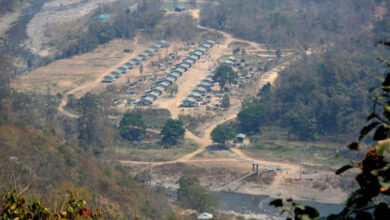
A general view of a camp of the Myanmar ethnic rebel group Chin National Front is seen on the Myanmar side of the India-Myanmar border close to the Indian village of Farkawn in the northeastern state of Mizoram, India, March 13, 2021. Picture taken 13 March 2021. Photo: REUTERS
Dhaka: The Arakan Army has captured 10 more junta camps in Maungdaw, Rakhine State, within less than two weeks, resulting in the deaths of approximately 200 junta troops, including a strategic commander, according to reports from the ethnic army.
Targeting junta military camps and border guard police positions, the ethnic army seized northern Maungdaw last month and launched a large-scale attack on Maungdaw town in late May after capturing Buthidaung town. Both towns are located in northeastern Rakhine State near the Bangladesh border, where the population is predominantly Rohingya.
In an announcement on Friday, the Arakan Army stated it had seized four more junta camps this week, including the Mawyawaddy tactical command base and Na Khaung To camp on Thursday, reports The Irrawaddy.
During the battles, Colonel Tayzar Htay, the strategic commander of Mawyawaddy, and about 200 junta troops were killed. The Arakan Army also captured the well-known junta camp Ah Lel Than Kyaw, located at an entry point to the township, on Wednesday night following an afternoon attack on the camp. Approximately 200 junta soldiers and border guard personnel were at the camp before many reportedly retreated to other bases.
The junta’s military utilised airstrikes and artillery shelling to defend both Ah Lel Than Kyaw camp and the Mawyawaddy tactical command base.
In the first week of this month, the Arakan Army captured six junta bases, including Border Guard Police Battalion No. 9 near Myint Lut village on the Maungdaw-Agnumaw Road and the headquarters of Border Guard Police Battalion No. 6 in Inn Din village, where Myanmar military soldiers massacred 10 Rohingya people in 2017. The ethnic army announced its intent to continue targeting junta positions in Maungdaw, Ann, and Thandwe townships. Ann is in central Rakhine, and Thandwe is in the southern part of the state.
On Friday, the Arakan Army also reported taking more prisoners of war and continues searching for junta troops who fled instead of surrendering. At least 28 more defeated junta troops fled across the border to Bangladesh from Maungdaw, according to Bangladeshi officials on Thursday. This latest influx occurred just days after over 130 Myanmar security personnel and their family members, who had previously fled the fighting, were repatriated from Bangladesh last Sunday.
Since launching an offensive against junta positions in Rakhine State in November of last year, the Arakan Army has taken control of more than half of the state—nine out of its 17 townships—and has also gained control of the neighboring Paletwa Township in Chin State.
Rakhine, Myanmar’s westernmost state, is situated on the western fringe of Southeast Asia. It faces the Bay of Bengal and is separated from the rest of Myanmar by a range of mountains on its eastern border.
Members of ethnic armed groups continue to claim more territory in northern Myanmar [File: The Kokang via AP Photo]
Ethnic armed groups fighting to restore civilian rule in Myanmar have claimed new territory in the country’s northwest near the border with India, amid an escalating offensive against the military regime.
Fighters in Chin state reportedly took control of two military outposts on the border of India’s Mizoram state after hours-long battles on Monday, according to local media outlets.
Fighting was taking place across Rakhine, according to two residents and a spokesperson for the Arakan Army (AA), a group fighting for greater autonomy that has seized military posts in Rathedaung and Minbya towns.
A Rathedaung resident told Reuters on Tuesday the area came under artillery fire overnight and that the military had entered the town.
“Artillery fell on a street in Rathedaung town last night. No immediate report of injured or casualties yet,” said the resident, who asked not to be identified.
“People have started fleeing the town. Soldiers are in the town now.”
Despite its brutal history of communal violence and the 2017 military crackdown on the mostly Muslim Rohingya, Rakhine emerged as one of the more peaceful parts of the country after the coup, thanks to an informal ceasefire between the AA and the military agreed just a few months before.
The arrangement began to break down by November 2021, as the AA entrenched its political control over the state.
The AA was established in 2009 to push for self-determination within Myanmar and mostly represents ethnic Rakhine Buddhists, who make up the majority of the state’s population.
Many of the country’s other ethnic armed groups have been fighting the military for decades.
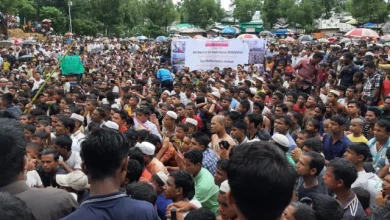
The Rohingyas hold a peaceful rally demanding justice for the genocide in Myanmar in 2017 and five-point demands including dignified repatriation with full civil rights in their own homes in Cox’s Bazar on Friday, August 25, 2023. Photo: Dhaka Tribune
Cox’sbazar: Thousands of Rohingya refugees rallied at camps in Bangladesh to demand their safe return to Myanmar on the sixth anniversary of the violence that drove them from their homes.
Bangladesh is home to around a million members of the stateless minority, most of whom fled the 2017 military crackdown now subject to a genocide probe at the International Criminal Court.
About 730,000 fled Myanmar following the 2017 crackdown and living in different countries in refugee camps.
Frustration is widespread over rampant lawlessness in the refugee settlements, along with cuts to international humanitarian aid and the lack of progress in a much-hyped repatriation deal.
“We demand citizenship back from Myanmar. It’s nothing new, we were and are the citizens of Myanmar,” Kamal Hussain, a Rohingya community leader, told the AFP news agency on Friday.
“They are slowly trying to wipe out our name from the history of Myanmar.”
Several protests were staged across the sprawling patchwork of settlements near the Myanmar border despite monsoon downpours.
Around 10,000 refugees were present at the largest one, according to the Armed Police Battalion, which is tasked with maintaining security in the camps.
“We have insecurity and increasing frustration here,” refugee Mohammad Imran, 19, said. “We want to go back home with our full rights.”
The Rohingyas hold a peaceful rally demanding justice for the genocide in Myanmar in 2017 and five-point demands including dignified repatriation with full civil rights in their own homes in Cox’s Bazar on Friday, August 25, 2023.
Deepening hardships
Budget cuts forced the UN World Food Programme to steeply reduce humanitarian aid to the Rohingya camps this year, with rations now $8 per refugee, per month.
Malnutrition was already rampant among the refugee population and rights groups say the cuts have deepened existing hardships.
Violence has continued to plague the camps, which are home to armed groups and are used as staging posts for regional drug trafficking networks.
Dozens have been killed in Rohingya camp clashes so far this year, including women and children.
“As humanitarian conditions in the world’s largest refugee settlement worsen… the challenges surrounding this protracted crisis continue to increase,” the UN refugee agency said in a statement this week.
Bangladesh and Myanmar are working on a pilot programme to begin returning the Rohingya to their homes, despite concerns from rights groups who say conditions are not safe for their return.
Widely viewed as interlopers from Bangladesh, Rohingya who remain in Myanmar are denied citizenship and access to healthcare, and require permission to travel outside of their townships.
Myanmar junta chief Min Aung Hlaing — who was head of the army during the crackdown — has dismissed the term Rohingya as “imaginary”.
Bangladesh has repeatedly said any repatriation would be voluntary.
The pilot scheme has not begun, and Bangladesh refugee commissioner Mizanur Rahman told AFP his country was still working out details with Myanmar authorities.
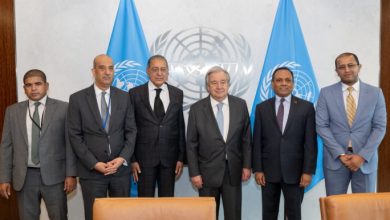
Dhaka: Permanent Representative of Bangladesh to the United Nations in New York Ambassador Muhammad Abdul Muhith has said they deeply condemn the repeated incidents of the public burning of Holy Quran in a few countries as they insult the sacred values of Muslims worldwide.
He met the UN Secretary-General António Guterres today at his office in his capacity as the Acting Chair of the OIC CFM.
He was accompanied by representatives of other OIC countries including Egypt, the Kingdom of Saudi Arabia, Mauritania and Pakistan.
During the meeting, Ambassador Muhith told the secretary-general that such despicable acts of Holy Quran’s desecration not only inflames the sentiments of Muslims worldwide but also goes against the principles of freedom of expression, religious tolerance and individual beliefs.
He further stated that inaction against this form of religious hatred may lead to incitement of violence and thus destabilize the peace and security in many countries.
In this context, he also referred to the case of Rohingya Muslims who were forced to take shelter in Bangladesh owing to the consequences of religious and ethnic hatred in Myanmar.
Muhith urged the UN secretary general to request all UN member states to take appropriate legal measures at the national level to combat religious intolerance including Islamophobia, hate speech and desecration of Holy Quran and other religious symbols.
Secretary-General Guterres expressed his solidarity with the OIC members and strongly condemned this heinous act of religious hatred.
He also assured the OIC representatives that he would do his best in his capacity as the UN secretary-general to support the global efforts in preventing the recurrence of such anti-religious hatred in future.
Earlier led by Ambassador Muhith, OIC representatives called on the President of the General Assembly Csaba Kőrösi on 14th July and President of the Security Council for the month of July Ambassador Dame Barbara Woodward on 20th July to express the similar concerns.
Foreign Minister Dr AK Abdul Momen sought stronger support from Asean leaders to ensure safe and voluntary repatriation of Rohingyas
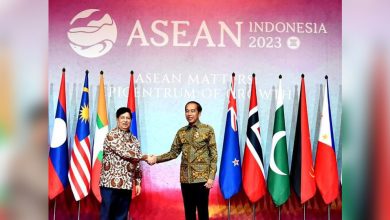
Jakarta : Bangladesh has once again pushed the Asean to take the country as a “sectoral dialogue partner”.
Foreign Minister Dr AK Abdul Momen urged the Asean member states “to provide active support to Bangladesh’s candidacy for attaining Sectoral Dialogue Partner status by the next Asean Summit”, the foreign ministry said on Saturday.
Dr Momen was speaking at the 30th Asean Regional Forum (ARF) in Jakarta.
He sought stronger and more effective support of Asean leaders and ARF member states to ensure safe, sustainable, dignified and voluntary return of Rohingyas to their homeland.
The Association of Southeast Asian Nations, or Asean, was established on August 8, 1967 in Bangkok.
Indonesia, Malaysia, Philippines, Singapore, Thailand, Brunei Darussalam, Viet Nam, Lao PDR, Myanmar, and Cambodia are the ten Member States of Asean.
For external engagement, to date, Asean has established Dialogue Partnerships with Australia, Canada, China, European Union, India, Japan, New Zealand, Republic of Korea, Russian Federation, United Kingdom and the United States.
Foreign Minister Dr AK Abdul Momen sought stronger support from Asean leaders to ensure safe and voluntary repatriation of Rohingyas
The Sectoral Dialogue Partnerships include Brazil, Norway, Pakistan, Switzerland, Türkiye, and United Arab Emirates.
Development partners include Chile, France, Germany and Italy.
Bangladesh has been seeking to be a partner of the sectoral dialogue format.
Appreciating this year’s theme, “Asean Matters: Epicentrum of Growth”, the foreign minister acknowledged strong and effective commitment of Asean for strengthening regionalism and multilateralism as well as Asean centrality in furthering confidence building through constructive dialogue.
While presenting an overview of Bangladesh’s socio-economic development over the last decade, he highlighted effective Covid management, Disaster Risk Reduction, investment in sustainable infrastructure, contribution in UN peace keeping operation.
He also cited Indo-Pacific Outlook (IPO) of Bangladesh emphasizing the peace-centric foreign policy of Bangladesh, based on Father of the Nation Bangabandhu Sheikh Mujibur Rahman’s dictum “friendship to all, malice towards none”.
In addition, he stressed the necessity of financing and technology transfer for effectively graduating from LDC, attaining SDGs, becoming a knowledge-based advanced economy and building a prosperous and climate-resilient delta in time.
He reiterated Bangladesh’s commitment and continued support to ARF activities aimed at collective security, peace and shared prosperity.
The meeting concluded by adopting seven outcome documents including:
1. ARF Statement on the Commemoration of 30 Years of the ARF
2. Statement of the 30th ASEAN Regional Forum on Strengthening Maritime Non- Traditional Security Cooperation
3. ARF Statement on Nuclear Risk Reduction
4. Guidance on Nuclear Risk Reduction: In Pursuit of a World Without Nuclear Weapons
5. Collection of Documents Commemorating the 30th Anniversary of the ASEAN Regional Forum
6. ARF Work Plan for Counter-Terrorism and Transnational Crime 2023-2025
7. Concept Paper on the Establishment of an Expert Group on Ferry Safety
Burma’s abundant natural resources have garnered significant interest from various foreign investors and governments, including those from China, India, Thailand, and Japan, who are keen on ensuring access to energy and raw materials.
Dhaka: Burma, also known as Myanmar, is a Southeast Asian nation that has garnered attention in the media due to its current political situation. Nevertheless, the country’s advantageous geographical position and abundant natural resources contribute significantly to its influential role in the region’s geopolitical and geoeconomic dynamics. In this article, we will examine the importance of Burma within the regional and global context, the various conflicts and challenges it encounters, and its strategic positioning in relation to neighbouring countries and other major powers.
Historical background of Burma’s geopolitical and geoeconomic significance
The country enjoys a strategic location between China and India, two prominent nations in terms of population and influence, and benefits from its access to the Indian Ocean and the Bay of Bengal. Burma is fortunate to possess a wide range of natural resources, including oil, gas, timber, jade, and gemstones, which have garnered significant attention and investment from foreign entities. Nevertheless, Burma has encountered a range of complex circumstances and disputes throughout its historical journey, including periods of colonial rule by the British, struggles for independence, instances of military coups, ethnic insurgencies, civil conflicts, concerns regarding human rights, and movements advocating for democratic principles.
The ethnic insurgencies have been ongoing since 1948 and have primarily revolved around the aspirations of different ethnic groups for self-determination, autonomy, or federalism. A few notable ethnic armed organizations (EAOs) consist of the Kachin Independence Army (KIA), the Karen National Union (KNU), the Shan State Army (SSA), and the Arakan Army (AA). These groups have engaged in conflicts with the central government and its armed forces, the Tatmadaw, as well as occasionally experiencing internal disagreements. The recent change in leadership in 2021 led to a series of protests and received international attention, resulting in unfortunate instances of violence and humanitarian challenges. Burma’s complex history has played a significant role in shaping its current political, social, and economic situation, as well as its relations with neighbouring countries and the international community.
Democratic resistance fighters escort protesters during a demonstration against the military in Sagaing, Myanmar, on Sept. 7. STR/AFP VIA GETTY IMAGES
Key natural resources of Burma and their impact on its economy and relations with other countries
Natural resources play a crucial role in shaping a country’s economy and its relationships with other nations. Based on the data from the World Factbook, it can be observed that natural gas played a significant role in Burma’s exports in 2017, representing approximately 40% of the total. Additionally, Burma ranked as the 39th largest global producer of natural gas. Burma also had significant coal exports to neighbouring countries, while relying on imports for approximately 90% of its total oil needs.
The extraction of natural resources has, at times, been associated with certain environmental and social challenges, including deforestation, land degradation, water pollution, human rights concerns, and instances of armed conflicts. Burma’s abundant natural resources have garnered significant interest from various foreign investors and governments, including those from China, India, Thailand, and Japan, who are keen on ensuring access to energy and raw materials. Nevertheless, there have been some concerns raised regarding the fair distribution of benefits and the protection of human rights and the environment in the mining sector, which may be attributed to certain aspects such as the lack of transparency, accountability, and regulation. Based on ERIA’s findings, it is noted that Burma’s total primary energy supply amounted to 20.12 million tonnes of oil equivalent in 2017. Additionally, the country’s GDP per capita was recorded at $1,300 in 2015. The country has carefully devised a sustainable development plan with the aim of achieving an average annual growth rate of 7.0% in GDP from 2018 to 2030.
Major conflicts and challenges facing Burma, both internally and externally
Burma is currently navigating through a range of significant conflicts and challenges, both within its borders and beyond. These may include:
The ongoing conflict between the military (Tatmadaw) and ethnic armed groups has been persisting for a significant period of time, leading to the unfortunate displacement of a large number of individuals. The coup in 2021 has further complicated the conflict, as the Tatmadaw has taken measures to address dissent and armed opposition groups.
Rohingya refugees help each other after crossing the Bangladesh-Myanmar border. Mohammad Ponir Hossain/Reuters
The Rohingya are a Muslim minority group who have faced challenges in their relationship with the Burmese government over the years. The recent political events have unfortunately had a negative impact on the Rohingya community, leading to increased marginalization. Disturbing reports have also emerged regarding incidents of violence, including mass killings and displacement.
The COVID-19 pandemic has had a significant impact on Burma, affecting both the health and the economy of the country. There have been some concerns raised regarding the government’s management of the pandemic, and there have been reports indicating potential challenges in ensuring sufficient availability of food, medicine, and other essential supplies.
The challenges of poverty and inequality. Burma faces economic challenges and experiences varying levels of inequality within its society. The coup has had a significant impact on these issues, as it has led to a contraction in the economy and unfortunately resulted in job losses for many individuals.
Burma is currently grappling with several environmental challenges, which encompass issues such as deforestation, soil erosion, and climate change. These challenges are adding to the existing issues faced by the country, which presents additional obstacles in the pursuit of development.
These are a few of the significant issues and obstacles currently being encountered in Burma. The country is currently facing a pivotal moment, and the decisions made in the upcoming years will significantly shape its future trajectory.
In addition to the internal challenges, Burma is also currently navigating a range of external challenges, including:
China is one of Burma’s significant trading partners, and there have been concerns raised by some members of the international community regarding the potential influence of its economic ties on the political dynamics in the country. The west holds the view that the recent coup has potentially enhanced China’s influence in Burma, given the increased economic reliance of the country on China.
However, America and other western countries have implemented measures on Burma in response to the recent political developments and concerns regarding human rights. The current sanctions are presenting challenges for the economy and posing obstacles to the country’s recovery efforts.
Rohingya refugees walk after crossing the Naf river from Myanmar into Bangladesh amin the ‘ethnic cleansing’ last summer CREDIT: FRED DUFOUR/ AFP
Interests of Burma’s neighbours
Burma has faced various challenges over the years, including ethnic tensions, political transitions, and concerns related to human rights. The strategic significance of this place is derived from its favourable location, abundant natural resources, and sizable population. Burma has the privilege of sharing borders with China, India, Bangladesh, Thailand, and Laos, which positions it as an important contributor to regional security and connectivity.
Additionally, it possesses a significant amount of oil, gas, minerals, and hydropower potential, which has proven to be appealing to foreign investors and has facilitated increased trade opportunities. Additionally, it is worth noting that the country boasts a significant population of more than 50 million individuals, including a substantial number of young citizens who possess a strong desire for societal transformation.
Burma’s neighbours and other major powers hold diverse perspectives and have varying interests in the country, influenced by their historical connections, geopolitical objectives, and economic prospects. China plays a significant role in Burma’s economy and international relations, being the country’s largest trading partner and investor, while also providing valuable diplomatic support. China views Burma as an important strategic partner, recognizing its potential as a key access point to the Indian Ocean and as a country that helps maintain regional stability in light of India’s influence.
China also has a vested interest in promoting stability and security along its border with Burma, as it faces certain challenges related to armed groups and refugees. China has played a constructive role in facilitating dialogue and offering assistance in addressing certain ethnic conflicts in Burma.
India is one of Burma’s neighbouring countries and has a distinct relationship with China in the region. India recognizes the strategic importance of Burma as a valuable link to Southeast Asia and as a cooperative ally in efforts related to counter-terrorism and maritime security. India also expresses its desire to support the principles of democracy and human rights in Burma, while also prioritizing the well-being and safeguarding the rights of its own ethnic minorities residing along the border. India has been actively engaged in supporting Burma’s democratic transition and development through a range of initiatives, including the Kaladan Multi-Modal Transit Transport Project, the India-Burma-Thailand Trilateral Highway, and the Act East Policy.
Bangladesh, being Burma’s neighbouring country, has experienced certain challenges due to the instability in the region. Bangladesh is currently providing shelter to a significant number of Rohingya refugees who sought safety after experiencing a challenging situation in Burma in 2017. Bangladesh is actively pursuing a peaceful and lasting resolution to the Rohingya crisis, while also emphasizing the importance of collaboration on border management, trade, and connectivity. Bangladesh has been actively involved in fostering dialogue and cooperation with Burma through various channels, including bilateral discussions, regional forums, and international efforts to address the situation.
Thailand has established a strong relationship with Burma, being one of its closest allies in Southeast Asia and maintaining a significant trading partnership as its third-largest trading partner. Thailand and Burma have a border that spans a significant distance, allowing for cultural and familial connections between various ethnic groups. Thailand is fortunate to have a significant number of migrant workers from Burma who make valuable contributions to its economy. Thailand aims to uphold positive relations with both the military and civilian leaders of Burma, while also prioritizing regional integration and development. Thailand has been actively involved in supporting Burma’s peace process and offering valuable humanitarian assistance to those affected by displacement.
Areas of forests under different classifications in Oudomxay.
Laos maintains relatively modest political and economic connections with Burma compared to its other neighbouring countries. Laos is a landlocked country that has established significant trade and investment partnerships with China. The political system of this country shares certain characteristics with Burma’s military regime, as it is a one-party state governed by the Lao People’s Revolutionary Party. The country has shown interest in the situation in Burma and has yet to actively engage in efforts to address it.
There are several other major powers, such as America, Japan, the European Union (EU), Russia, and ASEAN, that have significant interests in Burma. America has expressed concerns regarding Burma’s recent political developments and human rights situation, implementing measures such as sanctions and advocating for a restoration of democratic processes. America also aims to address China’s influence in the region while promoting civil society and media freedom in Burma. Japan has been a significant contributor to Burma’s development as its largest donor and an important economic partner.
It has made substantial investments in various sectors such as infrastructure, energy, and industrial projects. Japan also aims to ensure a harmonious regional dynamic and foster stability and democratic values in Burma, while considering the various roles played by different countries, including China. The EU plays a significant role as a donor and trade partner for Burma, while also actively supporting human rights and democratic reforms. The EU has made the decision to temporarily suspend its trade preferences for Burma and has also implemented sanctions on its military leaders.
Russia has been a significant arms supplier to Burma and has consistently supported its sovereignty at the United Nations Security Council. Russia is also interested in enhancing its presence and influence in Southeast Asia by fostering cooperation with Burma. ASEAN is a regional bloc that has the privilege of including Burma as one of its esteemed members. ASEAN adheres to a policy of respecting the internal affairs of its member states, while also upholding the principles of consensus and consultation. ASEAN has been actively engaged in efforts to foster constructive dialogue among all relevant stakeholders in Burma, while also prioritizing the provision of essential humanitarian assistance.
Salient features of the Burma Act
The Burma Act is a legislation that was enacted by American Congress in 2022 as a component of the National Defense Authorization Act. It seeks to apply additional pressure on the Burmese military junta, which assumed control through a coup in February 2021, and to provide assistance to the people of Burma in their pursuit of democracy, human rights, and justice. The law applies sanctions to individuals and entities who may have been involved in the coup, including senior military leaders, government officials, family members, and associates. The measures involve restricting access to their property and assets, considering visa denials, and implementing limitations on trade and financial interactions with them. The law also imposes certain limitations on trade and financial transactions with Burma’s defense sector and gemstone industry, which are significant contributors to the junta’s revenue. The law provides support for civil society groups, ethnic armed organizations, and initiatives aimed at ensuring accountability for human rights violations.
The law also emphasizes the importance of increased US engagement with regional and international partners to support the restoration of civilian rule and the protection of minority rights in Burma. The law also emphasizes the importance of holding China and Russia accountable for their alleged involvement in supporting the Burmese military, including the provision of arms, jet fuel, and diplomatic assistance.
Remains of a Rohingya village in Rakhine, Myanmar, after the security forces razed it to the ground during the 2017 crackdown. FILE PHOTO: REUTERS
Potential future developments in Burma’s geopolitical and geoeconomic landscape
The recent political events involving the military have caused significant challenges for the nation, leading to protests, instances of violence, sanctions, and international concerns. The future of Burma is closely tied to the responses and actions of different stakeholders, both within the country and from external sources. It will be crucial to work towards a political resolution that can address the current situation.
One potential scenario could involve the military effectively consolidating its power and addressing opposition through various means, such as employing force or engaging with ethnic armed groups and political parties. This could potentially lead to a situation where there may be a decrease in the space available for civil society, media, and human rights, potentially resembling an authoritarian regime.
The military would also aim to safeguard its economic interests and privileges, while actively pursuing stronger partnerships with China, its primary ally and investor. China would potentially find advantages in having a neighboring country that offers stability and amicability, facilitating access to valuable natural resources and markets. Additionally, such a neighbor could serve as a strategic buffer in relation to India and America. However, it is important to consider that this scenario may bring about certain challenges for Burma, including potential isolation from Western nations, potential reduction in foreign aid and investment, potential increase in poverty and inequality, and potential continuation of ethnic conflicts and humanitarian crises.
Another potential scenario involves the military encountering ongoing opposition from the public, who are advocating for the reinstatement of democratic processes and the acknowledgment of the election outcomes from 2020. The civil disobedience movement, spearheaded by the National League for Democracy (NLD) and backed by diverse social groups, intends to persist in organizing peaceful demonstrations, strikes, and boycotts. Additionally, they aim to establish alternative systems of governance and legitimacy.
The international community, including America, the EU, and ASEAN, may consider employing diplomatic, economic, and humanitarian measures to exert pressure on the military. Additionally, they could explore opportunities for dialogue and mediation. It is possible that the military may come to negotiations to facilitate a transition to civilian rule if there is a consensus between the Burmese military, China, opposition groups and the west.
Written by Rajeev Ahmed Geopolitcal Analyst, Strategic Thinker and the Editor at geopolits.com Illustration: Google image search
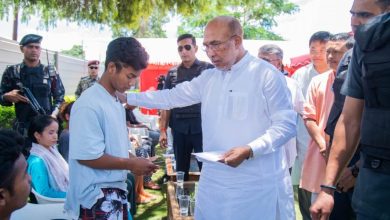
Manipur CM N. Biren Singh. Photo: Twitter/@NBirenSingh
New Delhi: On the day when Manipur chief minister N. Biren Singh announced that he would not resign from post, Biren appears to have engaged in spats with Twitter users who criticised him, calling them “Kukis” and “belonging to Myanmar” and then deleted the tweets.
These exchanges took place on the evening of June 30, Friday, and were deleted soon after. Indian Express has reported that a member of Biren’s social media team denied that the tweets had been written either by him or his team.
In one, he purportedly writes “Are you from India or Myanmar?” to a person whose name is ‘Thang Kuki’ on Twitter and who tells him, “You should have resigned long time ago.”
To another person who tells him that there is a huge population of Meitei people in Burma as well, Biren purportedly says, “Meitei in Myanmar never ask their homeland in Myanmar (sic).”
In reply to another person who asks him to resign as “Manipur is burning for the last 60 days,” Biren’s Twitter handle says, “Don’t bark without knowing the ground realities, mainland will not understand the complexity of Myanmar border Indian state.”
Indian Express has reported on another instance.
When a Twitter user wrote, “At this critical juncture, I wish to clarify that I am now a citizen of Zalengam,” Biren’s account wrote, “Can be in Myanmar.”
Zalengam is a reference to the name for a proposed Kuki nation of Kuki-inhabited territories across countries.
Additionally, Express reported that when a Twitter user said the situation in Manipur would have been different had Biren acted promptly, his official handle said, “How? Did the ATSUM announce that they will attack Meiteis during rallies?”.
Meanwhile Indian Express has reported that Defence Secretary Giridhar Aramane made a two-day visit to Myanmar to meet its senior leadership to discuss issues of maintaining peace in border area.
Biren was reportedly on the verge of resigning on June 30, but reportedly decided to go back on the decision under public pressure. What appeared to be his torn resignation letter emerged on social media.
Ethnic violence which began in early May has led to the deaths of nearly 200 people and displaced over 60,000. Singh has been on the receiving end of much criticism over his handling of the violence.
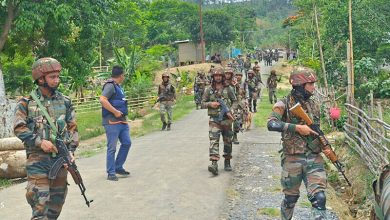
In this file photo, Indian army soldiers patrol during a security operation in hill and valley areas in the northeastern state of Manipur, India, June 7, 2023.—Reuters
Imphal: Indian authorities said on Sunday they had started to relax a curfew imposed in violence-hit Manipur after 45 days of civil unrest in the north-east state, seeking to reduce anger spilling onto the streets and restore normalcy.
“We have decided to remove curfew from 5 am until 5 pm to enable residents to buy food, medicines, and other essentials,” said Diana Devi, a local government official based in capital city of Imphal, not far from the border with Myanmar.
Manipur has experienced widespread violence since May 3, following protests by indigenous communities sparked by resentment over economic benefits and quotas for government jobs and education reserved for Kukis, an ethnic group, who mostly live in the hills.
Meiteis, the dominant community in the low lands of the state, who account for half of state’s population, demand extension of limited affirmative action quotas to them.
But Kukis fear it would mean Meiteis would get a greater share in education and government jobs reserved for them.
Last week’s federal home ministry records showed 83 people have been killed and more than 60,000 residents displaced since May in the violence.
On Thursday, a federal minister’s house was set on fire in Imphal. He hails from the majority Meitei community.
Neighbouring states which have provided shelter to the displaced population appealed Prime Minister Narendra Modi’s government to release funds needed to feed the refugees.
Leaders from the opposition party accused Modi government of failing to contain the crisis in a state governed by his party.
“We believe that if the prime minister takes action, then peace in Manipur can be restored in 24 hours,” said Nimaichand Luwang, an opposition lawmaker in Manipur.
A senior home ministry official in New Delhi said at least 32,000 security forces will continue to support local police until normalcy is restored.
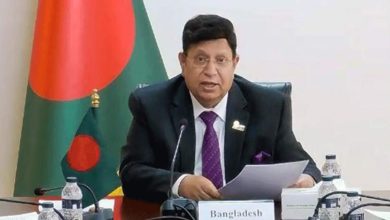
Dhaka: Foreign minister AK Abdul Momen on Saturday urged countries, who are heavily investing in Myanmar, to come forward for a sustainable solution to the Rohingya crisis for their own interests and to protect their investment.
‘If this problem is not resolved, you have seen many countries in the Asia Pacific and the Bay of Bengal — their attractions have increased and made investments, enhancing trade. This investment will be hurt if there are terrorist activities,’ Momen told reporters after a seminar.
Diplomats World, a publication that deals with cultural, legal, regional, global security, politics, and various other issues, hosted the seminar titled Rohingya Repatriation: A Pathway to Peace, Stability and Harmony in the Bay of Bengal Region at a Dhaka hotel.
Momen said if the Rohingyas who are frustrated succumb to terrorism, major investments by some countries in the whole region would be at risk.
He said peace was required in the region so that investment could sustain.
Foreign minister AK Abdul Momen (center).
‘If there is a commitment, if there is a will, they can do it. It is the commitment that is lacking on the part of our global leadership. There is lip service, unfortunately,’ said the foreign minister.
He, however, said he always remains hopeful and mentioned that both the United States and China have engaged in senior-level focal point for resolving the Rohingya issue.
‘These are good news. We want to resolve this issue amicably through dialogue and discussion,’ he said, urging the global leadership to come forward instead of ‘empty words.’
‘They should come forward with sincerity and commitment. We must keep the hope alive. The Rohingyas have to go back to their own country for a better life and future. I hope it will happen one day,’ Momen said.
‘If this problem is not resolved, you have seen many countries in the Asia Pacific and the Bay of Bengal — their attractions have increased and made investments, enhancing trade. This investment will be hurt if there are terrorist activities,’ Momen told reporters after the seminar.
He said there was a political commitment from the friendly countries and sincerity from Myanmar to find a permanent solution to the Rohingya crisis.
Lieutenant General (retd) Md Mahfuzur Rahman moderated the seminar while Md Obaidul Haque, associate professor, Dhaka University, presented keynote paper.
Former state minister for foreign affairs and executive advisor of the publication, Abul Hasan Chowdhury, executive editor of the publication Nazinur Rahim, Gareth John Evans, Professor Michael W Charney, Major General Md Nayeem Ashfaque Chowdhury (retd), among others, spoke at the programme.