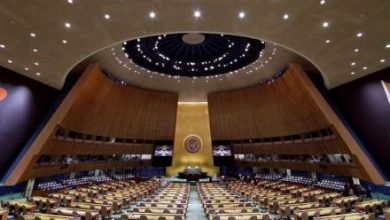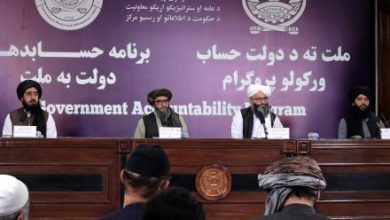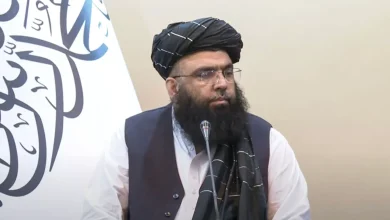
New York : Heads of state and national representatives gather in New York to attend the UN General Assembly, which is September 18-19, and a spokesman for the Islamic Emirate said that they expect the summit to lift sanctions from the interim government.
The deputy spokesman for the Islamic Emirate, Bilal Karimi, said that the summit should also consider the achievements of the Islamic Emirate.
“The realities of Afghanistan, the improvements made, there are achievements in economic and security issues. They should understand these realities. They should fulfil their responsibilities regarding the removal of sanctions and establishment of diplomatic relations,” he said.
There will be no representative from Afghanistan at the UNGA summit.
Political analysts meanwhile said that the Islamic Emirate and the international community need to engage in order to address the existing crisis in Afghanistan.
“They (Islamic Emirate) through back to back decrees restricted the rights of women and girls of Afghanistan, which caused serious concerns among the people of Afghanistan and the international community,”said Ahmad Khan Andar, a political analyst.
“There is a need for the people of Afghanistan and Afghanistan to take its position back in the UN General Assembly,” said Fazal Rahman Oria, a political analyst.
Previously, the Secretary General of the United Nations announced that the situation of Afghan women will be discussed in the meeting.
Joe Biden was on vacation when Taliban took over Kabul in 2021, as per a new book.
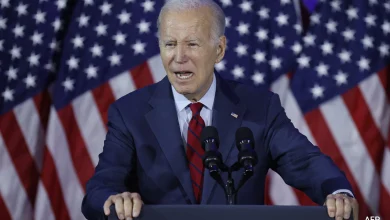
Kabul: US President Joe Biden gave an explosive reaction when he was told that then-Afghanistan President Ashraf Ghani had fled Kabul ahead of the Taliban’s takeover of the city, according to a new book. It mentions that Mr Biden was on vacation at that time at Camp David and he was told about the events in Afghanistan by National Security Advisor Jake Sullivan on August 12, 2021, as per a Fox News report.
The chaotic withdrawal has been rendered in great detail in the book titled ‘The Last Politician: Inside Joe Biden’s White House and the Struggle for America’s Future’ by Franklin Foer.
“Biden exploded in frustration when he heard the news and exclaimed ‘Give me a break!’” Mr Foer said in the book.
It also mentions that Mr Biden wasn’t the only one on vacation when Mr Ghani escaped.
After the withdrawal of US forces, the Biden administration had thought that the responsibility will be gradually handed over to the new Afghan government.
But the Taliban rapidly advanced and took over many cities as US forces moved out of bases, prompting Mr Ghani to flee.
Mr Foer has also claimed in the book that the US President privately admitted to feeling “tired”, but described his vast political experience as a vital asset.
“His advanced years were a hindrance, depriving him of the energy to cast a robust public presence or the ability to easily conjure a name,” Mr Foer has said in the book, according to The Guardian.
The author has not cited a source for Mr Biden’s reported private remarks but his book, according to its publisher, Penguin Random House, is based on “unparalleled access to the tight inner circle of advisers who have surrounded Biden for decades”.
Last month, The Guardian published the results of a poll conducted by the Associated Press and Norc Centre for Public Affairs, which said that 77 per cent of Americans thought age would be a problem if Mr Biden won the White House again.
The book is set to be released in the US on Tuesday.
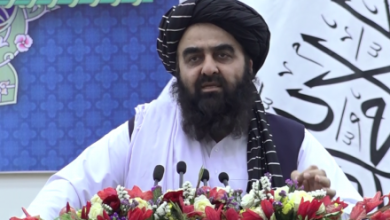
The acting Minister of Foreign Affairs, Amir Khan Muttaqi
Kabul: The acting Minister of Foreign Affairs, Amir Khan Muttaqi, said that weakening the Afghan government will harm everyone and that the international community has assured the Islamic Emirate that they don’t support the armed resistance against the interim government.
Speaking at a large gathering of religious clerics and influential figures of the country, Muttaqi said that Afghan soil is not a threat to any country and there is a need for the international community have a moderate policy towards the Islamic Emirate.
“There is no opposition all over Afghanistan. The whole world assured us that they don’t support the armed opponents. This opportunity should be used considering the policy of the Islamic Emirate and its moderate policy which doesn’t want Afghanistan to become a battlefield for negative powers,” he said.
Addressing the same gathering, the country’s Interior Minister, Sirajuddin Haqqani, called on the people to support the Islamic Emirate.
“The reconstruction needs patience and major engagement. Bullying has ended and a pure independence has been ensured,” he said.
The participants issued a resolution of 12 principles, in which they also stressed the facilitation of religious and modern education based on Sharia and Afghan culture.
The statement also stresses the need for engagement of the Islamic Emirate with the international community within a Sharia and Islamic framework. They also called for releasing Afghanistan’s assets abroad and lifting sanctions as well as economic cooperation by the international community.
“The Ulema and influential figures wants the Islamic Emirate to take necessary actions for engagement with the world while considering Islamic Sharia, independence, reputation of Afghanistan, national reconciliation and based on the current conditions,” said Sultan Ahmad Adel, head of the Ulema council at 22nd PD in Kabul.
“We are opposing modern education. We need medical, science, physics, chemistry, and biology,” said Deen Mohammad, head of the Kabul Ulema.
The gathering of the religious clerics and influential figures comes as the international community has repeatedly called for national consensus and national dialogue in Afghanistan in a bid to solve the ongoing challenges of the country.
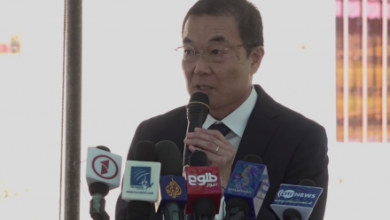
Kabul: The Japanese Ambassador in Kabul, Takashi Okada, called on the Afghan “de facto” authorities to strengthen legitimacy within the country to expand international cooperation.
Speaking at a signing ceremony for “Enhancing Agriculture Production through Community-Led Irrigation between the Embassy of Japan and FAO”, Okada said:
“For the expansion of international cooperation, the de facto authorities first needs to strengthen… legitimacy within the country by prioritizing people’s needs. When it happens, its external relations will be improved.”
During the ceremony, a water project worth $9.5 million in eastern Kunar province was kicked off. The project was signed between the Food and Agriculture Organization of the UN and Japan.
Okada said that approximately 12,000 people will benefit from the project.
“With this agreement, the Japanese government will provide approximately $9.5 million to FAO for the rehabilitation and expansion of Tetsu Nakamura’s legacy project,” he said.
Richard Trenchard, FAO Representative in Afghanistan, said that the project will begin mid next year.
“The construction will begin next year. In the middle of next year. Involving local Afghan companies and the project will be completed by 2027,” he said.
Japanese ambassador once again reiterated his country’s support to the people of Afghanistan.
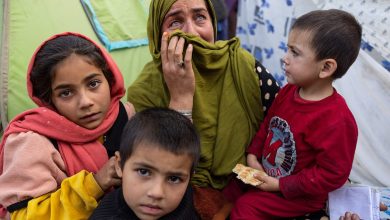
Poverty is a factor that has caused the people of the nation to leave their homes in addition to insecurity and conflict.
Kabul: The UN Development Program said in its recent report that Afghanistan currently has a “staggering 6.55 million Internally Displaced Persons (IDPs), making it the country with the second highest tally worldwide after Syria.”
Based on the report, over 4.39 million people are internally displaced as a result of conflict and violence as of 31 December 2022, while a further 2.16 million people are displaced due to disasters in the country.
The report issues a warning on the potential rise of global displacement over the next 30 years.
Malik Khan, who moved to Kabul from Laghman province a few years ago due to conflict and instability, told a TOLOnews reporter: “Our main issue is that there is no assistance for internally displaced people, and in the last two years, the only assistance we have received has been 50 kg of oil and 5 kg of peas.”
“We ask the Islamic Emirate to give us shelter and help us. We accept it if it gives us the same place and we don’t have a clinic,” said Maryam, another displaced person.
Some other displaced people asked the Islamic Emirate and aid organizations to help them.
“We came here to do something and provide shelter to our children. We have a water problem, we have an electricity problem, and our children do not attend school. We moved here from Mazar, where there was no job,” said Hayatullah, displaced from Balkh province.
Poverty is a factor that has caused the people of the nation to leave their homes in addition to insecurity and conflict.
The International Organization for Migration (IOM) earlier reported a rise in the number of internally displaced people in Afghanistan. This organization has estimated the nation’s internal displacement population at about six million people.
The deputy minister of Higher Education said that about 200 to 250 professors from various universities have left the country.
Kabul: A committee of the Ministry of Higher Education said it is working on a plan to reopen universities for girls and will share it with the public if finalized.
Lutfullah Khairkhwa, the deputy minister of Higher Education, said during the annual reporting of the ministry that the finalization time for the plan is not clear.
The Ministry of Higher Education in the past year has started 3 Ph.D. programs and 15 master’s programs, and now there are 9 Ph.D. programs and 40 master’s programs in Afghanistan, he said.
Khairkhwa gave statistics that 118,000 new students were recruited to universities in the last year and more than 400,000 students are studying in the country’s universities.
The deputy minister of Higher Education said that about 200 to 250 professors from various universities have left the country.
Meanwhile, Hafiz Hamed Hasib, the financial and administrative deputy of the higher education ministry said in the annual report of the ministry that 658 religious scholars have been recruited to teach Islamic subjects in universities, and nearly 90 scholars have been invited to specialized Islamic programs.
According to the Ministry of Education, in the past year more than 1 million new students were registered in schools, of which “more than 500,000 of them are girls,” presumably referring to girls under grade 7.
Kiramatullah Akhoundzada, an official of the Education Ministry, in the annual report of the ministry, said that a total of 10,189,634 students, including more than 4 million girls, are registered with them.
According to the ministry, there are 18,010 schools in Afghanistan now.
Kabul: The fall of Kabul was a military and political “failure” of America, a spokesman for China’s foreign ministry said on the anniversary of the Islamic Emirate’s two-year rule.
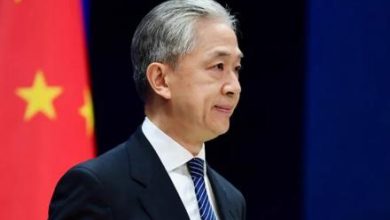
Addressing a press conference on Tuesday, August 15, Chinese foreign ministry spokesperson Wang Wenbin said that Afghanistan has been stable for two years and the future of this country is now back in the hands of its people.
“What happened in Afghanistan marked a military, political and counter-terrorism failure of the US in Afghanistan, and once again proved that military intervention, political infiltration and “democratic transformation” from the outside will not work and will only breed turmoil and disaster,” Wenbin noted.
The spokesperson added that the international community expects the Islamic Emirate to fulfill its commitments to form a comprehensive government, ensure the rights of women and ethnic minorities, and prevent terrorist activities in Afghanistan.
“The international community still has expectations for Afghanistan in building a more broad-based and inclusive government framework and safeguarding the rights and interests of all its citizens, including women and ethnic minorities,” Wang Wenbin added.
The Islamic Emirate has not yet complied with the requests of the international community regarding women’s rights.
In reaction to restrictions on women in Afghanistan, António Guterres, Secretary-General of the UN, said: “It is now two years since the Taliban takeover of Afghanistan & the situation in the country remains deeply troubling, including the severe restrictions imposed on the rights of women & girls. The international community must not forget the people of Afghanistan.”
But the Islamic Emirate spokesman said that women’s rights have been ensured in the country.
“We have never violated human rights; the rights that people possess are assessed in accordance with the Islamic Sharia, and they will definitely be granted to them. We are also defending people’s rights,” Mujahid said.
Although two years of the Islamic Emirate have passed in the country, the world does not recognize it due to what the world sees as the violation of human rights and the non-establishment of a inclusive government in the country.
However, the Islamic Emirate has consistently highlighted that, in accordance with Islamic law, women’s rights are upheld, and the formation of an inclusive government is one of Afghanistan’s internal issues.
Kabul: Afghanistan’s Taliban on Tuesday marked the second anniversary of their return to power, celebrating their take-over of Kabul and the establishment of what they said was security throughout the country under an Islamic system.
After a lightning offensive as US-led foreign forces were withdrawing after 20 years of inconclusive war, the Taliban entered the capital on Aug. 15, 2021, as the U.S.-backed president, Ashraf Ghani, fled and the Afghan security forces, set up with years of Western support, disintegrated.
“On the second anniversary of the conquest of Kabul, we would like to congratulate the mujahid (holy warrior) nation of Afghanistan and ask them to thank Almighty Allah for this great victory,” the spokesman for the Taliban, Zabihullah Mujahid, said in a statement.
Security was tight in the capital on Tuesday, which was declared a holiday, with soldiers stepping up checks.
Taliban parades were expected through the day and several departments, including the education ministry, held gatherings to celebrate.
“Now that overall security is ensured in the country, the entire territory of the country is managed under a single leadership, an Islamic system is in place and everything is explained from the angle of sharia,” Mujahid said.
Afghanistan is enjoying peace not seen in decades but the UN says there have, nevertheless, been dozens of attacks on civilians, some claimed by the Islamic State rivals of the Taliban.
For many women, who enjoyed extensive rights and freedoms during the two decades of rule by Western-backed governments, their plight has become dire since the return of the Taliban.
“It’s been two years since the Taliban took over in Afghanistan. Two years that upturned the lives of Afghan women and girls, their rights and futures,” Amina Mohammed, deputy secretary-general of the UN, said in a statement.
Mujahid made no mention of the contentious issue of female education in his statement.
OBSTACLE TO RECOGNITION
Girls over the age of 12 have been mostly excluded from classes since the Taliban returned to power. For many Western governments, the ban is a major obstacle to any hope of formal recognition of the Taliban administration.
The Taliban, who say they respect rights in line with their interpretation of Islamic law, have also stopped most Afghan female staff from working at aid agencies, closed beauty salons, barred women from parks and curtailed travel for women in the absence of a male guardian.
Journalism, which also blossomed in the two decades of rule by Western-backed governments, has been significantly suppressed.
The detention of media workers and civil society activists, including prominent education advocate Matiullah Wesa, have raised the alarm of human rights groups.
The Taliban have not commented in detail on those issues but say their law enforcement and intelligence agencies investigate activities they consider suspicious to seek explanations.
On the positive side, the corruption that exploded as Western money poured in for years after the Taliban were ousted in 2001, has been reduced, according to the UN special representative.
There are also signs that a Taliban ban on narcotics cultivation has dramatically reduced poppy production in what has for years been the world’s biggest source of opium.
The Taliban will be hoping the progress will help bring foreign recognition and the lifting of sanctions, and the release of about $7 billion in central bank assets frozen in the US Federal Reserve Bank of New York in 2021 after the Taliban took control, half of which was later transferred to a Swiss Trust.
A fall-off in development aid has seen job opportunities and gross domestic product shrink and the UN estimates more than two-thirds of the population need humanitarian aid to survive.
A few members of the Taliban delegation head to the opening session of the peace talks between the Afghan government and the Taliban in Doha on September 12, 2020 [File: AP/Hussein Sayed]By Obaidullah Baheer
Since the Taliban took over Kabul in 2021, the United States has struggled to make progress in talks with the group.
A common complaint among Afghanistan observers against the office of the US State Department’s Special Representative for Afghanistan has been that it often does the right thing at the wrong time.
Over the past two years, the US would often appear to increase its efforts to reach out exactly as the Taliban announce yet another decree restricting the human rights of Afghans. This supposedly has to do with the sluggishness of the State Department’s machinery, which takes quite a lot of time to execute a decision to engage and disengage.
But a recent meeting held in Doha seems to have broken this pattern of mismatched priorities and bad timing. On July 31, representatives of the Taliban and US officials met officially for the first time since August 2021 to discuss the way forward for their relations and steps towards the recognition of the Taliban government and unfreezing of Afghan state assets.
The two-day talks indicate that a major barrier to cooperation may have been surmounted. Over the past two years, the issue of human rights violations by the Taliban stood in the way of engagement. The international community, including the US, demanded concessions on human rights issues before any other discussions could take place.
This was based on the logic of the low-hanging fruit. The assumption was that the human rights issues, including the bans on women and girls’ education and work, were the easiest to solve, and the Taliban would have to concede as a show of good faith. But the group never did and as a result, little progress was made on engagement.
Mohammed Abdul Kabir is a senior member of the Taliban leadership and the acting Prime Minister of Afghanistan
But the July 31 meeting seems to suggest that this precondition has been reconsidered. Of note was the presence of US Special Envoy for Afghan Women, Girls, and Human Rights Rina Amiri, who had previously refused to meet with the Taliban over their violations of women’s rights.
Amiri justified her presence in those meetings by saying that she had consulted with Afghans and human rights defenders who had advised her to join the US delegation.
The State Department’s logic behind this renewed effort for engagement seems to be that better relations between the US and the Taliban would create incentives for the latter to form an inclusive government and draft a constitution that can limit the more conservative voices within the movement. This would lead to internal consensus on repealing the bans on girls and women’s education and work and tackling other human rights issues.
The idea is that it is important to win on the fronts that can be won now and lay the ground for the Taliban’s horrendous social policies to be addressed internally in the longer run.
This reset in strategy is a positive development and there are already indications that it may work.
First, the Taliban issued a statement about the meeting in Doha which somewhat aligned with the one released by the US State Department. This is significant as, usually, communiques issued after formal and informal meetings between the Taliban and foreign delegations would read as if they were referring to two different engagements. The coherent message issued by the two sides in Doha reflected the constructive dialogue that had taken place.
Second, confidence-building measures were discussed which had been absent from the one-off encounters held in the past. These measures are a chance to find noncontroversial avenues of cooperation and agree on monitoring mechanisms that help build trust between the two parties. These can include climate change, narcotics and others.
The spokesman for the Ministry of Mines and Petroleum, Homayoun Afghan, said they have signed contracts for four mines with four domestic companies.
Third, the meeting set the foundation for more frequent engagements to take place in the near future. The UN Assistance Mission for Afghanistan has already announced a meeting for the end of the year which could see a continuation of these efforts to engage the Taliban.
Future meetings can benefit from the appointment of joint commissions that do the groundwork beforehand and reach an agreement on frameworks of discussion. This would ensure that the limited time the officials spend together is optimised and more ground is covered.
Future iterations of these talks could also be a good chance to push the Taliban to include in these discussions prominent Afghan voices from outside their group. This could encourage the Taliban leadership to start a national dialogue and start thinking about a more inclusive government makeup.
The stakes for both sides are quite high, which should motivate them to keep up the momentum. For the Taliban, this could lead to the international recognition it needs in order to join the international community and receive much-needed foreign assistance that can help rebuild the devastated Afghan economy and alleviate the humanitarian crisis. For the US, this could be a chance to redeem itself, at least partially, for its devastating failures in Afghanistan since 2001.
Obaidullah Baheer is a lecturer of Transitional Justice at the American University in Afghanistan. He holds a postgraduate degree in International Relations from the University of New South Wales, Australia. His research was titled “A Study of the Ideational and Structural Factors Hindering Negotiations with the Taliban”.
Mohammed Abdul Kabir is a senior member of the Taliban leadership and the acting Prime Minister of Afghanistan.
Kabul: The Deputy Prime Minister, Mawlawi Abdul Kabir, said that the Islamic Emirate’s relations with the international community are improving.
Speaking to a gathering of instructors who returned from their educational programs abroad, he said that the Islamic Emirate’s embassies are opened in 16 countries.
“The world knows it and timely reaches a hand for engagement with the Islamic Emirate. You know that our embassy is open in 16 countries,” he said.
Mawlawi Abdul Kabir said that the Islamic Emirate will continue its positive diplomacy with the world.
“The Islamic Emirate of Afghanistan is committed to protecting the Islamic government. We continue to provide security and ensure diplomacy and we will continue to engage with the world,” he said.
Speaking at the same gathering, a senior member of the Islamic Emirate, Anas Haqqani, said that the Islamic Emirate came to power through sacrifices not political deals.
“Many people are thinking — due to propaganda — some are of this mindset– that this government will not endure and that this government is like a guest for only some nights. Many good people are worried about it. Many investors and major traders, academics and those who are outside are worried that it is possible that (the Islamic Emirate) is a guest for only some days,” he said.
“I want to assure you, we have not come here easily nor through deals. We arrived here through sacrifice… The world has tested its power. After they understood that they could not stand here, they withdrew.”
The meeting at the gathering was held two days before the 2nd anniversary of the collapse of the former government.