

By Muhammad Wasama Khalid
The 80th session of the United Nations General Assembly (UNGA), held in New York from September 9–29, 2025, takes place under the theme “Better Together: 80 Years and More for Peace, Development, and Human Rights.”
As the world grapples with some of its most critical issues, the discussions here reflect a rare convergence of global aspirations for peace, sustainable development, and human dignity. The focus at this year’s UNGA has been on the ongoing conflicts in Gaza and Ukraine, the looming threats of climate change, and the complex governance of artificial intelligence. Yet, among these global concerns, one pressing issue stands out, particularly for Pakistan: climate change and the shared responsibility of the global community.
This session comes at a moment of significant challenge for Pakistan, which finds itself on the frontline of a battle it did not initiate but is destined to suffer the most. The assembly has served as a platform for countries to address the existential crisis that is climate change. Leaders have collectively echoed the necessity of multilateralism and a unified approach toward meeting the goals of the Sustainable Development Agenda. However, for Pakistan, this call to “shared responsibility” rings hollow when viewed through the lens of its own experience with the devastating consequences of climate change.
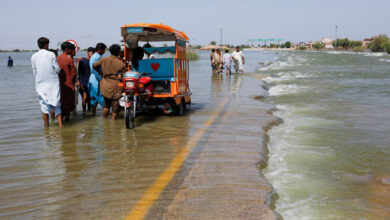
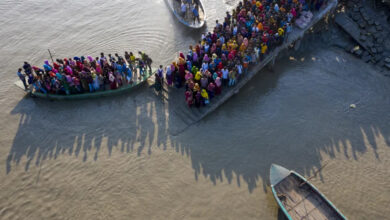
Despite contributing less than 1% of global greenhouse gas emissions, Pakistan is among the world’s most vulnerable nations when it comes to climate disasters. The recent history of the country paints a grim picture of a nation grappling with the consequences of global inaction. In 2022, unprecedented floods submerged one-third of the country. These floods affected 33 million people, displaced 2 million families, destroyed 4.4 million acres of crops, and resulted in 1,700 fatalities. The damage amounted to an estimated $30 billion in economic losses, a staggering figure for a country already grappling with poverty and instability.
Yet, this tragedy was not an isolated event. In 2025, as the country enters its monsoon season, heavier-than-usual rains and cloudbursts have led to the death of over 800 people since late June, with climate scientists confirming that these patterns are a direct result of climate change. South Asia, in general, and Pakistan, in particular, are seeing more intense and unpredictable monsoons, with the possibility of a disaster akin to the 2022 floods looming once again. These are not mere fluctuations in the weather, but signals of a larger, systemic crisis that Pakistan, though not responsible for, has had to bear the brunt of.
Beyond the floods, the country has also been battling extreme heatwaves. In recent years, temperatures have soared beyond 50°C, leaving vulnerable communities to face heat strokes, dehydration, and untold suffering. The effects of these extreme weather events have led to severe mortality rates, particularly among marginalized populations in rural and underserved areas. The paradox for Pakistan is stark while it is a minor contributor to global warming, it faces the lion’s share of its devastating effects.
Another crucial aspect of Pakistan’s climate vulnerability is its vast array of glaciers, over 7,000 in total, making it home to the largest glacier system outside of the polar regions. As the world heats up, these glaciers are rapidly melting, contributing to both short-term floods and long-term water shortages. Pakistan’s agricultural sector, on which millions of livelihoods depend, is at direct risk due to the erratic water flow from these glaciers. What was once a source of life has now become a harbinger of disaster, as agriculture, ecosystems, and water resources are threatened by this accelerated glacial melt.
Pakistan’s position on the global climate front is one of undeniable injustice. The country is a victim its people are suffering the consequences of a crisis they did not create. As the world gathers at the UNGA, the country’s call is simple yet urgent: the international community must shoulder the responsibility for the damage that has been inflicted. It is not merely a question of aid; it is a matter of global justice. Pakistan’s demand is for dedicated international funding for climate adaptation, resilience, and loss-and-damage response. This is not charity, but a global obligation, one that stems from the principles of equity and shared responsibility.
As the world’s leaders converge in New York, it is critical that they recognize the stark realities faced by countries like Pakistan. The 80th session of the UNGA must affirm that climate justice is not a peripheral concern but a core issue of multilateral cooperation. The legitimacy and credibility of global governance mechanisms depend on how well they address this inequality. The call to action for shared responsibility must be more than just a rhetoric—it must translate into concrete actions, commitments, and funding that help nations like Pakistan adapt to the changes they did not cause but now have to face. Only then can the world truly claim to be “Better Together.”
For Pakistan, the future is uncertain, but the need for global solidarity is clearer than ever. The stakes are not just about environmental preservation; they are about human dignity, justice, and the survival of vulnerable communities across the globe. As the UNGA continues, the world must recognize that the fight against climate change is not just a battle for the environment, but for the very future of the most affected, the most vulnerable, and the most innocent. And if the international community fails to take responsibility, the promises of peace, development, and human rights will remain empty.
Pakistan’s position on the global climate front is one of undeniable injustice. The country is a victim its people are suffering the consequences of a crisis they did not create. As the world gathers at the UNGA, the country’s call is simple yet urgent: the international community must shoulder the responsibility for the damage that has been inflicted. It is not merely a question of aid; it is a matter of global justice. Pakistan’s demand is for dedicated international funding for climate adaptation, resilience, and loss-and-damage response. This is not charity, but a global obligation, one that stems from the principles of equity and shared responsibility.
As the world’s leaders converge in New York, it is critical that they recognize the stark realities faced by countries like Pakistan. The 80th session of the UNGA must affirm that climate justice is not a peripheral concern but a core issue of multilateral cooperation. The legitimacy and credibility of global governance mechanisms depend on how well they address this inequality. The call to action for shared responsibility must be more than just a rhetoric—it must translate into concrete actions, commitments, and funding that help nations like Pakistan adapt to the changes they did not cause but now have to face. Only then can the world truly claim to be “Better Together.”
For Pakistan, the future is uncertain, but the need for global solidarity is clearer than ever. The stakes are not just about environmental preservation; they are about human dignity, justice, and the survival of vulnerable communities across the globe. As the UNGA continues, the world must recognize that the fight against climate change is not just a battle for the environment, but for the very future of the most affected, the most vulnerable, and the most innocent. And if the international community fails to take responsibility, the promises of peace, development, and human rights will remain empty.
Muhammad Wasama Khalid
Muhammad Wasama Khalid is a Correspondent and Researcher at Global Affairs. He is pursuing a Bachelor’s degree in International Relations at National Defense University. His interests include history, politics, and current affairs. He has been published in the London Institute of Peace and Research, South Asian Journal, Diplomatic Insight, International Policy Digest, Sri Lanka Guardian, Global Village Space, Global Defense Insight, Global Affairs, And Modern Diplomacy. He tweets at @Wasama Khalid and can be reached at Wasamakhalid@gmail.com

5 Comments