Author: SAC Desk

  • Bangladesh’s Climate Advocacy: Efforts of the Global South in Pursuit of Climate Justice

    Bangladesh’s Climate Advocacy: Efforts of the Global South in Pursuit of Climate Justice

    Sadia Aktar Korobi
    Sadia Aktar Korobi

    By Sadia Aktar Korobi

    Bangladesh has emerged as the leading voice of climate change activism in recent years, particularly in Global South. The country has shown resilience, determination, and an unapologetic stance in the pursuit of climate justice by holding the developed world accountable for its part in accelerating climate change. As a low-lying, densely populated country, Bangladesh finds itself on the frontline of climate change impacts, grappling with rising sea levels, extreme weather events, and the displacement of vulnerable communities. Despite contributing minimally to the carbon emissions responsible for these changes, Bangladesh is at the forefront of advocating for climate action and justice on the global stage.

    Bangladesh, often described as one of the most climate-vulnerable countries, has been dealing with the severe consequences of climate change for decades. Geography and socio-economic conditions make it uniquely susceptible to the impacts of global warming. Rising sea levels pose an existential threat to coastal communities, and extreme weather events such as cyclones and floods disrupt livelihoods. According to the World Bank’s Country and Climate Development Report, tropical cyclones cost Bangladesh about $1 billion annually on average. The country could see as many as 13.3 million people displaced by 2050 due to climate change, and its GDP could fall by as much as 9% in case of severe flooding.

    In the face of these challenges, Bangladesh has displayed an action-centered attitude in dealing with climate change, as the World Bank calls it “the emerging hot spot” where climate threats and action meet. Bangladesh was one of the first developing countries to establish a coordinated action plan in 2009. Till now, its climate policy deck includes the Bangladesh Climate Change Trust Act, the Delta Plan 2100, and the Mujib Climate Prosperity Plan.

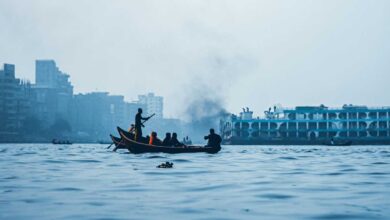
    photo: Unsplash
    photo: Unsplash

    The country has also set up a Climate Change Trust Fund, the first of its kind, allocating $300 million from domestic resources between 2009 and 2012, and in 2014, the country adopted the Climate Fiscal Framework to create climate-inclusive public financial management. Bangladesh also introduced a National Sustainable Development Strategy to align economic development with climate priorities further, and it put forward a target to generate 5% of its electricity from renewable energy sources by 2015 and 10% by 2020.

    Its initiatives have resulted in impressive climate adaptation ventures, including the construction of the world’s largest multi-storied social housing project in Coxs Bazar, which will rehabilitate 4,400 families displaced by climate change. In mitigation, Bangladesh has become one of the world leaders in Solar House Systems, with 6 million households using solar photovoltaic systems.

    Bangladesh has also been a member of essential bodies set up by the UNFCCC over the years, such as the Adaptation Fund Board and the Green Climate Fund Board. It also plays a significant role in international climate diplomacy, having organized and led the Least Developed Countries negotiating bloc in the United Nations Framework Convention on Climate Change (UNFCCC) negotiations since the bloc’s inception. During the pandemic, Bangladesh launched the South Asian regional office for the Global Center on Adaptation (GCA) in Dhaka in September 2020. The GCA Bangladesh office will promote indigenous nature-based sustainable solutions and innovative adaptation measures with the regional countries.

    Activists form a human chain calling for climate justice, Dhaka, Bangladesh, 24 September 2021 | Photo by Mahmud Hossain Opu.
    Activists form a human chain calling for climate justice, Dhaka, Bangladesh, 24 September 2021 | Photo by Mahmud Hossain Opu.

    Bangladesh is protecting its citizens and setting an example for other nations facing similar challenges. The country has also emerged as a vocal proponent of climate justice, emphasizing the need for collective global responsibility in addressing climate change.

    The hallmark of Bangladesh’s climate awareness and advocacy is that it has played a crucial role in shaping the discourse around loss and damage at international climate negotiations. Dhaka has consistently called for developed nations, historically responsible for most greenhouse gas emissions, to take decisive actions in reducing their carbon footprints and providing financial and technological support to developing countries. The country’s advocacy has contributed to establishing the Warsaw International Mechanism for Loss and Damage, signaling a step forward in recognizing and addressing the impacts beyond adaptation.

    Pursuing climate justice also includes Bangladesh’s proactive advocacy of raising awareness about the disproportionate impact of climate change on vulnerable nations. In December 2022, Bangladesh even became a party to the case by an international organization of small island states, known as the Commission of Small Island States (COSIS), on states’ obligations regarding climate change at ICJ.

    In the latest Munich security conference, this issue of regional disparities in renewable energy investment was discussed broadly. Till now, the funding discrimination in the global south is glaring-mostly circulating in China and some high- and middle-income economies, with India and Indonesia gaining recent attention due to the steep rise in emissions. But poorer nations in the south are still largely off the radar.

    The failure of advanced economies, the major contributors to climate change, to mobilize investments in renewables for low-income countries is a critical discussion that must be kept alive for opportunities for global green growth. Bangladesh should be a vocal party to this conversation, too, as its measures won’t be adequate forever to deal with its climate urgencies soon, especially considering the pressure of financing climate actions on its emerging economy. The country could require an estimated $26.5 billion to meet its goal of generating 40% of electricity from renewables by 2041.

    Bangladesh must be vigilant in securing climate finance and technology from the public and private sectors at future COPs, or it risks losing decades of economic gains to climate change during the crucial period of its development.

    The burden of climate change disproportionately falls on those who have contributed the least to its causes. Recognizing the challenges the Global South faces is crucial for fostering a fair and inclusive response to the climate crisis. The COP28 Loss and Damage Fund has been the right direction to take in this regard. The global community must acknowledge and support the efforts of nations like Bangladesh to pursue climate justice. Climate justice is not a charity but a shared responsibility for a more equitable and sustainable future for all.

    Sadia Aktar Korobi, currently studying at University of Dhaka in the department of Peace and Conflict Studies (MSS). She have graduated from the same department recently. Her research interests include peace studies, international relations and gender studies.

  • India’s policy towards Nepal remains unchanged: Envoy

    India’s policy towards Nepal remains unchanged: Envoy

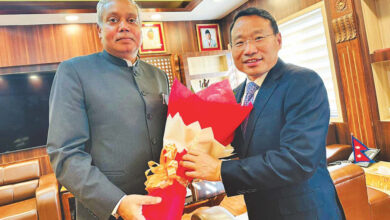
    Indian envoy Naveen Srivastava (left) and Nepal’s Finance Minister Barsha Man Pun. Photo: Md Imran Hasan
    Indian envoy Naveen Srivastava (left) and Nepal’s Finance Minister Barsha Man Pun. Photo: Md Imran Hasan

    By Md Rashel, Senior Reporter

    Kathmandu: In the wake of recent political developments in Nepal, Indian Ambassador Naveen Srivastava reaffirmed India’s consistent stance towards its neighbor, emphasizing unwavering support and cooperation. Amid speculations surrounding India’s reaction to the dissolution of the Nepali Congress and CPN (Maoist Centre) alliance, Ambassador Srivastava clarified that India’s policy remains unaltered.

    Prime Minister Pushpa Kamal Dahal’s recent Cabinet restructuring, which included ministers from the CPN-UML and other parties, prompted discussions regarding India’s stance. However, Ambassador Srivastava emphasized during separate meetings with Deputy Prime Minister Narayan Kaji Shrestha and Finance Minister Barsha Man Pun that India views these changes as Nepal’s internal affairs.

    In conveying India’s position, Ambassador Srivastava highlighted the enduring and robust nature of Nepal-India relations, characterized by mutual trust. He assured continued support and expressed readiness to enhance investment in Nepal’s development.

    Moreover, discussions between Ambassador Srivastava and Minister Pun underscored the unique bond between Nepal and India, with a commitment to fostering mutually beneficial cooperation.

    Additionally, Deputy Prime Minister Shrestha received congratulations from Chinese Ambassador Chen Song on his new role. Discussions between them centered on further strengthening Nepal-China relations and fostering cooperation.

    The affirmations from both Indian and Chinese envoys signal continued engagement and support for Nepal amidst its evolving political landscape.

  • UK PM Sunak’s mother-in-law appointed to Indian parliament

    UK PM Sunak’s mother-in-law appointed to Indian parliament

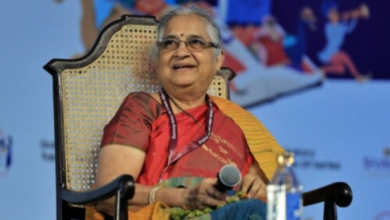
    Sudha Murthy, 73, is the former chair of the Infosys Foundation, the philanthropic arm of the global tech behemoth Infosys her husband NR Narayana Murthy co-founded in 1981.
    Sudha Murthy, 73, is the former chair of the Infosys Foundation.

    New Delhi:  The mother-in-law of British Prime Minister Rishi Sunak was appointed today (8 March) to serve in India’s parliament, capping a career working for the philanthropic arm of her billionaire husband’s tech firm.

    Sudha Murthy, 73, is the former chair of the Infosys Foundation, the philanthropic arm of the global tech behemoth Infosys her husband NR Narayana Murthy co-founded in 1981.

    The couple’s daughter Akshata married Sunak in 2009.

    Indian Prime Minister Narendra Modi said he was “delighted” at Murthy’s nomination to the upper house, announced by President Droupadi Murmu.

    He said in a social media post that her “contributions to diverse fields including social work, philanthropy and education have been immense and inspiring”.

    Most members of India’s upper house are elected but 12 of them, usually high achievers in public life, are nominated to the chamber by the president for a six-year term.

    Murthy’s appointment takes immediate effect.

    An engineer by training, Murthy is also a feted author and her foundation is credited with establishing libraries in rural areas.

    The Indian government last year bestowed Sudha with the Padma Bhushan, India’s third-highest civilian honour, for her career in social work.

    Her husband Narayana has an estimated net worth of $4.7 billion, according to Forbes.

    In the past he has said he needed to borrow money from his wife to start his firm, now India’s seventh-largest by market cap and the first Indian company to be listed on the New York stock exchange.

    Sunak, 43, became the first British prime minister of South Asian descent in 2022 — a milestone year for India’s relationship with its former colonial ruler.

    That August marked the 75th anniversary of India’s independence from Britain, weeks before the South Asian country overtook Britain to become the world’s fifth-largest economy.

  • Pakistan-It’s A Rocky Road Ahead For Shehbaz Sharif, Thanks To Imran

    Pakistan-It’s A Rocky Road Ahead For Shehbaz Sharif, Thanks To Imran

    Professor Harsh V. Pant is Vice President – Studies and Foreign Policy at Observer Research Foundation, New Delhi.
    Professor Harsh V. Pant is Vice President – Studies and Foreign Policy at Observer Research Foundation, New Delhi.

    BY HARSH V. PANT

    While India enters its own season of general elections, Pakistan’s poll cycle seems to be ending with Shehbaz Sharif taking over the nation’s prime minister for a second term. In last month’s elections, independent candidates backed by Imran Khan’s Pakistan Tehreek-e-Insaf (PTI) ended up winning 93 National Assembly seats, defying all odds and the military’s will. But it could not win enough seats to form a majority government on its own. The Pakistan Muslim League-Nawaz (PML-N) of Nawaz Sharif came in second with 75 seats, followed by the Pakistan People’s Party (PPP) of Bilawal Bhutto Zardari with 54 seats. This made some kind of coalition a veritable necessity.

    After weeks of political negotiations and horse-trading, an eight-party coalition was formed, which has now assumed power with Sharif as the Prime Minister; PPP co-chair Asif Ali Zardari would be the new president. The dissonance in Pakistani polity was evident as Shehbaz Sharif in his speech thanked his older brother Nawaz, describing him as “the one who built Pakistan”, while Imran Khan’s supporters called the new alliance government a “coalition of losers”.

    Pakistan PM Shehbaz Sharif. File Photo
    Pakistan PM Shehbaz Sharif. File Photo

    Disenchantment Simmering

    The success of PTI-backed candidates in recent elections and the inability of the military to manage the selection process in ways it would have preferred has already cast a spell over the future stability of the ruling coalition. People defied the military to vote against the Sharif-Bhutto duopoly, and the vote was so strong that despite widespread rigging and several seats reportedly being siphoned off to PML-N and other parties, PTI-backed candidates managed to win more seats than either of the two established parties. Yet, the two dynasties are now back in power and the disenchantment continues to simmer below the surface.

    After ensuring that Imran Khan could not be kept away from the electoral process, his supporters are unlikely to give in. They have tasted blood against the all-powerful Pakistani military establishment. Khan’s popularity remains very high. Despite being in power till 2022 and providing shambolic governance, Khan has managed to preserve his identity as an outsider to the system, thereby proving to be an effective challenger to both the military and established political parties. The military’s crackdown on him and his supporters made him even more popular as he gained sympathy for being the target of an establishment hell-bent on keeping him out of the political process.

    Imran Khan, Former Prime Minister of Pakistan. File Photo
    Imran Khan, Former Prime Minister of Pakistan. File Photo

    Khan Continues To Be Popular

    Now, with an unstable coalition in power, Khan will continue to wield influence from behind the bars, seeking to disrupt the functioning of the government with a sizeable number in Parliament. By sitting in the opposition, he is also ensuring that he is seen as not compromising on his anti-corruption plank. The coalition has no one who can match his charisma or his credibility. That the PPP decided not to join the government suggests that it is already concerned about its future by being associated with a seemingly discredited coalition. It is therefore trying to maintain its distance, though it is far from evident whether there are any takers for this in Pakistan anymore.

    For a country that is reeling under multiple crises, this is the worst possible outcome. The kind of policy reforms that are needed to manage the gargantuan challenges the nation faces stand in direct contrast to the nature of the government that is being formed. A ragtag bunch of discredited parties are no match for the difficulties Pakistan is facing on every front. The economic situation is particularly dire, with inflation sky-high and state bankruptcy on the cards. For foreign lenders, some semblance of political stability is a basic necessity for moving forward with financial support. The PML-N-led coalition, which few expect to last long, is hardly likely to inspire any confidence.

    The Chaos Will Get Worse

    But it is the domestic challenge that is the biggest one. Political polarisation in Pakistan is at an all-time high and the military is facing a challenge unlike any in recent times. Khan and his supporters, buoyed by their remarkable electoral performance, will ensure that any meaningful governance is almost impossible in the absence of some kind of political reconciliation—which seems unlikely any time soon given how the military went all out to end Khan’s political career, and failed.

    Those who have formed the new government in Pakistan do not seem enthused by the prospect of running the country, but those who are outside in the opposition are basking in the glow of a mandate that came their way despite all the tactics of the establishment.

    And this is what makes Pakistan’s immediate future fascinating as well as troubled. For those in India who were looking forward to some kind of India-Pakistan rapprochement post-elections, a word of caution: the chaos in Pakistan is likely to get worse before it gets better.

    This commentary originally appeared in NDTV.

  • Should we feel proud or guilty: Dr Yunus after getting bail upon surrender in graft case

    Should we feel proud or guilty: Dr Yunus after getting bail upon surrender in graft case

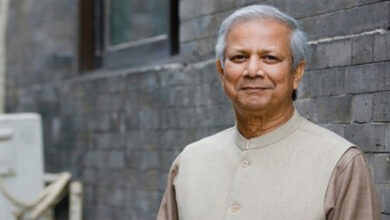
    Noble laureate Dr Muhammad Yunus. Photo: Collected
    Noble laureate Dr Muhammad Yunus. Photo: Collected

    Dhaka:  Nobel laureate Dr Muhammad Yunus has said he is at a crossroads about whether he should feel proud of getting bail in the Grameen Telecom embezzlement case or feel guilty over the situation.

    “It’s recorded. It will be a part of the nation. Should we feel proud or guilty about it? Those who have worked for this organisation all their life had also been accused in the case,” he said after a Dhaka court granted him and seven others bail upon surrender before the court in a case filed over embezzling around Tk25 crore from dividends reserved for Grameen Telecom workers.

    Speaking to reporters outside the court, Dr Yunus said, “This is a historic day. Remember this day. Collect today’s picture today. This is important. Because laws are made for the welfare of people. As law keeps people at peace, it also creates fear and apprehension. In which direction we take the law depends on society’s will.”

    He further said, “Consider this, the Anti-Corruption Commission sat in a trial today – whether it was done for the right reasons or not, whether it was done properly or not. On this day, a Nobel laureate had to stand in court.

    “Keep a picture of this day. It will be a historical picture of the Anti-Corruption Commission… It will be published in various newspapers. It will also be published in various books over the ages. You have witnessed history,” he added.

    The Dhaka court, however, has not disclosed the duration of the bail yet.

    The Labour Appellate Tribunal fixed 16 April as the next hearing date in the case.

    Along with Dr Yunus, seven others who were granted bail are – Grameen Telecom Managing Director Nazmul Islam, directors Ashraful Hasan, Naznin Sultana, Parvin Mahmud, Md Shahjahan, Nurjahan Begum and SM Huzzatul Islam Latifee.

    Earlier, on 1 February, the investigating officer of the case, Anti-Corruption Commission Deputy Director Gulshan Anwar filed a charge sheet against 14 people, including Dr Muhammad Yunus, to Judge Md Asaduzzaman of Dhaka Metropolitan Sessions Judge’s Court.

    Today was scheduled for a hearing on the chargesheet of the case, further details about the hearing regarding the other accused could not be obtained yet.

    The Anti-Corruption Commission (ACC) placed before a Dhaka court the chargesheet against Nobel laureate Dr Muhammad Yunus and 14 others over the embezzlement of around Tk25 crore from dividends reserved for Grameen Telecom workers.

    According to the case statement, a decision was made at the company’s 108th board meeting, presided over by Dr Yunus, on 9 May 2022 to open a bank account at the Gulshan branch of Dhaka Bank. However, it was found that the account was already opened a day before the meeting.

    Over Tk26 crore was transferred to the account on different occasions, as per “fake settlement agreements” and the board’s decision.

    However, before distributing the shares of the company’s profit to the workers and informing them, the accused embezzled about Tk25 crore from the fund in collusion with each other.

  • Shehbaz Sharif elected Pakistan’s prime minister for second term

    Shehbaz Sharif elected Pakistan’s prime minister for second term

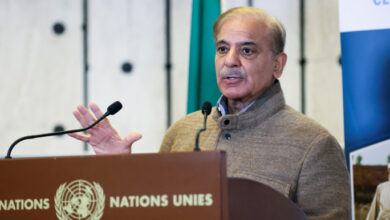
    Pakistan's Prime Minister Shehbaz Sharif speaks at a news conference, during a summit on climate resilience in Pakistan, months after deadly floods in the country, at the United Nations, in Geneva, Switzerland, January 9, 2023. REUTERS/Denis Balibouse/File Photo
    Pakistan’s Prime Minister Shehbaz Sharif speaks at a news conference, during a summit on climate resilience in Pakistan, months after deadly floods in the country, at the United Nations, in Geneva, Switzerland, January 9, 2023. REUTERS/Denis Balibouse/File Photo.

    Islamabad: Pakistan’s newly formed parliament elected Shehbaz Sharif on Sunday as prime minister for a second time, three weeks after uncertain national elections caused delays in the formation of a coalition government.

    “Shehbaz Sharif is declared to have been elected the prime minister of the Islamic Republic of Pakistan,” National Assembly Speaker Ayaz Sadiq said, after announcing Sharif had secured 201 votes, above the required 169 votes in the house.

    He beat Omar Ayub, the candidate backed by jailed former Prime Minister Imran Khan, who secured 92 votes.

    The declaration was met with loud protests from the Sunni Ittehad Council (SIC) party backed by Khan. The lawmakers called for Khan’s release and shouted slogans alleging Sharif had come to power through electoral rigging.

    The Feb. 8 election was marred by a mobile internet shutdown, arrests and violence in its build-up and the unusually delayed results triggered accusations that the vote was rigged.

    Sharif returned to the role he held until August when parliament was dissolved ahead of the elections and a caretaker government took over. No single party won a majority.

    Sharif, 72, is the younger brother of three-time Prime Minister Nawaz Sharif, who spearheaded their Pakistan Muslim League-Nawaz (PML-N) party’s election campaign.

    Candidates backed by Khan gained the most seats but the PML-N and the Pakistan Peoples Party (PPP) agreed to form a coalition government, which enabled Shehbaz Sharif to be elected as prime minister as his brother stepped aside.

    In his previous term, Sharif’s government was able to negotiate a critical International Monetary Fund (IMF) deal but the process was mired in challenges, and measures required by the agreement – which expires in April – have contributed to rising prices and added pressure on poor and middle class households.

    The new government will have to immediately start talks with the IMF for the next agreement to shore up the country’s economy whilst also dealing with growing discontent over deepening poverty.

    The government will also have to grapple with ongoing challenges from Khan’s supporters.

  • UN concerned over Sri Lanka’s proposed laws

    UN concerned over Sri Lanka’s proposed laws

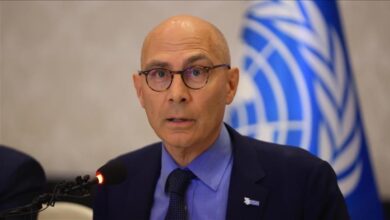
    UN High Commissioner for Human Rights Volker Türk
    UN High Commissioner for Human Rights Volker Türk

    By DARSHANA SANJEEWA BALASURIYA

    UN, March 3 (Daily Mirror) – UN High Commissioner for Human Rights Volker Türk expressed deep concern over Sri Lanka’s proposed legislative measures, at the 55th Session of the Human Rights Council, warning of their potential impact on fundamental rights and freedoms.

    Türk highlighted the introduction of several new laws, including the Online Safety Act, Anti-Terrorism Bill, Electronic Media Broadcasting Authority Bill and NGO Supervision and Registration Bill.

    “These laws, if enacted, could grant extensive powers to the executive, security forces, and severely restrict freedoms of assembly, association and expression,” he said.

    Moreover, Türk emphasized the ongoing economic crisis in Sri Lanka, with poverty levels soaring to an estimated 27.9% and a significant decline in household incomes. Despite efforts by the government, social protection remains strained, with a substantial portion of the budget allocated towards debt servicing.

    The UN High Commissioner also addressed human rights violations dating back to the civil war’s end 15 years ago, including unresolved disappearances, land disputes and lack of devolution promised by Provincial Councils and Local Government bodies.

    Furthermore, Türk raised concerns about the delay in justice for victims of the Easter Sunday bombings, despite the introduction of draft legislation for a Commission for Truth, Unity and Reconciliation. Allegations of surveillance, harassment and arrests of civil society representatives and journalists persist, indicating a troubling environment for accountability and truth-seeking.

    He said the UN is also concerned about the appointment of the new Inspector General of Police, despite the Supreme Court’s finding that he was responsible for torture of an individual in 2010.

    Highlighting reports of abductions, unlawful detention and torture, including sexual violence, Türk underscored the urgent need for comprehensive security sector reforms. Despite these challenges, the UN High Commissioner reiterated the importance of addressing the root causes of conflict and economic crisis for genuine reconciliation and sustainable peace.

    Türk urged the Sri Lankan government to reverse the trend of regressive laws and authoritarian approaches and called for credible accountability measures to investigate and prosecute human rights violations and economic crimes.

    He also urged member states to reinforce these efforts, including through universal jurisdiction and targeted measures against alleged perpetrators.

    The full statement:

    Two years ago, tens of thousands of Sri Lankans took to the streets demanding deep democratic reforms and accountability for economic mismanagement and corruption, which resulted in the most severe socio-economic crisis in a generation. There was great hope that the country would embark upon a long overdue transformation that would benefit all its communities.

    While the Government has taken important steps to stabilize the economy, I am concerned by the introduction of new or proposed laws with potentially far-reaching impact on fundamental rights and freedoms, the rule of law and democratic governance.

    These include the Online Safety Act; the Anti-Terrorism Bill; the Electronic Media Broadcasting Authority Bill; and the NGO Supervision and Registration Bill – which variously strengthen the executive, grant broad powers to the security forces, and severely restrict rights to freedom of assembly, association and expression, impacting not only on civic space but the business environment.

    Meanwhile, the disastrous consequences of Sri Lanka’s economic crisis continue to bite deeply, particularly for the most marginalised. Poverty rose further to an estimated 27.9% last year. Nearly two-thirds of households across the country have seen their monthly incomes decrease since March 2022, while food, transportation, health and education costs continue to rise. Despite the Government’s efforts, social protection remains overstretched, and the government’s largest budget expenditure this year will go towards servicing its debt. I appeal for Sri Lanka to be given the fiscal space and support by international financial institutions and creditors to uphold economic, social and cultural rights.

    This year, Sri Lanka marks 15 years since the end of a decades-long civil war. Yet violations of human rights remain unaddressed. Tens of thousands of families of the disappeared are still looking for their loved ones and face intimidation, arrests and violence in their search. Land disputes continue to escalate in the north and east of the country impacting on people’s livelihoods. Provincial Councils and local government bodies, that promised a measure of devolution, are not currently constituted.

    It is also almost five years since the devastating Easter Sunday bombings, and despite Supreme Court orders victims are still seeking truth and justice.

    While the Government has introduced a draft legislation for a Commission for Truth, Unity and Reconciliation, the environment for a credible truth-seeking process remains absent. My Office continues to receive allegations of surveillance, harassment and arrests by security forces of civil society representatives, journalists and victims, as well as of people who have been involved in organising commemoration events for war victims.

    I remain deeply concerned about recurring, credible accounts received by my Office of abductions, unlawful detention and torture, including sexual violence, by the Sri Lankan police and security forces, some of which allegedly took place in 2023, mainly in the north and east of the country. Last week, the appointment of a new Inspector General of Police was confirmed, despite the Supreme Court’s finding that he was responsible for torture of an individual in 2010. These cases highlight the need for comprehensive security sector reform.

    My Office continues to work to advance accountability in Sri Lanka. It is providing support to several jurisdictions undertaking criminal justice investigations, and is deepening its information and evidence base on specific incidents of human rights concern. It has also been carrying out research on enforced disappearance and conducting consultations with victims.

    Sustainable peace and reconciliation will not be achieved in Sri Lanka with regressive laws and authoritarian approaches, which will only serve to perpetuate the human rights concerns of the past.

    I urge the Government immediately to reverse this trend and undertake credible accountability measures to investigate and prosecute past and present human rights violations and economic crimes. I also urge Member States to continue to reinforce these efforts, including through appropriate use of universal and extra-territorial jurisdiction and targeted measures against credibly-alleged perpetrators of serious human rights violations and abuses.

    It is only through addressing the root causes of the country’s conflict and economic crisis, and ensuring accountability, that Sri Lanka will be able to enhance its prospects of achieving genuine reconciliation and sustainable peace and development.

  • Taleban Hopes for Improved Relations with New Govt in Pakistan

    Taleban Hopes for Improved Relations with New Govt in Pakistan

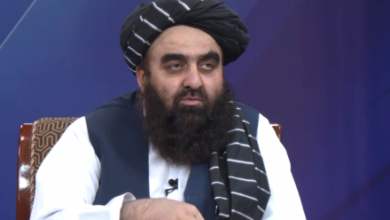
    The acting Minister of Foreign Affairs, Amir Khan Muttaqi
    The acting Minister of Foreign Affairs, Amir Khan Muttaqi

    Kabul: The acting Minister of Foreign Affairs, Amir Khan Muttaqi, in a special interview with TOLOnews said that he is hopeful that the relations between Kabul and Islamabad will improve with the emergence of a new government in Pakistan.

    Amir Khan Muttaqi emphasized that the caretaker government of Afghanistan seeks good relations with all countries, especially neighboring countries.

    “We hope that after the elections in Pakistan and the formation of a new government, as some high-ranking officials have made positive remarks about, the situation will improve. Most importantly, the people on both sides are very poor, their economy and security are important, and we have cooperated in all sectors,” Muttaqi said.

    The senior official of the Islamic Emirate said the deportation of Afghan refugees from Pakistan <<<was>>> a political pressure tactic and emphasized that the presence of Afghan refugees in Pakistan poses no threat to that country.

    “If these refugees were a threat to security, they have been there for 40 years, why were they not a threat with this time? Now millions of people are there, why are they not a threat? These reasons cannot be justified,” he stated.

    The acting foreign minister also stressed that regional countries have concluded that Afghanistan is no longer a threat to them.

    “When a representative from Moscow comes here, along with representatives from Beijing and all regional countries, and sits around a table, it sends a message to the world that there is now security in Afghanistan and there is confidence, and the region is happy with Afghanistan, and people from neighboring countries should take steps in this direction,” he said.

    This follows the forced deportation of nearly half a million Afghans, with Pakistan setting a deadline for the remaining Afghan refugees to leave the country by the end of February.

  • Indian travellers can now scan and pay in Nepal

    Indian travellers can now scan and pay in Nepal

    For Nepalis holding debit cards, the transaction fee to withdraw from Indian banks is expensive. Post file photo
    For Nepalis holding debit cards, the transaction fee to withdraw from Indian banks is expensive. Post file photo

    By Sangam Prasain & Krishana Prasain

    Kathmandu : Indian tourists visiting Nepal were able to pay for the services through their mobile phones on Wednesday, for the first time since the ban on high-denomination Indian currency notes eight years ago.

    This marks a milestone in cross-border digital payment between Nepal and India and is expected to give a much-needed boost to the country’s tourism.

    Khalti reported that on the first day, they recorded more than 100 transactions.

    “The highest single transaction we recorded on Wednesday, the first day, amounted to Rs9,000 through the QR-based cross-border payment system,” said Binay Khadka, the CEO of Khalti, a digital wallet for instant online payments in Nepal.

    “We expect daily transactions to increase in the coming days.”

    The cross-border digital payment service was put on trial at the start of the week. The formal announcement for the commercial operation was made on Wednesday.

    The reciprocal service for Nepali citizens in India, however, has been delayed for unknown reasons.

    Sources said Nepal’s central bank has recently formed a committee to study the transaction limits through digital wallets for Nepalis travelling to India.

    The private sector, particularly, travel trade entrepreneurs has expressed happiness with the digital payment initiative between the two neighbours, which normally see a topsy-turvy relationship.

    The new system eliminates hassles associated with currency exchange, eliminates the need to carry physical cash, and ends complexities associated with currency conversion or visiting banks for currency exchange.

    For the service in Nepal, two digital wallets, Khalti and Fonepay Payment Service, have partnered with India’s NPCI International Payments to launch the cross-border payment service using quick-response (QR) codes.

    “This strategic partnership empowers Indian tourists to seamlessly make transactions in the Nepali market by scanning Khalti QR code using their preferred digital wallets, such as PhonePe and BHIM UPI,” according to Khalti.

    With Khalti’s QR code technology, over 20,000 Nepali merchants can effortlessly accept payments from Indian tourists, enhancing their revenue streams, it said.

    The payment services, currently, have been started from the two Indian digital apps.

    “As UPI will rope in more apps, it will enable payments through other Indian digital wallets soon,” Khadka said. “This is just the beginning.”

    The Post couldn’t independently verify the daily transaction limit for Indian citizens in Nepal.

    However, according to NPCI, the UPI transaction limit per day is set at IRs100,000 per person.

    Khadka said that as India’s PhonePe and BHIM UPI do not hold funds, payments are processed through banks. “So, the daily transactions are decided at the bank’s end.”

    But the progress from Nepal’s side is disappointing.

    “For the first time, payment through QR code has been allowed for Indians travelling to Nepal,” said Gunakar Bhatta, executive director at the Payment Systems Department of Nepal Rastra Bank, the country’s central bank.

    “We, however, are doing a study to set a daily payment limit for Nepalis in India through QR codes.”

    Sources, however, said that the delay on Nepal’s part shows the central bank’s lax approach as it has been nearly a year since both countries started working to introduce the cross-border digital payment system.

    But the launch of Nepal’s digital payment system in India anytime soon is uncertain, the source said.

    On June 1 last year, Nepal and India signed a memorandum of understanding for cross-border digital payment to ease digital transactions for business people, students, and tourists from both countries.

    Hundreds of thousands of Nepalis travel to India annually for medical and study purposes and have been facing hassles with currency conversion as they have to go to banks or pay big commissions to money exchanges at border points. For Nepalis holding debit cards, the transaction fee to withdraw from Indian banks is expensive.

    Bhatta, however, said that it is uncertain when Nepal will launch its digital payment system in India. “There is no fixed date. But as soon as the study is completed, based on the recommendation, we will launch the digital payment system in India,” said Bhatta.

    Since the ban on high-denomination Indian currency notes, Indian tourists have been facing difficulties paying for services in Nepal as they are allowed to carry notes of up to Rs100 denomination. Debit card usage is limited to mostly urban areas in Nepal.

    The Indian government, in a surprise move on November 8, 2016, pulled INR500 and INR1,000 out of circulation “to unearth unaccounted wealth and fight corruption”.

    As a tit-for-tat policy, Nepal’s central bank, subsequently, banned all Indian notes above INR100 in Nepal. The 2,000 rupee note introduced by the Reserve Bank of India on November 8, 2016, too, was banned.

    The Reserve Bank of India, in February 2015, introduced the Foreign Exchange Management (export and import of currency) Regulations, allowing Nepali and Bhutanese citizens to “carry Reserve Bank of India currency notes of denominations INR500 and/or INR1,000 up to a limit of INR25,000”.

    “The cross-border digital payment service is good news for the tourism industry,” said Binayak Shah, president of the Hotel Association Nepal. “We all know how Indian tourists are facing hassles over payments in Nepal despite being the citizens of a close neighbour,” he said.

    “The credit card is not accessible in most of Nepal’s locality. As the QR system has reached almost all areas, this will greatly facilitate tourists.”

    He said the government should also introduce a payment system in US dollars to pep up tourism.

    Travel trade entrepreneurs said Nepal wants to host 2 million tourists annually and boost the economy through their spending, but on the other hand, it has set limits to bring money.

    Nepal welcomed 1 million tourists in 2023 following record arrivals from India.

    For the first time, Nepal received over 315,000 Indian tourists last year, who came to Nepal by air. Indian tourists coming via land routes are not taken into account as tourists and therefore no records are kept.

    However, a survey of overland Indian visitors conducted by Nepal Tourism Board in 2017 shows more than 1.2 million Indians came to Nepal by land. The survey showed that the average length of stay of Indian tourists coming overland was 5.8 days. The average expenditure per visitor was Rs11,310.

    On February 15 this year, the Nepal Rastra Bank and Reserve Bank of India signed and exchanged Terms of Reference for interlinking the Unified Payment Interface (UPI) of India and the National Payment Interface of Nepal.

    The integration is aimed at facilitating cross-border remittances between India and Nepal by enabling users of the two systems to make instant, low-cost fund transfers.

    Khalti said it is optimistic that “within a few days, Nepali citizens will also be able to make payments in Indian markets by scanning QR codes through their Khalti wallets.”

    Sangam Prasain
    Sangam Prasain is Business Editor at The Kathmandu Post, covering tourism, agriculture, mountaineering, aviation, infrastructure and other economic affairs. He joined The Kathmandu Post in October 2009.

    Krishana Prasain
    Krishana Prasain is a business reporter for The Kathmandu Post covering markets. Before joining The Kathmandu Post in 2018, she spent 3 years in New Business Age magazine covering business.

  • Sri Lanka awards energy projects to India after canceling tender won by China

    Sri Lanka awards energy projects to India after canceling tender won by China

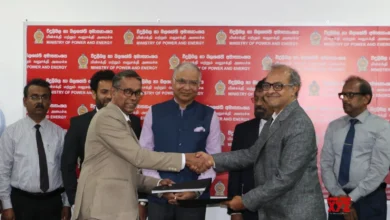
    On Friday, the two signed the contract for the Hybrid Renewable Energy Project in Nainativu, Analaitivu, and Delft islands, off Jaffna.
    On Friday, the two signed the contract for the Hybrid Renewable Energy Project in Nainativu, Analaitivu, and Delft islands, off Jaffna.

    NEW DELHI: Sri Lanka has awarded a contract for the construction of three solar and wind hybrid power generation facilities to an Indian company, following the cancellation of a tender previously won by a Chinese firm.

    Initially financed by an Asian Development Bank (ADB) loan, the project had been put on hold two years ago due to India’s apprehensions regarding China’s participation.

    Sri Lanka’s energy ministry announced on Friday that the project has been revived and is now entirely funded by an $11 million grant from the Indian government. The contract for building the facilities has been awarded to U-Solar, a renewables firm based in Bengaluru, India.
    According to a statement from the Indian embassy, India’s assistance “underscored the significance New Delhi attached to bilateral energy partnership”.

    The three facilities, with a combined renewable energy capacity of 2,230 kilowatts, will be situated on islets near the northern city of Jaffna, not far from India’s southern coast.

    Sri Lanka is currently recovering from its worst economic crisis since gaining independence from Britain in 1948. Beijing is Sri Lanka’s largest bilateral creditor, contributing to approximately 10 percent of the island nation’s $46 billion foreign debt during the government default at the height of the crisis in 2022.