Tag: Afganistan

  • Afganistan Launches Efforts to Aid Refugees in Neighboring Countries

    Afganistan Launches Efforts to Aid Refugees in Neighboring Countries

    Displaced families collect water during a harsh winter in Kabul, Afghanistan. © UNHCR/Andrew McConnell
    File Photo: Displaced families collect water during a harsh winter in Kabul, Afghanistan. © UNHCR/Andrew McConnell

    Kabul: The Administrative Deputy of the Prime Minister’s Office, during his visit to the refugee township in Daman District of Kandahar Province, stated that the Islamic Emirate has initiated efforts in neighboring countries to improve the situation of Afghan refugees.

    Abdul Salam Hanafi further emphasized that neighboring countries should treat Afghan refugees based on good neighborly relations and international migration principles.

    He said: “Afghans living in neighboring countries possess legal residency documents and should not be subjected to unlawful treatment. We are striving to improve their situation, and at the same time, we urge neighboring countries to treat Afghan refugees according to Islamic principles or international migration standards.”

    Meanwhile, the Acting Minister of Urban Development and Housing stated that around 500 million Afghanis will be allocated this year to provide shelters for refugees.

    Hamidullah Nomani, the Acting Minister, said: “The budget for refugee townships has been allocated on an emergency basis by the leadership of the Islamic Emirate. This year, we have also proposed 500 million Afghanis to be spent on the construction of refugee townships.”

    On the other hand, several forcibly returned refugees from Pakistan have welcomed the start of the land distribution process by the Islamic Emirate.

    Abdul Samad, one of the deportees from Pakistan, said: “Roads must be constructed in the townships, schools and madrasas must be activated, and services must be expedited.”

    Faizul Haq, another deportee, said: “Lands must be handed over to us as soon as possible because we are currently living under tents and are in difficult conditions.”

    According to the Ministry of Urban Development and Housing, the distribution of land plots for returnees has begun in 35 townships across 25 provinces.

  • US President Exploded As Afghanistan Collapsed, Admitted Feeling Tired, Claims Book

    US President Exploded As Afghanistan Collapsed, Admitted Feeling Tired, Claims Book

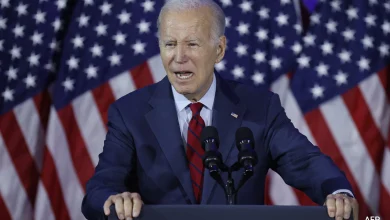
    Joe Biden was on vacation when Taliban took over Kabul in 2021, as per a new book.
    Joe Biden was on vacation when Taliban took over Kabul in 2021, as per a new book.

    Kabul: US President Joe Biden gave an explosive reaction when he was told that then-Afghanistan President Ashraf Ghani had fled Kabul ahead of the Taliban’s takeover of the city, according to a new book. It mentions that Mr Biden was on vacation at that time at Camp David and he was told about the events in Afghanistan by National Security Advisor Jake Sullivan on August 12, 2021, as per a Fox News report.

    The chaotic withdrawal has been rendered in great detail in the book titled ‘The Last Politician: Inside Joe Biden’s White House and the Struggle for America’s Future’ by Franklin Foer.

    “Biden exploded in frustration when he heard the news and exclaimed ‘Give me a break!’” Mr Foer said in the book.

    It also mentions that Mr Biden wasn’t the only one on vacation when Mr Ghani escaped.

    After the withdrawal of US forces, the Biden administration had thought that the responsibility will be gradually handed over to the new Afghan government.

    But the Taliban rapidly advanced and took over many cities as US forces moved out of bases, prompting Mr Ghani to flee.

    Mr Foer has also claimed in the book that the US President privately admitted to feeling “tired”, but described his vast political experience as a vital asset.

    “His advanced years were a hindrance, depriving him of the energy to cast a robust public presence or the ability to easily conjure a name,” Mr Foer has said in the book, according to The Guardian.

    The author has not cited a source for Mr Biden’s reported private remarks but his book, according to its publisher, Penguin Random House, is based on “unparalleled access to the tight inner circle of advisers who have surrounded Biden for decades”.

    Last month, The Guardian published the results of a poll conducted by the Associated Press and Norc Centre for Public Affairs, which said that 77 per cent of Americans thought age would be a problem if Mr Biden won the White House again.

    The book is set to be released in the US on Tuesday.

  • Weakening Afghan Interim Govt Harms Everyone Says AFM

    Weakening Afghan Interim Govt Harms Everyone Says AFM

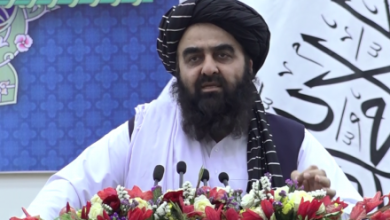
    The acting Minister of Foreign Affairs, Amir Khan Muttaqi
    The acting Minister of Foreign Affairs, Amir Khan Muttaqi

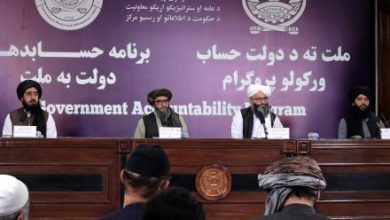
    Kabul: The acting Minister of Foreign Affairs, Amir Khan Muttaqi, said that weakening the Afghan government will harm everyone and that the international community has assured the Islamic Emirate that they don’t support the armed resistance against the interim government.

    Speaking at a large gathering of religious clerics and influential figures of the country, Muttaqi said that Afghan soil is not a threat to any country and there is a need for the international community have a moderate policy towards the Islamic Emirate.

    “There is no opposition all over Afghanistan. The whole world assured us that they don’t support the armed opponents. This opportunity should be used considering the policy of the Islamic Emirate and its moderate policy which doesn’t want Afghanistan to become a battlefield for negative powers,” he said.

    Addressing the same gathering, the country’s Interior Minister, Sirajuddin Haqqani, called on the people to support the Islamic Emirate.

    “The reconstruction needs patience and major engagement. Bullying has ended and a pure independence has been ensured,” he said.

    The participants issued a resolution of 12 principles, in which they also stressed the facilitation of religious and modern education based on Sharia and Afghan culture.

    The statement also stresses the need for engagement of the Islamic Emirate with the international community within a Sharia and Islamic framework. They also called for releasing Afghanistan’s assets abroad and lifting sanctions as well as economic cooperation by the international community.

    “The Ulema and influential figures wants the Islamic Emirate to take necessary actions for engagement with the world while considering Islamic Sharia, independence, reputation of Afghanistan, national reconciliation and based on the current conditions,” said Sultan Ahmad Adel, head of the Ulema council at 22nd PD in Kabul.

    “We are opposing modern education. We need medical, science, physics, chemistry, and biology,” said Deen Mohammad, head of the Kabul Ulema.

    The gathering of the religious clerics and influential figures comes as the international community has repeatedly called for national consensus and national dialogue in Afghanistan in a bid to solve the ongoing challenges of the country.

  • BRICS’ Silence on Taliban: The World Must Not Abandon Afghanistan & Its Women

    BRICS’ Silence on Taliban: The World Must Not Abandon Afghanistan & Its Women

    afghan women
    A girl looks on among Afghan women lining up to receive relief assistance, during the holy month of Ramadan in Jalalabad, Afghanistan, June 11, 2017. REUTERS/Parwiz – RC19526F6FC0.

    By C UDAY BHASKAR

    Afghan women were dealt yet another body blow by the Taliban regime which declared that women were not observing the hijab regulations inside parks in the prescribed manner and hence, would be forbidden from entering such recreation spots.

    Mohammad Khaled Hanafi – Afghanistan’s acting minister of virtue and vice – made this announcement on 26 August after noticing the ‘transgression’ by some women at the well-known Band-e-Amir National Park.

    He further added that it “was not obligatory” to visit parks for sightseeing and that a solution would soon be found – presumably one that would place further fetters on the hapless women and girl children of Afghanistan who are already reeling under the gender apartheid policies of the Taliban.

    afghan women
    afghan women

    Women Remain a Target of the Taliban

    Multiple ironies and tragedies mark the plight of the Afghan people and women in particular since the Taliban returned to power in Kabul in August 2021.

    Over the last two years, it is evident that the Afghan issue has gone off the radar of the major powers, and barring anodyne references at multilateral summits and at the UN that are made periodically – the women of Afghanistan have been abandoned to the misogynistic mercy of the Taliban regime.

    The shambolic US withdrawal announced by President Joe Biden soon after he assumed office – was symptomatic of this costly US fatigue and a cynical acceptance by the White House that despite the blood and treasure expended since October 2001, socio-cultural rhythm change in Afghanistan was not a feasible proposition.

    Liberal voices within Afghanistan have been stifled – in extreme cases, even killed – and there is no discernible light at the end of the tunnel.

    Afghanistan Isn’t Brought Up in BRICS

    In keeping with this erasure of the Afghan woman from the larger global consciousness, it was both intriguing and disappointing that there was no reference at all to Afghanistan in the recently concluded BRICS summit in South Africa.

    The 94-paragraph document comprising 9276 words touched upon various issues and some of the troubled conflict-ridden regions of the world – but Afghanistan was missing.

    It merits recall that at the BRICS 2021 summit chaired by India, Afghanistan received empathetic notice from the five-member group (Brazil, Russia, China, and South Africa being the other four), and at that time, the leaders sought an “inclusive intra-Afghan dialogue so as to ensure stability, civil peace, law, and order.”

    The 2022 BRICS summit chaired by China devoted a whole paragraph to the Afghan issue and noted: “We strongly support a peaceful, secure, and stable Afghanistan while emphasizing the respect for its sovereignty, independence, territorial integrity, national unity, and non-interference in its internal affairs. We emphasise the need for all sides to encourage the Afghanistan authorities to achieve national reconciliation through dialogue and negotiation, and to establish a broad-based inclusive, and representative political structure. We reaffirm the significance of relevant UNSC resolutions.”

    It also states, “We emphasise that the Afghan territory not to be used to threaten or attack any country or to shelter or train terrorists, or to plan to finance terrorist acts, and reiterate the importance of combating terrorism in Afghanistan. We call on the Afghanistan authorities to work towards combating drug-related crime to free Afghanistan from the scourge of drugs. We stress the need to provide urgent humanitarian assistance to the Afghan people and to safeguard the fundamental rights of all Afghans, including women, children, and different ethnic groups.”

    Sidestepping the Afghan Issue

    The SCO (Shanghai Cooperation Organisation) which has a regional and counter-terrorism focus has in the past, taken note of the intractable Afghan issue at its summits and it is instructive that India, Russia, and China are the three major nations who are part of both BRICS and the SCO.

    While they have provided bilateral support to Afghanistan over the decades, there has been no RIC (Russia, India, China) consensus about harmonisng their efforts in a tangible manner to realise their declaratory positions – particularly as related to the contentious issue of Afghan gender equity.

    The 2022 BRICS summit chaired by China devoted a whole paragraph to the Afghan issue and noted: “We strongly support a peaceful, secure, and stable Afghanistan while emphasizing the respect for its sovereignty, independence, territorial integrity, national unity, and non-interference in its internal affairs. We emphasise the need for all sides to encourage the Afghanistan authorities to achieve national reconciliation through dialogue and negotiation, and to establish a broad-based inclusive, and representative political structure. We reaffirm the significance of relevant UNSC resolutions.”

    It also states, “We emphasise that the Afghan territory not to be used to threaten or attack any country or to shelter or train terrorists, or to plan to finance terrorist acts, and reiterate the importance of combating terrorism in Afghanistan. We call on the Afghanistan authorities to work towards combating drug-related crime to free Afghanistan from the scourge of drugs. We stress the need to provide urgent humanitarian assistance to the Afghan people and to safeguard the fundamental rights of all Afghans, including women, children, and different ethnic groups.”

    Sidestepping the Afghan Issue

    The SCO (Shanghai Cooperation Organisation) which has a regional and counter-terrorism focus has in the past, taken note of the intractable Afghan issue at its summits and it is instructive that India, Russia, and China are the three major nations who are part of both BRICS and the SCO.

    While they have provided bilateral support to Afghanistan over the decades, there has been no RIC (Russia, India, China) consensus about harmonisng their efforts in a tangible manner to realise their declaratory positions – particularly as related to the contentious issue of Afghan gender equity.

    With India preparing to host the G20 summit from 8 to 10 September, one hopes that there will be the appropriate degree of high-level political attention accorded to Afghanistan and its stoic women who have borne the brunt of cruel and grossly iniquitous gender policies.

    The brave women teachers in Afghanistan who continue to teach the girl child secretly despite the Taliban diktat merit a salute for keeping the flickering flame alive. Their plight and resolve should not be erased from the collective global memory.

    (Commodore C Uday Bhaskar, Director, Society for Policy Studies, has the rare distinction of having headed three think tanks. He was previously Director at the National Maritime Foundation (2009-11) and the Institute for Defence Studies and Analyses (2004-05). He tweets @theUdayB. This is an opinion piece. The views expressed above are the author’s own. The Quint neither endorses nor is responsible for them.)

  • Japanese Envoy Urges Afghan Interim Govt to Strengthen Internal Legitimacy

    Japanese Envoy Urges Afghan Interim Govt to Strengthen Internal Legitimacy

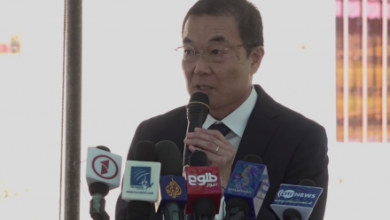
    The Japanese Ambassador in Kabul, Takashi Okada
    The Japanese Ambassador in Kabul, Takashi Okada.

    Kabul:  The Japanese Ambassador in Kabul, Takashi Okada, called on the Afghan “de facto” authorities to strengthen legitimacy within the country to expand international cooperation.

    Speaking at a signing ceremony for “Enhancing Agriculture Production through Community-Led Irrigation between the Embassy of Japan and FAO”, Okada said:

    “For the expansion of international cooperation, the de facto authorities first needs to strengthen… legitimacy within the country by prioritizing people’s needs. When it happens, its external relations will be improved.”

    During the ceremony, a water project worth $9.5 million in eastern Kunar province was kicked off. The project was signed between the Food and Agriculture Organization of the UN and Japan.

    Okada said that approximately 12,000 people will benefit from the project.

    “With this agreement, the Japanese government will provide approximately $9.5 million to FAO for the rehabilitation and expansion of Tetsu Nakamura’s legacy project,” he said.

    Richard Trenchard, FAO Representative in Afghanistan, said that the project will begin mid next year.

    “The construction will begin next year. In the middle of next year. Involving local Afghan companies and the project will be completed by 2027,” he said.

    Japanese ambassador once again reiterated his country’s support to the people of Afghanistan.

  • US Should Align Sanctions Policy with Peacemaking Efforts : ICG

    US Should Align Sanctions Policy with Peacemaking Efforts : ICG

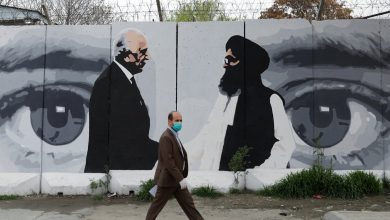
    An Afghan man walks past a wall painted with a photo of U.S. Special Representative for Afghanistan Reconciliation Zalmay Khalilzad in Kabul, Afghanistan, on April 13, 2020. Mohammad Ismail/Reuters
    An Afghan man walks past a wall painted with a photo of U.S. Special Representative for Afghanistan Reconciliation Zalmay Khalilzad in Kabul, Afghanistan, on April 13, 2020. Mohammad Ismail/Reuters

    By Mujeeb Rahman Awrang Stanikzai
    Head of TOLOnews’ Online Department

    Kabul: The International Crisis Group (ICG), said in a new report that sanctions have become an increasingly prominent tool of US statecraft, but urged Washington to align sanctions policy with peacemaking efforts.

    The ICG said that as the use of sanctions has increased, so, too, has awareness of their collateral effects.

    “While the US looks to sanctions to further its goals in numerous conflicts, sanctions also sometimes obstruct peacemaking – that is, activities in the service of violence prevention and conflict resolution,” it said. “The more Washington uses sanctions, the more far-reaching the downsides are and the more pressing it is to address them.”

    To align sanction policy with peacemaking efforts, the ICG said, the US administration “could do so by setting clear objectives for sanctions programs, subjecting them to rigorous periodic review, expanding and making permanent carveouts for peace activities, and addressing private-sector concerns about investment in previously sanctioned jurisdictions.”

    It said sanctions can also impede US efforts to encourage private-sector investment in post-conflict settings. Investors often lack the confidence to enter markets where sanctions exist, even when the US Treasury has issued licenses specifically authorising certain transactions or when sanctions have recently been lifted, in part or in full. In these situations, sanctions have a “chilling effect” on business activity or, in the words of one former US official, hang over a country “like a black cloud”.

    According to the report, private firms often express confusion about the scope of permitted activity and may err on the side of caution by refusing to do business in these places altogether.

    “Such have been the calculations of many companies that had been active in Afghanistan before the Taliban takeover, which pulled out of the country despite the general licenses published by the US permitting extensive private-sector transactions as part of efforts to stave off state collapse,” the report said.

    The ICG cited that the effects can seem trivial (some diplomats working on Venezuela in 2019 and 2020 were told to avoid buying anything, even a cup of coffee, for sanctioned members of the Maduro government), but in other cases they can prove a hurdle to dialogue.

    “For example, some US officials have expressed regret at the designation of Afghanistan’s Haqqani network as a Foreign Terrorist Organization (FTO), which they said made it harder for the US government as a whole to come around to the idea of dialogue with the group on ending the conflict in Afghanistan,” it said.

  • WFP Says ‘5.6 Million’ Afghans Given Aid in July

    WFP Says ‘5.6 Million’ Afghans Given Aid in July

    The International Organization for Migration recently wrote in a report that seventy percent of Afghan citizens are currently below the poverty line.
    The International Organization for Migration recently wrote in a report that seventy percent of Afghan citizens are currently below the poverty line.

    Kabul: The World Food Program announced it provided food and cash to more than 5.6 million people across Afghanistan in July.

    Wahidullah Amani, the spokesperson of the World Food Program in Afghanistan, said that the assistance of the organization includes 35,000 tons of food and $9 million in cash, which was distributed to the citizens of Afghanistan in July.

    “WFP in Afghanistan this July was able to provide food aid to more than 5.6 million people across Afghanistan. Among these, 3.8 million people were those who benefited from emergency humanitarian aid,” said Wahidullah Amani.

    Meanwhile, some economists said that for transparency in the distribution of aid, it is necessary to create a committee to supervise the process of providing aid and emphasize that Afghan citizens will need help more than ever in the coming winter.

    “In order to reduce the level of poverty in Afghanistan, it is necessary to change the way of aid and to spend it in ways that can create a basis for employment for the poor families of the country,” said Seyar Qurishi, an economist.

    The Ministry of Economy has welcomed the assistance of aid organizations in Afghanistan, adding that for economic progress, it is necessary to build up infrastructure.

    We welcome the help of the international community, but the aid can be effective when it is used in infrastructure. At the same time, aid should take a developmental aspect to play an important role in creating employment and reducing poverty.

    The International Organization for Migration recently wrote in a report that seventy percent of Afghan citizens are currently below the poverty line.

  • Afgan Higher Education Ministry Says it is Formulating Plan for Girls’ Schooling

    Afgan Higher Education Ministry Says it is Formulating Plan for Girls’ Schooling

    The deputy minister of Higher Education said that about 200 to 250 professors from various universities have left the country.
    The deputy minister of Higher Education said that about 200 to 250 professors from various universities have left the country.

    Kabul: A committee of the Ministry of Higher Education said it is working on a plan to reopen universities for girls and will share it with the public if finalized.

    Lutfullah Khairkhwa, the deputy minister of Higher Education, said during the annual reporting of the ministry that the finalization time for the plan is not clear.

    The Ministry of Higher Education in the past year has started 3 Ph.D. programs and 15 master’s programs, and now there are 9 Ph.D. programs and 40 master’s programs in Afghanistan, he said.

    Khairkhwa gave statistics that 118,000 new students were recruited to universities in the last year and more than 400,000 students are studying in the country’s universities.

    The deputy minister of Higher Education said that about 200 to 250 professors from various universities have left the country.

    Meanwhile, Hafiz Hamed Hasib, the financial and administrative deputy of the higher education ministry said in the annual report of the ministry that 658 religious scholars have been recruited to teach Islamic subjects in universities, and nearly 90 scholars have been invited to specialized Islamic programs.

    According to the Ministry of Education, in the past year more than 1 million new students were registered in schools, of which “more than 500,000 of them are girls,” presumably referring to girls under grade 7.

    Kiramatullah Akhoundzada, an official of the Education Ministry, in the annual report of the ministry, said that a total of 10,189,634 students, including more than 4 million girls, are registered with them.

    According to the ministry, there are 18,010 schools in Afghanistan now.

  • China-Hosted Trade Exhibit Includes 50 Afghan Booths

    China-Hosted Trade Exhibit Includes 50 Afghan Booths

    the 7th South Asia-China Import and Export Exhibition
    the 7th South Asia-China Import and Export Exhibition

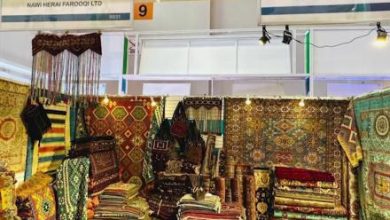
    Kabul: The Afghanistan Chamber of Commerce and Investment said that 50 Afghan businessmen, led by a delegation from the chamber, participated in the 7th South Asia-China Import and Export Exhibition.

    “In the exhibition section of this conference, about 50 Afghan businessmen have booths to display Afghan products and services in the exhibition, and a delegation from the Chamber of Commerce and Investment has also participated in the conference and exhibition,” said Khan Mohammad Sarfraz, an official of the Chamber of Commerce and Investment.

    Mawlawi Abdul Kabir, the political deputy PM, said at the opening ceremony of the exhibition that holding such exhibitions can bring the countries of the region closer together.

    “Organizing such exhibitions can bring regional countries closer together and increase trade opportunities. Governments are responsible for the progress of their people’s economy,” said Mawlawi Abdul Kabir.

    The political deputy PM who spoke online at the opening ceremony of the exhibition, also emphasized creating facilities for foreign investors inside the country.

    “Economic and trade relations between Afghanistan and China are at a good level and both sides are trying to develop these relations. Two years ago, on August 15, when political changes occurred in Afghanistan, China was one of the first countries to which we were able to start exporting pine nuts,” said Mawlawi Abdul Kabir.

    China is one of the countries that kept its embassy in Kabul open after the takeover of the Islamic Emirate in Afghanistan and also signed some commercial contracts with the current government, including for oil extraction in the Amu Darya area.

  • China’s Foreign Ministry: What Happened in Afghanistan ‘Failure of US’

    China’s Foreign Ministry: What Happened in Afghanistan ‘Failure of US’

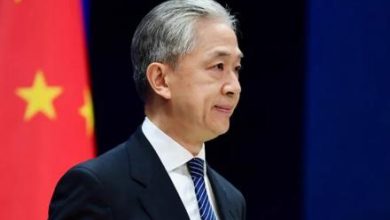
    Chinese foreign ministry spokesperson Wang Wenbin
    Chinese foreign ministry spokesperson Wang Wenbin

    Kabul: The fall of Kabul was a military and political “failure” of America, a spokesman for China’s foreign ministry said on the anniversary of the Islamic Emirate’s two-year rule.

    Addressing a press conference on Tuesday, August 15, Chinese foreign ministry spokesperson Wang Wenbin said that Afghanistan has been stable for two years and the future of this country is now back in the hands of its people.

    “What happened in Afghanistan marked a military, political and counter-terrorism failure of the US in Afghanistan, and once again proved that military intervention, political infiltration and “democratic transformation” from the outside will not work and will only breed turmoil and disaster,” Wenbin noted.

    The spokesperson added that the international community expects the Islamic Emirate to fulfill its commitments to form a comprehensive government, ensure the rights of women and ethnic minorities, and prevent terrorist activities in Afghanistan.

    “The international community still has expectations for Afghanistan in building a more broad-based and inclusive government framework and safeguarding the rights and interests of all its citizens, including women and ethnic minorities,” Wang Wenbin added.

    The Islamic Emirate has not yet complied with the requests of the international community regarding women’s rights.

    In reaction to restrictions on women in Afghanistan, António Guterres, Secretary-General of the UN, said: “It is now two years since the Taliban takeover of Afghanistan & the situation in the country remains deeply troubling, including the severe restrictions imposed on the rights of women & girls. The international community must not forget the people of Afghanistan.”

    But the Islamic Emirate spokesman said that women’s rights have been ensured in the country.

    “We have never violated human rights; the rights that people possess are assessed in accordance with the Islamic Sharia, and they will definitely be granted to them. We are also defending people’s rights,” Mujahid said.

    Although two years of the Islamic Emirate have passed in the country, the world does not recognize it due to what the world sees as the violation of human rights and the non-establishment of a inclusive government in the country.

    However, the Islamic Emirate has consistently highlighted that, in accordance with Islamic law, women’s rights are upheld, and the formation of an inclusive government is one of Afghanistan’s internal issues.