Tag: Afghanistan

  • Norwegian Refugee Council: Return of Migrants Has Worsened Afghanistan’s Food Crisis

    Norwegian Refugee Council: Return of Migrants Has Worsened Afghanistan’s Food Crisis

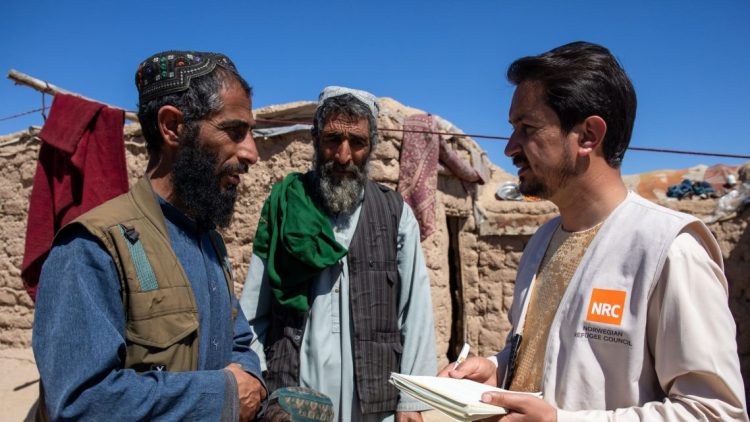
    Kabul : The Norwegian Refugee Council (NRC) has said that the forced return of tens of thousands of Afghan migrants from Iran and Pakistan, combined with severe droughts and recent earthquakes, has further aggravated Afghanistan’s humanitarian crisis.

    In a report released on Saturday, December 13, the council said that about 17.4 million people, nearly 36 percent of the country’s population, are facing acute food insecurity, with many families unable to meet their most basic living needs.

    The NRC added that the large-scale return of migrants to areas already struggling with extreme poverty and vulnerability has placed immense pressure on scarce local resources, putting the lives of millions at risk.

    The council also warned that successive droughts and recent devastating earthquakes in eastern and northern Afghanistan have destroyed people’s assets and agricultural land, further weakening their economic capacity.

    Emphasizing the approach of winter, the Norwegian Refugee Council called on the international community to deliver urgent assistance to Afghanistan to prevent widespread hunger.

  • More Than 800 Migrant Families Returned to Afghanistan Yesterday

    More Than 800 Migrant Families Returned to Afghanistan Yesterday

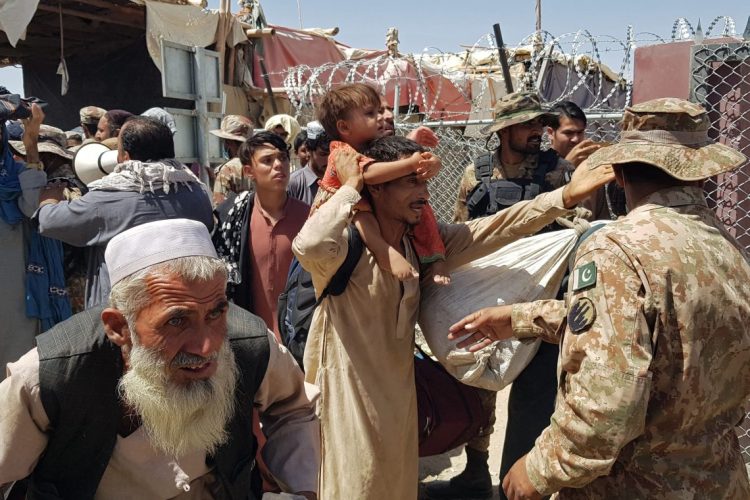
    Kabul : Media outlets under Taliban control reported that 830 migrant families returned to Afghanistan yesterday.

    The Taliban-run Bakhtar News Agency reported on Saturday, December 13, that 86 families returned via the Pul-e Abrasham crossing in Nimroz, 25 families via Islam Qala in Herat, 274 families via Spin Boldak in Kandahar, 375 families via Torkham in Nangarhar, and 70 families via Bahramcha in Helmand.

    Two days earlier, more than 1,000 migrant families had also returned to the country.

    Meanwhile, the governor of Iran’s Razavi Khorasan Province has said that 1.8 million Afghan migrants have returned to their country this year through the Islam Qala border crossing.

    In addition, Tom Fletcher, the United Nations Under-Secretary-General for Humanitarian Affairs, has said that more than two million migrants have returned to Afghanistan this year.

  • Will Afghanistan’s pledge against cross-border attacks ease tensions with Pakistan?

    Will Afghanistan’s pledge against cross-border attacks ease tensions with Pakistan?

    KABUL: As tensions flare up again between Afghanistan and Pakistan, the Afghan leadership has moved to reaffirm its commitment against cross-border militancy this week in what is seen as Kabul’s attempt to move the needle on peace negotiations, after multiple rounds of talks failed to produce a lasting truce.

    The neighboring countries have struggled to maintain a fragile ceasefire after border clashes killed dozens in October, the worst fighting since the Taliban took control of Afghanistan in 2021.

    While subsequent talks toward a permanent ceasefire yielded little progress, the temporary truce brokered by Qatar and Turkiye collapsed last Friday, with heavy firing along the Spin Boldak-Chaman border that killed at least five people.

    Over the years Pakistan has put much of the blame for the border clashes on the government in Kabul allowing Tehreek-e-Taliban Pakistan — an outlawed armed group, which is separate from the Afghan Taliban — to use Afghan territory for cross-border attacks — a claim that Afghanistan has repeatedly denied.

    Afghanistan again pledged to prevent its territory from being used to harm other countries on Thursday, with Taliban Foreign Minister Amir Khan Muttaqi highlighting it as a religious duty, as endorsed just a day earlier by around 1,000 Afghan clerics in a fatwa, or religious decree.

    “The fatwa was more political than religious,” Kabul University lecturer Abdullah Awwab told Arab News on Friday.

    “I think it was a smooth way out of the pressure put on them by Pakistan and mediators, who were asking for a fatwa against the TTP. The emirate couldn’t issue that, so instead they had scholars issue a fatwa for ordinary Afghans, banning them from jihad abroad.

    “The fatwa shows Pakistan that the Taliban can use a fatwa to stop Afghans from joining the war. It demonstrates Kabul’s power and control over its own soil and people — and, at the same time, it shows Pakistan’s weakness in needing to ask Kabul for a religious fatwa.”

    Addressing new graduates at a ceremony in Kabul, Muttaqi said the Taliban had not “permitted anyone to carry out military activities in other countries” and that the government had the right to take action against anyone who violated the directive.

    “The leaders and elders of this Islamic emirate have pledged that Afghan soil will not be used to harm anyone. All the scholars and religious leaders affirmed that obeying this commitment is necessary for all Muslims,” he said.

    “Just as this nation has historically acted upon the fatwas and advice of its scholars, so too will (it) act upon them now. This is our shared duty.”

    Asif Durrani, Pakistan’s former special envoy to Afghanistan, said the decree was a “very significant” development.

    “Hopefully, the TTP, which owes allegiance to the Taliban’s Supreme Leader Mullah Hibatullah Akhundzada, will now submit to the collective wisdom of the Afghan Taliban ulema and surrender arms,” he wrote on X.

    Though the decree answers one of Pakistan’s demands, Afghan political analyst Wasi Baheer said it had “no direct impact” in the conflict.

    “Pakistan’s harsh words and threats to Kabul don’t mean much, because the real issue is inside Pakistan,” he told Arab News.

    “They cannot simply force changes in Kabul. The main reason talks collapsed in Qatar, Istanbul, and Saudi Arabia is that Pakistan demanded the Taliban act harshly against the TTP — which makes no sense, because it is an internal Pakistani problem. Using force here in Afghanistan will not bring any relief to Pakistan’s security.”

  • India Condemns Pakistan’s Attacks On Afghanistan That Killed Civilians

    India Condemns Pakistan’s Attacks On Afghanistan That Killed Civilians

    A spokesperson of the Taliban regime in Afghanistan said Pakistan initiated the attacks.
    A spokesperson of the Taliban regime in Afghanistan said Pakistan initiated the attacks.

    New Delhi: India on Monday condemned Pakistan’s fresh attacks on Afghanistan that killed several civilians.

    Fresh clashes between the two sides erupted less than two months after both sealed a ceasefire pact to end weeks of fighting.

    “We have seen reports of border clashes in which several Afghan civilians have been killed,” Ministry of External Affairs (MEA) spokesperson Randhir Jaiswal said at his weekly media briefing.

    “We condemn such attacks on innocent Afghan people. India strongly supports the territorial integrity, sovereignty and independence of Afghanistan,” he said.

    A spokesperson of the Taliban regime in Afghanistan said Pakistan initiated the attacks and that Kabul was “forced to respond”.

    The border conflict between Pakistan and Afghanistan began in early October, following a Pakistani airstrike on Kabul.

    Afghanistan strongly responded to the attack, following which the conflict escalated.

    The hostilities erupted while Afghan Foreign Minister Amir Khan Muttaqi was visiting India. The clashes were the worst since the Taliban seized power in 2021.

    The two sides entered into a ceasefire agreement on October 19, following talks brokered by Qatar and Turkiye.

    (Except for the headline, this story has not been edited by SAC staff and is published from a syndicated feed.)

  • Afghanistan shifts trade to Iran route to avoid Pakistan closures

    Afghanistan shifts trade to Iran route to avoid Pakistan closures

    KABUL, Nov 14 (Reuters) – Landlocked Afghanistan is leaning more heavily on trade routes through Iran and Central Asia to reduce dependence on Pakistan, officials said, as tension between the neighbours escalates, with their border closed in recent weeks.

    Afghanistan’s reliance on Pakistan’s ports has long given Islamabad leverage to press Kabul over Pakistani militants sheltering across the border.

    But Afghanistan is increasingly making use of Iran’s concessions to shift freight to its Indian-backed port of Chabahar, bypassing Pakistan and avoiding recurring border and transit disruptions.

    “In the past six months, our trade with Iran has reached $1.6 billion, higher than the $1.1 billion exchanged with Pakistan,” Abdul Salam Jawad Akhundzada, a spokesman for the commerce ministry, told Reuters.

    “The facilities at Chabahar have reduced delays and given traders confidence that shipments will not stop when borders close.”

    THREE-MONTH DEADLINE

    Traders have three months to settle contracts in Pakistan and shift to other routes, said Mullah Abdul Ghani Baradar, Afghanistan’s deputy prime minister for economic affairs.

    Accusing Islamabad of using “commercial and humanitarian matters as political leverage”, he said Afghanistan would not mediate disputes after the deadline and ordered ministries to stop clearing Pakistani medicines, citing “low-quality” imports.

    The biggest shift is to Chabahar, used since 2017 under a transit pact with Iran and India. Afghan officials say incentives from tariff cuts and discounted storage to faster handling are drawing more cargo south.
    Iran has installed updated equipment and X-ray scanners, while offering Afghan cargo a 30% cut in port tariffs, 75% off storage fees and 55% off docking charges, said Akhundzada, the commerce ministry spokesman.

    PAKISTAN SEES NO HARM FROM AFGHAN DECISION

    Afghanistan’s decision would cause no economic harm to Pakistan, Defence Minister Khawaja Asif told Geo News.

    “Afghanistan can trade through any port or country,” he said.
    However, Commerce Minister Jam Kamal Khan told Reuters, “We cannot compromise on security.”

    India has stepped up engagement with Afghanistan’s ruling Taliban, hosting acting foreign minister Amir Khan Muttaqi and broadening humanitarian assistance.

    CENTRAL ASIA CORRIDORS EXPAND

    Afghanistan has boosted shipments through Turkmenistan, Uzbekistan and Tajikistan, routes it says are growing faster than Pakistan’s.

    As advantages Akhundzada cited new transit deals, lower border costs and offices at Milak and Zahedan, Iran’s main border crossing points for Afghan trade.

    But Pakistan is still the fastest route to the sea, with trucks reaching its southern port of Karachi in three days. Its exports to Afghanistan neared $1.5 billion in 2024.

    Islamabad says closures curb militant movement; Kabul denies providing safe haven to the militants.

  • Pak Taliban group claims Islamabad bombing, Sharif blames India & Afghanistan

    Pak Taliban group claims Islamabad bombing, Sharif blames India & Afghanistan

    Pakistan PM Shehbaz Sharif says Afghanistan gives shelter to Tehreek-e-Taliban Pakistan, and alleged India gives them backing. Photo: AFP
    Pakistan PM Shehbaz Sharif says Afghanistan gives shelter to Tehreek-e-Taliban Pakistan, and alleged India gives them backing. Photo: AFP

    Islamabad: Even after the terror group Tehreek-e-Taliban Pakistan (TTP) claimed responsibility for a suicide bombing that 12 people in Islamabad today (11 November), Pak PM Shehbaz Sharif has sought to pin it on India.

    He condemned the perpetrators, calling them “Indian-sponsored terrorist proxies”. “These attacks are a continuation of India’s state-sponsored terrorism aimed at destabilising Pakistan,” he added, as per a report by his country’s news agency Associated Press of Pakistan (APP).

    India has not reacted yet to the allegations, as of 7:30 pm today but has in the past rubbished such assertions by Pakistan’a.

    Sharif, without citing evidence, also claimed the same network operating from Afghan territory had attacked children in Wana. He was referring to the Monday attack outside a Cadet College in Wana, Khyber Pakhtunkhwa, bordering Afghanistan in which three people died. According to security officials, this attack too was carried out by the banned Tehreek-e-Taliban Pakistan (TTP).

    Addressing the Inter-Parliamentary Speakers’ Conference in Islamabad, Shehbaz Sharif said, “Afghanistan must understand that lasting peace can only be realised by reining in TTP and other terrorist groups operating from Afghan territory.”

    In an X post on the Government of Pakistan account, Sharif also claimed that the “suicide attack” in the capital Islamabad on Tuesday originated in Afghanistan “with India’s backing”.

    Islamabad accuses Kabul of harbouring armed groups, particularly the TTP or Pakistani Taliban, which regularly claims deadly attacks in the country. The Afghan Taliban deny sheltering the group.

    “No condemnation is enough for these attacks being carried out from Afghan soil under Indian patronage,” Sharif said, as per APP.

    The attack on Tuesday took place at the federal capital’s G-11 judicial complex. Sharif said such attacks “cannot not shake Pakistan’s resolve to root out terrorism completely”.

    Islamabad has largely been spared major militant violence in recent years, with the last suicide attack occurring in December 2022. But Pakistan is facing a resurgence of attacks, which officials attribute mainly to armed groups allegedly sheltered on Afghan soil.

    The Islamabad court complex bombing came as Pakistani security forces battled militants who had holed up in a school in Khyber’s Wana.

    Recent attacks prompted a bloody clash between Pakistan and Afghanistan in October, their worst fighting across their border in years. More than 70 people were killed on both sides, including about 50 Afghan civilians, according to the United Nations.

    The two countries agreed to a fragile ceasefire, but failed to finalise its details during several rounds of negotiations that collapsed last week. Each side blamed the other for the impasse.

    Pakistan’s Defence Minister Khawaja Asif said the Islamabad suicide attack should be seen as “a wake-up call”. “In this environment, it would be futile to hold out greater hope for successful negotiations with the rulers of Kabul,” he wrote on X.

  • Pakistan says troops killed 20 militants in a region bordering Afghanistan

    Pakistan says troops killed 20 militants in a region bordering Afghanistan

    ISLAMABAD — Pakistani security forces killed 20 Pakistani Taliban insurgents in raids on hideouts in the northwest region bordering Afghanistan, the military said Monday, as tensions between the two countries escalated.

    Pakistan and Afghanistan blamed each other for the collapse of a third round of peace talks in Istanbul over the weekend. The negotiations, facilitated by Qatar and Turkey, began last month following deadly border clashes that killed dozens of soldiers and civilians on both sides.

    Pakistan’s military described the slain militants as “Khwarij,” a term the government uses for the outlawed Tehrik-e-Taliban Pakistan, or TTP, which is designated as a terrorist organization by both the United States and the United Nations.

    The group is separate from but allied with the Afghan Taliban and has been emboldened since the Afghan Taliban’s return to power in 2021. Many TTP leaders and fighters are believed to have taken refuge in Afghanistan since then. TTP often claims attacks in Pakistan, which has seen a surge in militant attacks in recent years.

    According to the military statement, eight militants were killed Sunday in North Waziristan, a former TTP stronghold in Khyber Pakhtunkhwa province, and 12 others were killed in a separate raid in the Dara Adam Khel district, also in the northwest.

    Pakistan often accuses Kabul of turning a blind eye to cross-border attacks by Pakistani militants. Afghanistan’s Taliban government denies the allegation.

    Tensions between the two countries escalated after Afghanistan blamed Pakistan for Oct. 9 drone strikes in Kabul and vowed retaliation. The ensuing fighting killed dozens of people, including soldiers, civilians and militants, before Qatar brokered a ceasefire on Oct. 19, which remains in place.

    It was followed for two rounds of talks in Istanbul, with the latest dialogue held on Thursday. But the talks ended without agreement after Kabul refused to provide a written assurance that the TTP and other militant groups would not be allowed to use its territory against Pakistan.

    On Monday, Afghan Foreign Minister Amir Khan Muttaqi said Kabul remains committed to preventing its territory from being used against any country. However, he blamed Pakistan for the stalemate, saying its delegation made “completely unacceptable demands.”

    His comments followed a statement Sunday by Pakistan’s Ministry of Foreign Affairs, which also said it remains committed dialogue but its core concern regarding “terrorism emanating from Afghanistan needs to be addressed first and foremost.”

    In 2022, Kabul had brokered a brief ceasefire between TTP and Pakistan, but TTP later ended it while accusing Pakistan of violating it. Since then, Pakistan has said there will be no talks with TTP and demanded Kabul hand over TTP members to Pakistan if it cannot rein them in.

  • Why is Afghanistan so prone to earthquakes?

    Why is Afghanistan so prone to earthquakes?

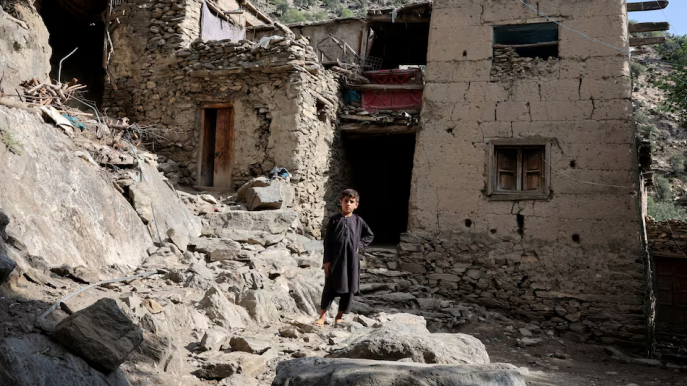
    A boy stands in front of houses damaged by a deadly earthquake that struck Afghanistan's Kunar and Nangarhar provinces, at Masud village in Nurgal district, Kunar province, Afghanistan, September 4, 2025. Photo: REUTERS/Sayed Hassib/File Photo
    A boy stands in front of houses damaged by a deadly earthquake that struck Afghanistan’s Kunar and Nangarhar provinces, at Masud village in Nurgal district, Kunar province, Afghanistan, September 4, 2025. Photo: REUTERS/Sayed Hassib/File Photo

    Kabul : A 6.3-magnitude earthquake struck near the northern Afghan city of Mazar-e Sharif early today (3 November), killing at least seven people and injuring about 150, just months after a quake and strong aftershocks killed more than 2,200 people at the end of August.

    Here is a look at why the war-shattered South Asian country experiences frequent tremors, and how their impact can be reduced:

    Are earthquakes common in Afghanistan?

    Hemmed in by rugged mountains, Afghanistan is prone to a range of natural disasters, but its earthquakes cause the most fatalities, killing about 560 people on average each year and causing annual damages estimated at $80 million.

    Studies indicate at least 355 earthquakes with a magnitude higher than 5.0 have hit Afghanistan since 1990.

    Why is Afghanistan prone to tremors?

    Afghanistan is located on the edge of the Eurasian tectonic plate, which shares a transgression zone with the Indian plate – implying the two may converge or brush past each other – and is also influenced by the Arabian plate to its south, creating one of the world’s most tectonically active regions.

    The northward movement of the Indian plate and its thrust against the Eurasian plate is usually responsible for Afghanistan’s numerous quakes.

    Which areas are vulnerable?

    Eastern and northeastern Afghanistan, especially regions along its borders with Uzbekistan, Tajikistan, and Pakistan, are particularly prone to earthquakes.

    This includes heavily populated Kabul, which has the highest average estimated damage due to earthquakes, amounting to $17 million every year, according to a study.

    Earthquakes are also particularly dangerous in Afghanistan’s mountains where they can trigger landslides, exacerbating loss of life and property.

    Which were Afghanistan’s worst earthquakes?

    Afghanistan has recorded around 100 “damaging” earthquakes since 1900.

    Among the worst in recent years was a magnitude 6 quake in 2022 that killed 1,000 people. Multiple quakes in one month in 2023 together killed 1,000 people and destroyed entire villages.

    One of Afghanistan’s largest earthquakes, with a magnitude of 7.5, struck in 2015, killing 399 people in Afghanistan, Pakistan and India.

    Some of the greatest devastation was seen in 1998 as two earthquakes shook Afghanistan within three months – the first killing 2,300 people and the second 4,700.

    How can the country build resilience?

    Studies recommend new structures be built in an earthquake-resistant way and existing buildings be retrofitted to reduce the chances of collapse.

    Better monitoring and early warning systems must also be created for more timely alerts, while fault lines should be mapped using geospatial and remote sensing technologies to enable relocation of people in vulnerable areas, they suggest.

  • Afghanistan’s Taliban government blames Pakistan for twin drone strikes on Kabul

    Afghanistan’s Taliban government blames Pakistan for twin drone strikes on Kabul

    By SIDDIQULLAH ALIZAI and MUNIR AHMED

    KABUL, Afghanistan (AP) — Afghanistan’s Taliban government said on Thursday that Pakistan carried out two drone strikes on Kabul the day before, even as the United Nations welcomed a critical ceasefire between the two neighbors after days of fighting killed dozens in both countries and injured hundreds more.

    The Wednesday attacks came just before the two countries declared a truce following the deadliest violence between them in years.

    The clashes had amounted to the deadliest crisis between the neighbors since 2021, when the Taliban seized power in Afghanistan following the collapse of the Western-backed government as the U.S. and NATO forces were withdrawing after 20 years of war.

    There was no immediate response in Islamabad on the latest accusations from Kabul and it was not immediately clear how this would affect the ceasefire.

    Pakistani officials, speaking on condition of anonymity because they were not authorized to discuss ongoing operations, had earlier told The Associated Press that Pakistani forces had targeted militant hideouts on Wednesday.

    Khalid Zadran, a spokesman for the Kabul police chief, told The Associated Press that the strikes hit the city on Wednesday afternoon. He said the drones hit a civilian house and a market. Zadran did not give casualty figures, but hospital doctors said earlier that five people were killed and dozens were injured.

    The surgical center run by Emergency, a nongovernmental organization, said people had suffered shrapnel wounds, blunt force trauma, and burns. Zabihullah Mujahid, the Taliban government’s chief spokesman, initially said there had been an oil tanker explosion.

    Meanwhile, the U.N. urged Pakistan and Afghanistan to bring “a lasting end to hostilities” to protect civilians.

    Cross-border violence has escalated since Oct. 10, with both Islamabad and Kabul saying they were retaliating to armed provocations from the other.

    The truce followed appeals from major regional powers, as the violence threatened to destabilize a region where groups, including the Islamic State group and al-Qaida, are trying to resurface. There were no reports of overnight fighting. Key border crossings remained closed on Thursday.

    The U.N. Assistance Mission in Afghanistan welcomed the ceasefire. It said the heaviest toll was in the south on Wednesday.

    The mission, known as UNAMA, said on Thursday that 37 civilians were killed and 425 were wounded in Afghanistan as a result of cross-border clashes with Pakistan this week. The casualties took place in Paktya, Paktika, Kunar, Khost, Kandahar and Helmand provinces, it said.

    It said it has also documented at least 16 civilian casualties in several Afghan provinces during earlier clashes between the two countries.

    “UNAMA calls on all parties to bring a lasting end to hostilities to protect civilians and prevent further loss of life,” the mission added.

    Pakistan has not provided figures for civilian casualties suffered on its side of the border. Islamabad has repeatedly accused Afghanistan of harboring militants, a charge rejected by the Taliban. Pakistan is grappling with attacks that have increased since 2021.

    Pakistani officials said security forces had shot and killed dozens of militants who crossed over from Afghanistan on Thursday. They were spotted in Mohmand district, northwest Khyber Pakhtunkhwa province, according to the officials who spoke on condition of anonymity because they were not authorized to talk to the media.

    The two countries share a 2,611-kilometer (1,622-mile) long border known as the Durand Line, which Afghanistan has never recognized.

  • Pakistan and Afghanistan agree to 48-hour ceasefire after deadly border clashes

    Pakistan and Afghanistan agree to 48-hour ceasefire after deadly border clashes

    Taliban security personnel on a Soviet-era tank are followed by motorcyclists as they ride towards the border, as clashes take place between Taliban security personnel and Pakistani border forces on Wednesday. Photo: TNS
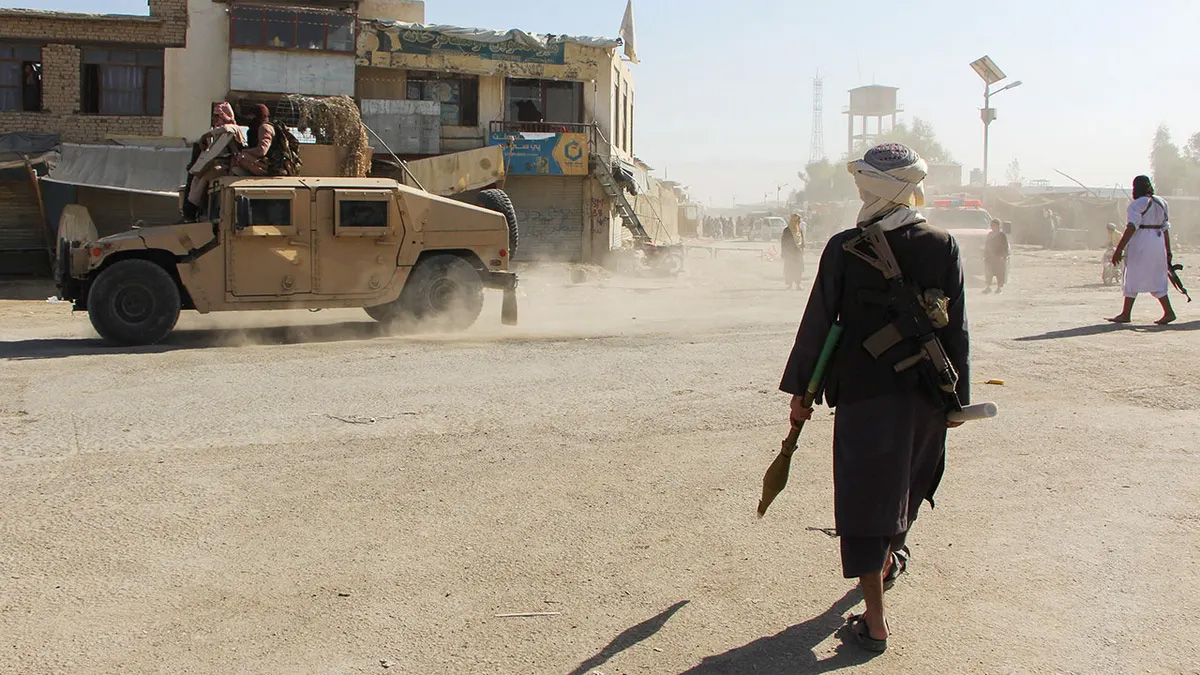
    Afghan Taliban fighters patrol near the Afghanistan-Pakistan border in Spin Boldak, Kandahar Province, following exchanges of fire between Pakistani and Afghan forces in Afghanistan, Oct. 15, 2025. (REUTERS/Stringer)

    Islamabad: Taliban security personnel on a Soviet-era tank are followed by motorcyclists as they ride towards the border, as clashes take place between Taliban security personnel and Pakistani border forces on Wednesday. Photo: TNS

    Pakistan said on Wednesday it agreed to a 48-hour ceasefire with Afghanistan following days of violence that have killed dozens of people on both sides of the border.

    Pakistan’s Foreign Ministry said the ceasefire was at Afghanistan’s request.

    Moments later, the Taliban government’s chief spokesman, Zabihullah Mujahid, said the truce was at “the insistence” of the Pakistani side. His social media post did not mention a 48-hour time frame. All Afghan forces have been instructed to observe the ceasefire “as long as no one violates it”, Mujahid added.

    Pakistan accuses Afghanistan of harbouring armed groups, a charge rejected by the Taliban rulers. Pakistan is grappling with militant attacks that have increased since 2021, when the Taliban seized power in Afghanistan.

    The escalation of tensions is likely to destabilise a region where groups, including Islamic State and al-Qaeda, are trying to establish a foothold and resurface.

    Earlier on Wednesday, before the ceasefire announcement, Pakistan said its forces killed dozens of Afghan security forces and militants in overnight fighting. The clashes had stopped briefly on Sunday following appeals from Saudi Arabia and Qatar.

    Pakistan forces said they had repelled “unprovoked” assaults, but denied targeting civilians after the Taliban government said more than a dozen were killed and more than 100 others wounded when Pakistan targeted sites in a border area of Afghanistan’s southern Kandahar province.