Tag: China

  • China’s new mega dam triggers fears of water war in India

    China’s new mega dam triggers fears of water war in India

    A view shows the Siang river in Siang district, Arunachal Pradesh, India, August 1, 2025. Photo: REUTERS/Francis Mascarenhas
    A view shows the Siang river in Siang district, Arunachal Pradesh, India, August 1, 2025. Photo: REUTERS/Francis Mascarenhas

    New Delhi : India fears a planned Chinese mega-dam in Tibet will reduce water flows on a major river by up to 85% during the dry season, according to four sources familiar with the matter and a government analysis seen by Reuters, prompting Delhi to fast-track plans for its own dam to mitigate the effects.

    The Indian government has been considering projects since the early 2000s to control the flow of water from Tibet’s Angsi Glacier, which sustains more than 100 million people downstream in China, India and Bangladesh. But the plans have been hindered by fierce and occasionally violent resistance from residents of the border state of Arunachal Pradesh, who fear their villages will be submerged and way of life destroyed by any dam.

    Then in December, China announced that it would build the world’s largest hydropower dam in a border county just before the Yarlung Zangbo river crosses into India. That triggered fears in New Delhi that its longtime strategic rival – which has some territorial claims in Arunachal Pradesh – could weaponize its control of the river, which originates in the Angsi Glacier and is known as the Siang and Brahmaputra in India.

    India’s largest hydropower company in May moved survey materials under armed police protection near a prospective site of the Upper Siang Multipurpose Storage Dam, which would be the country’s biggest dam, if completed. Senior Indian officials have also been holding meetings about accelerating construction this year, including one organized in July by Prime Minister Narendra Modi’s office, according to two of the sources, who spoke on condition of anonymity to discuss sensitive government matters.

    Delhi’s concerns were described in the undated Indian government analysis of the Chinese dam’s impact, the specifics of which Reuters corroborated with four sources and is reporting for the first time.

    Beijing hasn’t released detailed plans about the dam’s construction, but the analysis drew on past work conducted by Indian government-affiliated institutions like the Central Water Commission and accounted for the expected size of the Chinese project, which broke ground in July and will cost nearly $170 billion.

    Delhi estimates the Chinese dam will allow Beijing to divert as much as 40 billion cubic meters of water, or just over a third of what is received annually at a key border point, according to the sources and the document. The impact would be especially acute in the non-monsoon months, when temperatures rise and lands become barren across swathes of India.

    The Upper Siang project would alleviate that with its projected 14 BCM of storage capacity, allowing India to release water during the dry season. That could mean the major regional city of Guwahati, which is dependent on water-intensive industry and farming, would see a reduction in supply of 11%, according to the sources and the document, as opposed to 25% if the Indian dam isn’t built.

    The project could also mitigate any move by Beijing to release devastating torrents of water downstream, the sources said.

    If the dam is at its minimum drawdown level – where water is stored at less than 50% of its height – it would be able to fully absorb any excess water released from a breach in Chinese infrastructure, according to the document and the sources. India is considering a proposal to keep 30% of its dam empty at any time in order to account for unexpected surges, two of the sources said.

    A spokesperson for China’s foreign ministry said in response to Reuters’ questions that the hydropower projects “have undergone rigorous scientific research on safety and environmental protection, and will not adversely impact the water resources, ecology, or geology of downstream countries.”

    “China has always maintained a responsible attitude toward the development and utilization of transboundary rivers, and has maintained long-term communication and cooperation with downstream countries such as India and Bangladesh,” the spokesperson added.

    Modi’s office and the Indian ministries responsible for water and external affairs did not respond to Reuters’ questions. State-owned hydropower major NHPC also did not return a request for comment.

    India’s foreign ministry has said that top diplomat S. Jaishankar raised concerns about the dam during a meeting with his Chinese counterpart on Aug. 18. A Jaishankar deputy also told lawmakers in August that the government was implementing measures to safeguard the lives and livelihoods of citizens in downstream areas, including building the dam.

    India has itself been accused by Pakistan, a Chinese ally that it briefly clashed with in May, of weaponizing water. Delhi this year suspended its participation in a 1960 water-sharing treaty with Islamabad and is considering diverting flows from another crucial river away from its downstream neighbour.

    An international tribunal has ruled that India must adhere to the agreement but Delhi says the panel lacks jurisdiction.

    DEVELOPMENT OR DESTRUCTION?

    When NHPC workers moved surveying materials near the village of Parong in May, angry locals damaged their machinery, destroyed a nearby bridge and looted the tents of police sent to guard the operation.

    Many of them are members of Arunachal’s Adi community, who live off paddy, orange and sweet lime farms in the mist-shrouded hills and valleys nourished by the Siang.

    The villagers have set up makeshift watch posts on regional roads to deny access to NHPC workers. That has forced security personnel to trek miles, often under cover of night, to reach a prospective site of the dam.

    At least 16 Adi villages are likely to be lost to the storage area of the dam, directly affecting an estimated 10,000 people, according to two of the sources. Community leaders say more than 100,000 people will be impacted overall.

    “The cardamom, paddy, jackfruit and pear we grow on this land help educate our children and support our family,” said Odoni Palo Pabin, an Adi grocer and mother of two. “We will fight the dam to death.”

    The dam has the support of Arunachal’s chief minister, who is a member of Modi’s party and has called the Chinese project an existential threat.

    The project will “ensure water security and provide flood moderation to counter any potential water surges,” the state government said in a statement, adding that it decided in June to engage in detailed compensation discussions with families that could be affected by the dam.

    Lawmaker Alo Libang, an Adi who represents an area that would be submerged by the Indian project, said he believed locals could be convinced to move if they received generous compensation.

    NHPC has plans to spend more than $3 million on education and emergency infrastructure to incentivize the villagers to move elsewhere, three of the sources said, citing instructions from Modi’s office.

    In one sign of progress, three villages in the area recently agreed to let NHPC officials carry out dam-related work, according to the Arunachal government and dozens of locals.

    India has a history of activist movements against large dams, which have sometimes slowed these projects by years or forced them to scale down.

    Even if the Upper Siang dam gets the go-ahead, it could take a decade to build after breaking ground, according to four of the sources. That means the project would likely be completed after China’s project, which Beijing expects to start generating power by the early-to-mid 2030s.

    The delay means an Indian project would be vulnerable during construction if Beijing suddenly releases water during the monsoon season, triggering a surge that could wash away temporary dams, two of the sources said.

    International experts and Adi activists have also warned that building large dams in seismically active Tibet and Arunachal could heighten risks for downstream communities.

    The Chinese “dam is being built in a zone of high seismicity and in a zone that experiences extreme weather events,” said Sayanangshu Modak, an expert on the India-China water relationship at the University of Arizona.

    “These kinds of extreme weather events trigger landslides, mudslides, glacial lake outburst flooding,” he said. “So that raises concerns about dam safety… it’s a very legitimate concern and India should engage with China.”

  • China-Pakistan-Afghanistan Economic Corridor: Route Map And How Close Does It Pass To India?

    China-Pakistan-Afghanistan Economic Corridor: Route Map And How Close Does It Pass To India?

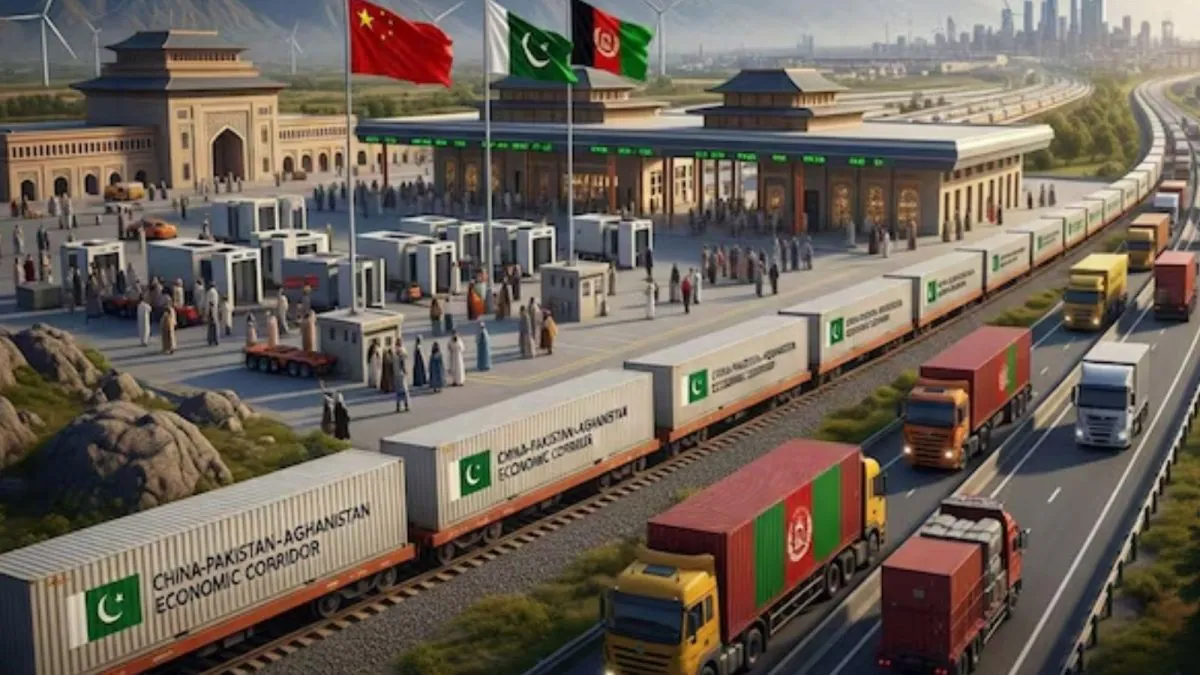
    The CPEC expansion into Kabul could reshape regional trade routes. (AI Image for repesentation)
    The CPEC expansion into Kabul could reshape regional trade routes. (AI Image for repesentation)

    News 18, Delhi :  A fresh push has begun to extend the ambitious China-Pakistan Economic Corridor (CPEC) into Afghanistan, a move that could reshape regional trade routes but has also raised questions about its implications for India. The initiative was discussed during a high-level meeting in Kabul where the foreign ministers of China, Pakistan, and Afghanistan agreed to strengthen cooperation on this project.

    The trilateral talks took place between the foreign ministers of all three nations – Wang Yi, Ishaq Dar, and Amir Khan Muttaki – where all the three sides endorsed plans to integrate Afghanistan into the corridor that already links China’s Xinjiang province with Pakistan’s Gwadar port. This extension, they said, would revive parts of the ancient Silk Road and potentially connect China to Iran through Afghan territory.

    The CPEC as it stands today stretches nearly 2,500 km from Kashgar in Xinjiang to Gwadar on Pakistan’s Arabian Sea coast. If expanded into Afghanistan, the route could gain an additional 350 km, and if linked to more Afghan cities, its total length would surpass 3,000 km. That extended network would link Gwadar to Kashgar and from there to Kabul, with future extensions envisioned towards Iran.

    Possible Entry Points

    Geographically, the most viable entry for the CPEC into Afghanistan is through the Wakhjir Pass, perched at 4,923 metres above sea level. This is the only road link between Afghanistan and China. The route could begin in Kashgar, traverse the Karakoram Highway, and then move through Bozai Gombad before entering Afghanistan via Wakhjir. From there, it could connect Kabul with Afghanistan’s broader road system and eventually reach the Iranian border.

    Alternative Path
    Experts say another possibility lies in the Wakhan Corridor, a remote 350-km strip of land in Afghanistan’s northeast that directly touches Xinjiang. However, its rugged mountains and narrow width, ranging between 13 and 65 km, make it one of the least traversed routes on Earth. Security risks in the area further complicate its use. As a fallback, China could instead use the Karakoram Highway via Pakistan and integrate it with Afghanistan’s Peshawar-Kabul network, which analysts consider a more practical option.

    Through Contested Territory
    Any route from Gwadar to Kabul would inevitably pass through Gilgit-Baltistan and Pakistan-occupied Kashmir (PoK). That segment, which could cover cities such as Gwadar, Quetta, Peshawar, Gilgit, Jalalabad, Kabul, Kandahar, Helmand, Nimroz, and Kashgar, remains the most politically sensitive stretch because of India’s objections.

    India’s Mixed Outlook
    For India, the project presents both potential opportunities and serious concerns. On the positive side, increased stability in Afghanistan could improve trade flows and enhance India’s ability to export goods to Central Asia. India’s investment in Iran’s Chabahar Port is already designed to provide such access, and a stable Afghan corridor could complement those efforts.

    Yet, India has consistently opposed the CPEC, arguing that its passage through Pakistan-occupied Kashmir constitutes a direct infringement of Indian sovereignty. Officials said that such projects not only undermined India’s territorial claims but could also alter the security balance in the region.

    The push to extend CPEC into Afghanistan reflects China’s long-term goal of deepening its influence across South and Central Asia. While China and Pakistan hail the project as a driver of connectivity and growth, India views it as a geopolitical maneuver with implications far beyond trade. The latest Kabul meeting may have set the stage for new routes, but it has also sharpened the debate over whether the corridor will bring stability to the region—or new fault lines.

  • India and China agree to reopen Lipulekh trade route

    India and China agree to reopen Lipulekh trade route

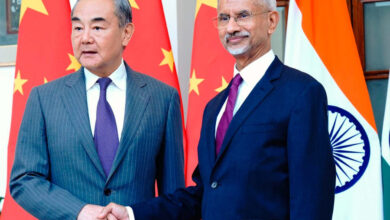
    Chinese Foreign Minister Wang Yi (left) and Indian External Affairs Minister S Jaishankar. Photo: Courtesy of S Jaishankar/X
    Chinese Foreign Minister Wang Yi (left) and Indian External Affairs Minister S Jaishankar. Photo: Courtesy of S Jaishankar/X

    By Rajesh Mishra

    Kathmandu: India and China have agreed to reopen border trade through Lipulekh Pass, a point located 56 kilometres inside Nepal’s western frontier in Limpiyadhura. The agreement was made during Chinese Foreign Minister Wang Yi’s visit to India earlier this week.

    Wang visited India on August 18 and 19 at the invitation of India’s National Security Advisor Ajit Doval. According to a statement issued by the Indian Ministry of External Affairs on Tuesday night, the agreement to reopen trade through Lipulekh was reached during Wang’s bilateral talks with Indian External Affairs Minister S Jaishankar.

    Point nine of the joint communiqué mentions the resumption of border trade. “Both sides agreed to the re-opening of border trade through the three designated trading points, namely Lipulekh Pass, Shipki La Pass and Nathu La Pass,” it states.

    This marks the first time in a decade that India and China have discussed trade through Lipulekh. In May 2015, during Indian Prime Minister Narendra Modi’s visit to China, he and then Chinese Premier Li Keqiang agreed to expand trade via Lipulekh. The joint statement issued on May 15, 2015, included the agreement in point 28.

    The 2015 decision triggered strong protests in Nepal as the agreement was reached without its consultation, despite the pass lying within Nepali territory. The Nepal government formally objected at the time, sending diplomatic notes to both countries.

    With India and China working to improve strained relations following the 2020 Galwan Valley clashes, both sides have once again agreed to open trade through Lipulekh. Nepal’s official map includes Lipulekh within its territory.

    Nepal has long claimed Lipulekh, Kalapani and Limpiyadhura as part of its sovereign land, though India has maintained control. Tensions escalated in November 2019 when India published a new political map incorporating Kalapani and Lipulekh within its boundary. Nepal immediately objected and sent a diplomatic note, urging talks.

    After India ignored the request, Nepal issued its own revised political map in May 2020, extending its western frontier up to Limpiyadhura. The new map is locally known as the “chuche naksa” (pointed map).

    In 2023, China released a new map showing Lipulekh, Kalapani, and Limpiyadhura as part of India, further complicating the dispute.

    The agreement comes ahead of Prime Minister KP Sharma Oli’s visits to India and China—he will first attend the Shanghai Cooperation Organisation summit in China from August 31 to September 1, then proceed to India for an official visit starting September 16.

  • India, China agree to resume direct flights, boost business links

    India, China agree to resume direct flights, boost business links

    The two countries would resume direct flights and boost trade and investment, including reopening border trade at three designated points, and facilitate in visas, the Indian foreign ministry said.
    The two countries would resume direct flights and boost trade and investment, including reopening border trade at three designated points, and facilitate in visas, the Indian foreign ministry said.

    New Delhi : India and China agreed on Tuesday to resume direct flights and step up trade and investment flows as the neighbours rebuild ties damaged by a 2020 border clash.

    The Asian giants are cautiously strengthening ties against the backdrop of US President Donald Trump’s unpredictable foreign policy, staging a series of high-level bilateral visits.

    The two countries would resume direct flights and boost trade and investment, including reopening border trade at three designated points, and facilitate in visas, the Indian foreign ministry said.

    Direct flights have been suspended since the COVID-19 pandemic in 2020. No date was given for their resumption.

    The latest statements came at the end of Chinese Foreign Minister Wang Yi’s two-day visit to New Delhi for the 24th round of talks with Indian National Security (NSA) Advisor Ajit Doval to resolve their decades old border dispute.

    The border talks covered issues related to pulling back troops both countries have amassed on their Himalayan border, delimitation of borders and boundary affairs, the Indian ministry said.

    Both countries have agreed to set up a working group to consult and coordinate on border affairs to advance demarcation negotiations, a Chinese foreign ministry statement released on Wednesday showed.

    It said the mechanism will extend talks to cover the eastern and middle sections of the border. Meanwhile another round of talks on the western section will be held as soon as possible, the ministry said.

    Beijing also said both countries agreed to meet again in China in 2026.

    “Stable, predictable, constructive ties between India and China will contribute significantly to regional as well as global peace and prosperity,” Prime Minister Narendra Modi posted on X after meeting Wang.

    Modi is scheduled to travel to China at the end of this month to take part in the summit of the Shanghai Cooperation Organisation – his first visit to the country in more than seven years.

    TIBET DAM

    A readout from the Chinese foreign ministry said Wang told Doval that “the stable and healthy development of China-India relations is in the fundamental interests of the two countries’ people”.

    The two sides “should enhance mutual trust through dialogues and expand cooperation,” Wang said, and should aim for consensus in areas such as border control and demarcation negotiations.

    India said Foreign Minister Subrahmanyam Jaishankar had underlined in his talks with Wang India’s concerns with regard to the mega dam China is building on the Yarlung  Zangbo river in Tibet.

    Yarlung  Zangbo becomes the Brahmaputra as it flows into India and Bangladesh, a lifeline for millions.

    The dam would have implications for lower riparian states and the need for “utmost transparency” was strongly underlined, New Delhi said.

    To that, China agreed to share with India emergency hydrological information on relevant rivers on humanitarian principles, China’s foreign ministry said.

    Both sides agreed to engage an expert-level mechanism on cross-border rivers, and maintain communication to renew flood reporting arrangements, the ministry said.

    Chinese officials had previously said hydropower projects in Tibet will not have a major impact on the environment or on downstream water supplies, but India and Bangladesh have nevertheless raised concerns.

    Earlier on Tuesday, an Indian source said Wang had assured Jaishankar that Beijing was addressing three key Indian concerns – the need for fertilisers, rare earths and tunnel boring machines.

    The Indian foreign and mines ministries and China’s commerce ministry did not immediately respond to requests for comment.

  • Pakistan, China and Afghanistan hold summit in Kabul to boost cooperation

    Pakistan, China and Afghanistan hold summit in Kabul to boost cooperation

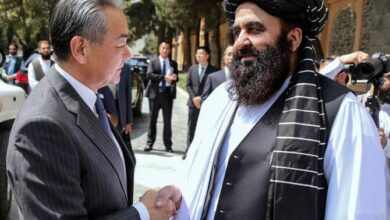
    Pakistan’s Foreign Minister Ishaq Dar and Chinese Foreign Minister Wang Yi were received by Taliban officials on arrival in the Afghan capital, according to separate statements issued by Islamabad and Beijing. (FILE/AFP)
    Pakistan’s Foreign Minister Ishaq Dar and Chinese Foreign Minister Wang Yi were received by Taliban officials on arrival in the Afghan capital, according to separate statements issued by Islamabad and Beijing. (FILE/AFP)

    ISLAMABAD: Top diplomats from Pakistan, China and Afghanistan are meeting on Wednesday in Kabul for a trilateral summit aimed at boosting political, regional and economic cooperation, officials said.

    Pakistan’s Foreign Minister Ishaq Dar and Chinese Foreign Minister Wang Yi were received by Taliban officials on arrival in the Afghan capital, according to separate statements issued by Islamabad and Beijing.

    Afghanistan’s Ministry of Foreign Affairs in a statement said the talks, hosted by Kabul, will include “comprehensive discussions” on a wide range of issues, including political, economic and regional cooperation.

    According to Pakistan’s Ministry of Foreign Affairs, Dar’s discussions at the meeting would focus on expanding trade, improving regional connectivity and strengthening joint efforts against terrorism.

    The last round of the dialogue took place in May in Beijing.

    The latest development comes more than a month after Russia became the first country to formally recognize the Taliban’s government in Afghanistan. While no country, except from Russian, has offered formal recognition, the Taliban have engaged in high-level talks with many nations and established some diplomatic ties with countries including China and the United Arab Emirates.

  • India’s Modi to meet China’s top diplomat as Asian powers rebuild ties

    India’s Modi to meet China’s top diplomat as Asian powers rebuild ties

    Chinese Foreign Minister Wang Yi, who arrived in India on Monday, expected to discuss disputed border in the Himalayan mountains with Indian leadership
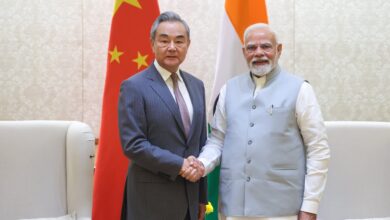
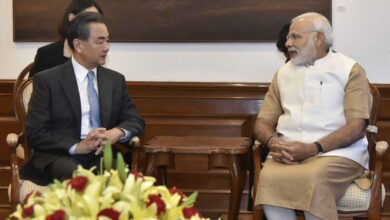
    FILE -In this Aug.13, 2016 file photo, visiting Chinese Foreign Minister Wang Yi, left, talks with Indian Prime Minister Narendra Modi during his visit in New Delhi, India. (Press Information Bureau via AP, File)

    NEW DELHI: Indian Prime Minister Narendra Modi will meet with China’s top diplomat on Tuesday in a sign of easing tensions between the nuclear-armed neighbors after a yearslong standoff between the Asian powers.

    Chinese Foreign Minister Wang Yi, who arrived in India on Monday, is scheduled to hold talks with Modi and other leaders, including National Security Adviser Ajit Doval, about the disputed border in the Himalayan mountains. There is an upward trend in India-China relations and bilateral engagements between the neighbors have been more substantial, India’s national security adviser told Chinese Foreign Minister Wang Yi on Tuesday as they began border talks.

    Reducing the number of troops on the border, and resuming some trade there, is expected to be on the agenda.

    The rebuilding of ties coincides with friction between New Delhi and Washington after US President Donald Trump imposed steep tariffs on India, a longtime ally seen as a counterbalance against China’s influence in Asia. India is part of the Quad security alliance with the US along with Australia and Japan.

    ‘Compromise at the highest political level’

    India and China’s decades-old border dispute worsened in 2020 after a deadly clash between their troops in the Ladakh region. The chill in relations affected trade, diplomacy and air travel as both sides deployed tens of thousands of security forces in border areas.

    Some progress has been made since then.

    Last year, India and China agreed to a pact on border patrols and withdrew additional forces along some border areas. Both countries continue to fortify their border by building roads and rail networks.

    In recent months, the countries have increased official visits and discussed easing some trade restrictions, movement of citizens and visas for businesspeople. In June, Beijing allowed pilgrims from India to visit holy sites in Tibet. Both sides are working to restore direct flights.

    Last week, the spokesman for India’s foreign ministry, Randhir Jaiswal, said India and China were in discussions to restart trade through three points along their 3,488-kilometer (2,167-mile) border.

    Manoj Joshi, a fellow at the Observer Research Foundation, a New Delhi-based think tank, said relations are still at an uneasy level of normalization.

    “Settling the boundary issue between the two countries requires political compromise at the highest political level,” said Joshi, who also served as a member of the advisory board for India’s National Security Council. He asserted that the countries are “still talking past each other when it comes to the border dispute and issues surrounding it.”

    On Monday, China’s Foreign Ministry spokesperson Mao Ning said Beijing is willing to take Wang’s India visit as an opportunity to work with the Indian side to “properly handle differences and promote the sustained, sound and stable development of China-India relations.”

    Mao said Wang’s meeting with Modi’s national security adviser will “continue in-depth communication to jointly safeguard peace and tranquility in the border areas.”

    Modi plans to visit China soon

    The thaw between Beijing and New Delhi began last October when Modi and Chinese President Xi Jinping met at a summit of emerging economies in Russia. It was the first time the leaders had spoken in person since 2019.

    Modi is set to meet Xi when he travels to China late this month – his first visit in seven years – to attend the summit of the Shanghai Cooperation Organization, a regional grouping formed by China, Russia and others to counter US influence in Asia.

    Earlier this year, Xi called for India and China’s relations to take the form of a “dragon-elephant tango” – a dance between the emblematic animals of the countries.

    Last month, India’s external affairs minister visited Beijing in his first trip to China since 2020.

    The US and Pakistan play roles in the thaw

    The renewed engagement comes as New Delhi’s ties with Trump are fraying. Washington has imposed a 50 percent tariff on Indian goods, which includes a penalty of 25 percent for purchasing Russian crude oil. The tariffs take effect Aug. 27.

    India has shown no sign of backing down, instead signing more agreements with Russia to deepen economic cooperation.

    Trump’s renewed engagement with India’s archrival, Pakistan, has also encouraged New Delhi’s overtures to China, said Lt. Gen. D.S. Hooda, who led Indian military’s Northern Command from 2014 to 2016.

    In June, Trump hosted Pakistan’s army chief for a White House lunch and later announced an energy deal with Islamabad to jointly develop the country’s oil reserves. Both followed Trump’s claims of brokering a ceasefire between India and Pakistan after the two sides traded military strikes in May.

    That clash saw Pakistan use Chinese-made military jets and missiles against India.

    “China is heavily invested in Pakistan and, practically speaking, you can’t have any expectation that Beijing will hold back support to Islamabad,” Hooda said. “But you can’t have two hostile neighbors on your borders and simultaneously deal with them also.”

  • China promises to address India’s rare earths needs as border talks begin: Indian source

    China promises to address India’s rare earths needs as border talks begin: Indian source

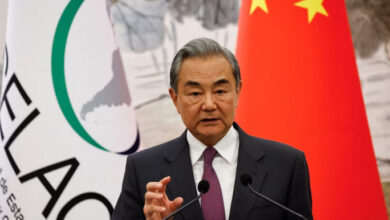
    Chinese Foreign Minister Wang Yi attends a press conference for a ministerial meeting of the China-CELAC Forum, at the Diaoyutai State Guesthouse, in Beijing, China May 13, 2025. Photo: REUTERS/Tingshu Wang/Pool
    Chinese Foreign Minister Wang Yi attends a press conference for a ministerial meeting of the China-CELAC Forum, at the Diaoyutai State Guesthouse, in Beijing, China May 13, 2025. Photo: REUTERS/Tingshu Wang/Pool

    New Delhi : There is an upward trend in India-China relations and Beijing has promised to address New Delhi’s needs on rare earths, a top Indian official and a source said on Tuesday, as the neighbours rebuild ties that were damaged by a 2020 border clash.

    Chinese Foreign Minister Wang Yi is visiting India for the 24th round of border talks with Indian National Security Advisor Ajit Doval and is also due to meet Prime Minister Narendra Modi on Tuesday, days before Modi travels to China for the summit of the Shanghai Cooperation Organisation.

    “There has been an upward trend. Borders have been quiet. There has been peace and tranquillity,” Doval told Wang as he opened the talks. “Our bilateral engagements have been more substantial.”

    “The new environment that has been created has helped us in moving ahead in the various areas that we are working on,” he said.

    Wang said the setbacks the two countries experienced over the past few years were not in the interests of the people of the two countries, according to a translation of his remarks by Indian news agency ANI.

    Earlier on Tuesday, an Indian source said that China had promised to address three key Indian concerns. Wang, the source said, had assured Indian Foreign Minister Subrahmanyam Jaishankar that Beijing is addressing India’s need for fertilisers, rare earths and tunnel boring machines.

    The Indian foreign and mines ministries did not respond immediately to Reuters requests for comment.

    China’s commerce ministry also did not immediately respond to a request for comment.

    It was not immediately clear whether China had agreed to approve export licenses faster or grant blanket exemptions for India.

    China has previously committed to speeding up export licenses for Europe and the US without actually dismantling the control regime.

    China’s exports of rare earths and related magnets jumped in June after these agreements and as the commerce ministry worked through a huge backlog of applications.

    However, rare earth magnet exports to India were still down 58% compared to January levels, according to Chinese customs data. June is the last month for which country-level data is available.

    India has the world’s fifth-largest rare earth reserves, at 6.9 million metric tons, but there is no domestic magnet production. India relies on imported magnets, mainly from China.

  • China’s top diplomat Wang Yi to visit India for first time in 3 years for border talks

    China’s top diplomat Wang Yi to visit India for first time in 3 years for border talks

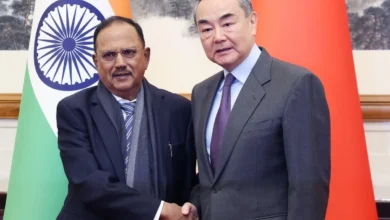
    Chinese Foreign Minister Wang Yi with Indian National Security Adviser Ajit Doval, in Beijing on December 18. Photo: EPA-EFE
    Chinese Foreign Minister Wang Yi with Indian National Security Adviser Ajit Doval, in Beijing on December 18. Photo: EPA-EFE

    By Xinlu Liang in Beijing

    Foreign Minister Wang Yi will visit India for the first time in three years to discuss the latest round of border talks, the Chinese foreign ministry has confirmed.

    During the trip from August 18 to 20, the top Chinese diplomat will serve as the “special representative of the China-India boundary question” in the 24th round of border talks “at the invitation of the Indian side”, according to a Saturday statement from the ministry.

    This series of negotiations aims to address long-standing border disputes, which have seen a temporary de-escalation following years of tension. Wang is expected to meet top Indian officials including National Security Adviser Ajit Doval.

    The two last met in Beijing in December to review disengagement in eastern Ladakh along the disputed border, known as the Line of Actual Control, where an estimated 50,000–60,000 troops remain deployed on each side.

    “We stand ready to work with India to act on the important common understandings reached between leaders of our two countries, maintain the momentum of high-level exchanges, cement political mutual trust, enhance practical cooperation, properly handle differences, and promote the sustained, sound and steady development of China-India ties,” Chinese foreign ministry spokesman Lin Jian said on Thursday in response to speculation about a trip by Wang.

    “China and India are both major developing countries and important members of the Global South,” he said. “A cooperative pas de deux of the dragon and the elephant as partners helping each other succeed is the right choice for both sides.”

    Joining the Post in 2021, Xinlu Liang covers China politics with a special interest in China’s governance philosophy, social justice, and ethnic minorities issues. Previously, she interned at the Los Angeles Times and Reuters in Shenzhen. She has a master’s degree in journalism from the University of Southern California and a bachelor’s degree in English from Sun Yat-sen University.

    Source : SCMP

  • China’s dominance in Nepal EV market leaves India trailing

    China’s dominance in Nepal EV market leaves India trailing

    Among the 16,701 vehicles sold in Nepal in the fiscal year 2024-25, the number of Chinese vehicles was 13,338.
    Among the 16,701 vehicles sold in Nepal in the fiscal year 2024-25, the number of Chinese vehicles was 13,338.

    By Krishana Prasain

    Kathmandu : The summer heat hung heavy over Bhrikutimandap Exhibition Hall in Kathmandu on Saturday, but that did not stop Ishwar Rauniyar from weaving through the crowded alleys of the Nepal Automobile Importers and Manufacturers Association (NAIMA) Auto Show. Rows of gleaming, high-tech electric vehicles stretched before him, their metallic surfaces catching the overhead lights.

    “EV cars here are more than I expected,” said the 52-year-old from Balaju, pausing to admire a sleek SUV. “The look and features are amazing, even in vehicles priced below Rs3 million.”

    This year’s auto show has become the battleground for Chinese and Indian electric vehicle (EV) makers. Almost every stall offers tempting deals — cash prizes up to Rs700,000, generous discounts, and new models boasting advanced technology.

    After comparing the models, Rauniyar had a clear verdict. “Chinese EV manufacturers are slightly ahead in fit and finish. Their technology is better,” he said, strolling alongside his cousin.

    The five-day event, which began last Wednesday, has been extended until Monday due to surging interest. Organisers say the competition on display reflects the fight for Nepal’s EV market dominance, with Chinese brands clearly taking the lead this year.

    One of the busiest stalls belonged to Chinese brand BYD, now one of Nepal’s best-selling EV names. Directly opposite Mahindra’s stand, BYD unveiled the Atto 1, starting at Rs2.89 million, attracting a steady stream of visitors.

    Electric vehicles now account for a staggering 73 percent of all four-wheeled passenger vehicle imports to Nepal—one of the highest shares globally.

    Imports of four-wheelers, including passenger buses, microbuses, and private vehicles, rose 27.04 percent year-on-year in the last fiscal year that ended mid-July. EV imports alone climbed 23.33 percent. Of 22,907 four-wheelers worth Rs50.88 billion brought into the country, 16,701 were EVs valued at Rs41.23 billion.

    Just five years ago, the market looked very different. In fiscal 2019-20, Nepal imported only 236 EVs—mainly from China—worth Rs674 million. That year, petrol- and diesel-powered vehicle imports totalled 10,310 units worth Rs9.24 billion.

    Until 2022, Tata Nexon EVs were preferred by Nepali customers for their affordability. From April 2021 to March 2022, just after Covid restrictions eased, Nepalis started buying EVs in earnest. Sipradi Trading, the authorised distributor of Tata vehicles in Nepal, said they sold more than 2,000 EV units that year, with the Nexon accounting for 90 percent of sales.

    Nexon EVs cost between Rs3.89 million and Rs4.39 million. India was then Nepal’s largest EV supplier, followed by China.

    Then BYD entered the market and quickly dominated, offering a new smart cockpit experience.

    Indian media report that India has recently sent a few hundred EV units to Nepal, but shipments have been hampered by slow domestic manufacturing and tough competition from Chinese brands.

    “This year, the response has been better than expected, and bookings are excellent,” said Prerna Maharjan, BYD’s marketing executive.

    She noted a surprising trend: women entrepreneurs are becoming a significant part of the customer base, with female buyers making up about 40 percent of BYD’s Atto 3 and Dolphin models.

    Representing India, Mahindra launched its all-electric BE 6 and XEV 9e SUVs. Company officials say the interest has been overwhelming — between 700 and 800 visitors stop by their stall daily.

    Sachin Arolkar, head of international operations at Mahindra Automotive, who was in Kathmandu for the BE 6 launch recently, said Chinese competition has helped expand the market. “It has pushed EV infrastructure development and raised customer expectations,” he told the Post. “But we’re confident Mahindra can stand out with trusted after-sales service, brand heritage, and product quality.”

    “Eighteen- and nineteen-year-olds are influencing their parents’ buying decisions,” said Santoshi Nepal, senior marketing manager at Agni Incorporated, Mahindra’s authorised distributor in Nepal. “Ground clearance and range are what attract most buyers.”

    Mahindra expects to cross three-digit bookings for its new EVs before the show ends. Prices range from Rs5.7 million to Rs6.8 million for the BE 6, and Rs6.9 million to Rs9.5 million for the XEV 9e. Even Mahindra’s internal combustion model, the 3XO, priced from Rs4.4 million, is drawing attention despite the EV rush.

    Crowds have been equally impressive.

    According to NAIMA’s media and marketing consultant Pratik Aryal, more than 15,000 people attended on the first day, 13,500 on the second, and nearly 19,500 on the third. Organisers hope the total will reach 100,000 by Monday.

    More than 50 automobile brands are participating this year—21 four-wheeler makers, 17 two-wheeler brands, seven commercial vehicle brands, and one three-wheeler manufacturer. Thirty-five new models, from internal combustion to hybrid and electric, have been launched.

    NAIMA has not disclosed total bookings, but conversations with exhibitors suggest most visitors are drawn to EVs, from budget hatchbacks to luxury SUVs.

    One premium contender is Zeekar X, a Chinese luxury EV built on the Volvo platform and launched in Nepal last year. It sold over 50 units in its first year. “We’ve taken more than 10 bookings in just the first three days,” said Kishor Maharjan, head of sales at Pioneer Moto Corp. Prices start at Rs8.5 million.

    Leapmotor, another Chinese brand, entered the Nepali market in November 2024 and has already sold 260 units. Its lineup includes the entry-level T03 hatchback at Rs2.79 million, the B10 sedan at Rs4.99 million, and the C10 SUV, offered at a discounted Rs6.5 million during the show. The B10, priced under Rs6 million, boasts a 460km range on a single charge.

    Two-wheeler EVs are also attracting strong interest.

    Indian brand Ather launched the Rizta S family scooter, capable of carrying four people, with a 125km range, live location sharing, and an eight-year battery warranty. Prices start at Rs383,500. “We booked over 80 scooters in three days,” said Nisaj Maharjan from Vaidya Energy, Ather’s official dealer.

    Chinese brand NIU also made a splash, unveiling the RQi electric bike at Rs1 million and the FQi 300 scooter at Rs385,000. “Within an hour of the RQi launch, we had 18 bookings,” said Manoj Thapa Magar of Eco Infinity.

    By the end of the day, Rauniyar had visited nearly every stall. He was impressed but not yet ready to commit. “Most EVs have similar technology, even their batteries, just with different features,” he said. “I haven’t made up my mind yet.”

    Krishana Prasain is a business reporter for The Kathmandu Post covering markets. Before joining The Kathmandu Post in 2018, she spent 3 years in New Business Age magazine covering business.

  • Modi to visit China for first time in 7 years as tensions with US rise

    Modi to visit China for first time in 7 years as tensions with US rise

    Russian President Vladimir Putin, Indian Prime Minister Narendra Modi and Chinese President Xi Jinping hold a meeting on the sidelines of the G20 summit in Osaka on June 28, 2019 [Mikhail Klimentyev/Sputnik/ AFP]
    Russian President Vladimir Putin, Indian Prime Minister Narendra Modi and Chinese President Xi Jinping hold a meeting on the sidelines of the G20 summit in Osaka on June 28, 2019 [Mikhail Klimentyev/Sputnik/ AFP]

    New Delhi : Indian Prime Minister Narendra Modi will visit China for the first time in over seven years, a government source said on Wednesday (6 August), in a further sign of a diplomatic thaw with Beijing as tensions with the United States rise.

    Modi will go to China for a summit of the multilateral Shanghai Cooperation Organisation that begins on 31 August, the government source, with direct knowledge of the matter, told Reuters. India’s foreign ministry did not immediately respond to a request for comment.

    His trip will come at a time when India’s relationship with the US faces its most serious crisis in years after President Donald Trump imposed the highest tariffs among Asian peers on goods imported from India, and has threatened an unspecified further penalty for New Delhi’s purchases of Russian oil.

    Modi’s visit to the Chinese city of Tianjin for the summit of the SCO, a Eurasian political and security grouping that includes Russia, will be his first since June 2018. Subsequently, Sino-Indian ties deteriorated sharply after a military clash along their disputed Himalayan border in 2020.

    Modi and Chinese President Xi Jinping held talks on the sidelines of a BRICS summit in Russia in October that led to a thaw. The giant Asian neighbours are now slowly defusing tensions that have hampered business relations and travel between the two countries.

    Trump has threatened to charge an additional 10% tariff on imports from members – which include India – of the BRICS group of major emerging economies for “aligning themselves with Anti-American policies.”

    Trump said on Wednesday his administration would decide on the penalty for buying Russian oil after the outcome of US efforts to seek a last-minute breakthrough that would bring about a ceasefire in the war in Ukraine.

    Trump’s top diplomatic envoy Steve Witkoff is in Moscow, two days before the expiry of a deadline the president set for Russia to agree to peace in Ukraine or face new sanctions.

    Meanwhile, India’s National Security Adviser Ajit Doval is in Russia on a scheduled visit and is expected to discuss India’s purchases of Russian oil in the wake of Trump’s pressure on India to stop buying Russian crude, according to another government source, who also did not want to be named.

    Doval is likely to address India’s defence cooperation with Russia, including obtaining faster access to pending exports to India of Moscow’s S400 air defence system, and a possible visit by President Vladimir Putin to India.

    Doval’s trip will be followed by Foreign Minister Subrahmanyam Jaishankar in the weeks to come.

    Export impact

    US and Indian officials told Reuters, mix of political misjudgement, missed signals and bitterness scuttled trade deal negotiations between the world’s biggest and fifth-largest economies, whose bilateral trade is worth over $190 billion.

    India expects Trump’s crackdown could cost it a competitive advantage in about $64 billion worth of goods sent to the US that account for 80% of its total exports, four separate sources told Reuters, citing an internal government assessment.

    However, the relatively low share of exports in India’s $4 trillion economy is expected to limit the direct impact on economic growth.

    On Wednesday, the Reserve Bank of India left its GDP growth forecast for the current April-March financial year unchanged at 6.5% and held rates steady despite the tariff uncertainties.

    India’s government assessment report has assumed a 10% penalty for buying Russian oil, which would take the total US tariff to 35%, the sources said.

    India’s trade ministry did not immediately respond to a request for comment.

    The internal assessment report is the government’s initial estimate and will change as the quantum of tariffs imposed by Trump becomes clear, all four sources said.

    India exported goods estimated at around $81 billion in 2024 to the US.