
 By Asaduzzaman Shamrat
The Sundarbans, stretching across the southern edge of Bangladesh, is more than just the largest mangrove forest on earth. It is the country’s living shield against cyclones, a vast carbon sink, and home to extraordinary wildlife including the Royal Bengal tiger. For centuries it has absorbed the fury of storms and tides, protecting millions of lives. But today this natural fortress is itself under siege, and the threat is not distant — it is happening now.
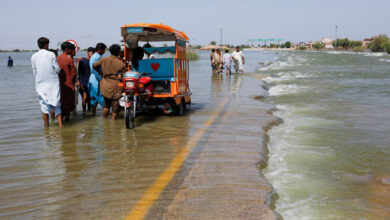
Climate change is reshaping the Sundarbans with alarming speed. Rising sea levels push saline water deeper into the forest, killing freshwater-dependent trees and altering the ecosystem’s very character. Cyclones like Sidr, Aila, Amphan and Remal have grown stronger and more destructive, tearing through embankments, flooding villages, and shredding mangrove canopies that take decades to recover. A 2022 World Bank assessment warned that a one-metre rise in sea level — within the range scientists consider possible by the end of this century — could submerge up to three-quarters of the Sundarbans on the Bangladeshi side. Every storm and every centimetre of sea-level rise erodes not just the forest but also the security of the millions who depend on it.
Biodiversity is faltering as a result. The Royal Bengal tiger, already squeezed into a shrinking habitat, faces the prospect of losing most of its territory to sea-level rise within decades. A peer-reviewed study in Climatic Change projected that even a 28-centimetre rise in sea level — far less than worst-case scenarios — could eliminate nearly all suitable tiger habitat in the Bangladeshi Sundarbans. Fish breeding grounds are disrupted, crocodiles and dolphins are struggling to adapt to salinity changes, and countless smaller creatures are losing the conditions they need to survive. When biodiversity collapses, so too do the services people rely on — from fisheries to flood protection.
Bangladesh has not ignored this crisis. The government’s ambitious Delta Plan 2100 acknowledges the Sundarbans as a national priority, and projects have been launched to plant mangroves, repair embankments, strengthen patrols, and provide alternative livelihoods. Early warning systems for cyclones have saved thousands of lives compared to past decades. These are important steps. Yet the reality is that the pace of climate change is outstripping the pace of protection.
Concrete embankments offer temporary safety but often fail under stronger storms, while poorly planned planting drives result in high sapling mortality. What works best, both in Bangladesh and globally, are nature-based solutions: restoring tidal creeks, ensuring sediment can replenish the delta, and planting species that can survive shifting salinity. This approach not only strengthens the forest but also delivers long-term resilience at a fraction of the cost of endless engineering.
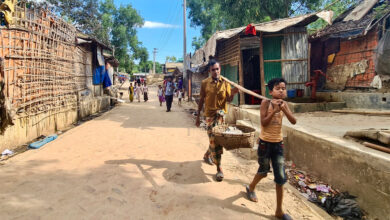
Equally vital is the role of local communities. The Sundarbans is intertwined with the lives of millions, many of whom depend on it when fields turn too salty to farm. Without viable alternatives, families turn to the forest for firewood, honey, or fish, often illegally. When people see tangible benefits from conservation — through sustainable livelihoods, eco-tourism, or regulated resource rights — they become its strongest protectors. When they are excluded, the opposite occurs. Any conservation plan that fails to address human survival is doomed to fail.

The flow of freshwater into the forest is another critical piece of the puzzle. Without sufficient inflows from the Ganges and its distributaries, salinity tips the balance irreversibly in favour of saltwater. Addressing this requires not only national engineering solutions but also transboundary cooperation with India. If ecological flows are not maintained, no amount of planting or patrolling will save the Sundarbans.
Time is short. Scientists warn of tipping points beyond which the forest cannot recover. If sea-level rise overtakes natural sedimentation, whole swathes may drown. If salinity surpasses tolerance limits, regeneration may stop altogether. If tiger habitat fragments further, extinction in this landscape becomes likely. These are not distant scenarios; they may unfold within the lifetime of today’s young generation.
And yet hope exists. In places where mangrove restoration has been carefully designed and communities engaged, shorelines have stabilised, fish stocks have recovered, and incomes have risen. Villages with strong early warning systems and accessible shelters now survive cyclones with far fewer casualties. These successes show that solutions are possible when science, policy, finance, and people are aligned.
Protecting the Sundarbans is not a side issue. It is a matter of national security, of economic survival, and of global climate stability. The forest absorbs carbon, shields millions from storms, sustains biodiversity, and defines part of Bangladesh’s cultural identity. To lose it would be to weaken the nation profoundly, and the consequences would reverberate across borders.
Bangladesh has shown the world it can innovate in disaster preparedness and community mobilisation. It can do the same for the Sundarbans — but only if action is scaled up urgently, transparently, and with communities at the centre. The Sundarbans is the frontline of the climate crisis. Saving it is not optional. It is a test of whether we have the resolve to defend both nature and ourselves against a warming world.
Asaduzzaman Shamrat, Executive President, South Asian Climate Change Journalist Forum (SACCJF)


3 Comments