Tag: Bhutan

  • Bhutan hosts first ANTAM meeting to boost farm machinery standards

    Bhutan hosts first ANTAM meeting to boost farm machinery standards

    Thimphu : The use of agricultural machinery has transformed traditional farming. In Bhutan, where farmers work on steep terrains and fragile ecosystems, using safe, efficient, and environmentally friendly machines is important. To support this, Bhutan is hosting a three-day annual meeting of the Asian and Pacific Network for Testing of Agricultural Machinery or ANTAM, for the first time. The meeting brings together 15 member countries to standardise testing and improve the safety and quality of farm machinery across the region.

    The Asian and Pacific Network for Testing of Agricultural Machinery (ANTAM), led by the United Nations Economic and Social Commission for Asia and the Pacific, is a regional network that promotes safe, sustainable and high-quality agricultural machinery through standardised testing. Bhutan became a member of the regional network in 2019.

    Adopting ANTAM testing codes ensures that farm machines are tested the same way in different countries. This makes safe, efficient and eco-friendly agricultural machinery easier to trade, more available and more affordable for farmers.

    “If a manufacturer of machinery tests the machine here in Bhutan or in another testing station that participates in this, the test report is the same. It’s consistent. So, this facilitates the trade of machinery that is safe, efficient, and has with low environmental impact. If the trade is easier, this means that it becomes more available for the smallholder farmers. And if the trade is easier, it becomes also more affordable for the smallholder farmers,” said Marco Silvestri, Programme Officer/Deputy Head, Centre for Sustainable Agriculture Mechanisation, UN ESCAP.

    There are more than 10 private companies in the country that import and sell farm machinery. The Agriculture Machinery and Technology Centre in Paro, staffed with five people, tests these companies’ machinery.

    Bhutan has a national standard that tests over 20 types of farm machinery, but only a few have been aligned with ANTAM standards.

    Officials said this meeting is an opportunity to access improved technologies and strengthen national testing capacity.

    “Aligning standards is not a big task. So, it is just to adopt, it’s just to follow. And it’s just about getting the systems in place. So, in that way, I think definitely we can use ANTAM standards here in Bhutan. So, if you look at ANTAM, ANTAM is a group of countries trying to promote farm machinery and keep the farm machinery equipment in better shape or have efficient and good quality equipment for the farmers,” said Karma Tshetrim, Head of Standard Division. Bhutan Standard Bureau, MoICE.

    “If I need training for certain machine testing, they give us such capacity-building training. They call us from a different country, such as Thailand. Thailand use a combine harvester, but it is not feasible in Bhutan considering our mountainous geography. However, they call us and teach us how to test. These standards and test code are something we made together. They even take our feedback,” said Pema Wangmo, Agriculture Engineer, Agriculture Machinery Technology Centre, Paro.

    By aligning with global testing standards, Bhutan is paving the way for a future where quality farm machinery becomes the norm rather than the exception.

  • First international flight takes off from Gelephu

    First international flight takes off from Gelephu

    Dr Lotay Tshering, Governor, GMC
    Dr Lotay Tshering, Governor, GMC

    Thimphu: Bhutan marked a historic milestone today as the first international flight departed from the Gelephu International Airport, officially opening the country’s southern gateway to regional aviation. The inaugural Gelephu–Kolkata–Gelephu service, operated by Drukair, signals the beginning of Gelephu’s emergence as Bhutan’s newest international aviation hub. Prime Minister Tshering Tobgay inaugurated the launch in Gelephu today.

    A delegation led by the Prime Minister, the Governor of the Gelephu Mindfulness City (GMC), and senior government and Drukair officials flew on the inaugural morning flight to Kolkata, returning to Gelephu in the afternoon, symbolising the airport’s readiness for full international operations.

    The inaugural flight signals greater regional connectivity, opening doors for investors, travellers, and visitors while boosting opportunities in tourism, logistics, trade, and services.

    Beginning December 12, Drukair will operate two scheduled commercial flights a week, every Monday and Friday.

    “Henceforth, Drukair will have a twice-a-week flight between Gelephu and Calcutta. And we hope this flight will enhance the visibility of Gelephu Mindfulness City and also increase activities related to the further development of GMC,” said Tandi Wangchuk, CEO, Drukair.

    Echoing this, the Governor of the Gelephu Mindfulness City highlighted the broader significance of international connectivity for the city’s long-term vision.

    “From today onward, we hope to see more of our aircraft landing in different countries, and flights from across the region arriving at Gelephu—day and night. With work now officially underway, this is a proud and joyful moment for every Bhutanese, at home and abroad. I humbly ask everyone to continue offering prayers for the success of this important project,” said Dr Lotay Tshering, Governor, GMC.

    This inaugural service follows the airport’s receipt of its Aerodrome Certificate in September 2023 from the Bhutan Civil Aviation Authority, confirming that the facility meets international safety and operational standards.

    According to Drukair’s latest airfare details, the cheapest one-way ticket in the Bhutanese Economy Class starts at Nu 5,500, while the highest fare, Business Class round trip, can go up to Nu 35,022, equivalent to about USD 390.

    As the inaugural aircraft disappeared into the clouds on its historic journey, it carried a clear message that Gelephu is ready, ready to welcome the world, and ready to take Bhutan’s story further than ever before.

  • Bhutan Amplifies Call For Global Peace At Prayer Festival

    Bhutan Amplifies Call For Global Peace At Prayer Festival

    Thimphu: Amid the towering Himalayas and cascades of fluttering prayer flags, Bhutan turned into a radiant sanctuary of devotion as thousands gathered for the Global Peace Prayer Festival, one of the most spiritually defining moments for the Buddhist world.

    Central to this year’s festival was the Kalachakra empowerment ceremony, a powerful and ancient Buddhist ritual invoking universal harmony and inner balance.

    Chorten Dorji, Secretary of the Central Monastic Body, highlighted the profound depth of this moment: “The Kalachakra empowerment ceremony inaugurated by the Honourable Prime Minister of India alongside His Majesty the King holds deep spiritual significance. The rituals and traditions of Kalachakra harmonise both physical and subtle elements within us, fostering universal peace and harmony. During the Global Peace Prayer Festival, this empowerment made the profound practices of Kalachakra accessible to international practitioners, strengthening our collective aspirations for global peace.”

    The festival’s spiritual magnitude was further elevated by a historic milestone, the ordination of nearly 270 nuns at Tshalumaphey in a landmark Gelongma ceremony.

    This long-awaited revival restored the highest monastic vows for women, an ancient practice absent for centuries across much of the Buddhist world.

    Adding to the sanctity of the moment was the ceremonial display of rare and revered Buddha relics, which drew pilgrims from Bhutan, India, Nepal, Southeast Asia and beyond.

    Karma from Bhutan’s Department of Culture emphasised the significance of this moment for the nation: “It is a very auspicious and historic event for us in Bhutan. This is the first time that the sacred Buddha relics have been brought to our country. We received them with a grand procession, equivalent to welcoming a head of state. Since opening the relics for public viewing, there has been a continuous stream of people coming to offer prayers. This has been made possible thanks to the warm and friendly relations between our two countries and the collaboration between the International Buddhist Confederation and the National Museum of India, the custodians of the relics.”

    The festival also carried diplomatic significance, with Prime Minister Narendra Modi, who joined the congregation, further strengthening the deep cultural and spiritual ties shared between India and Bhutan and amplifying the festival’s global message of peace and unity.

    In its entirety, the Global Peace Prayer Festival became more than an event. It marked a spiritual renaissance.

  • Bhutan extends health care to Hatisar, India in honour of His Majesty the Fourth Druk Gyalpo’s birthday

    Bhutan extends health care to Hatisar, India in honour of His Majesty the Fourth Druk Gyalpo’s birthday

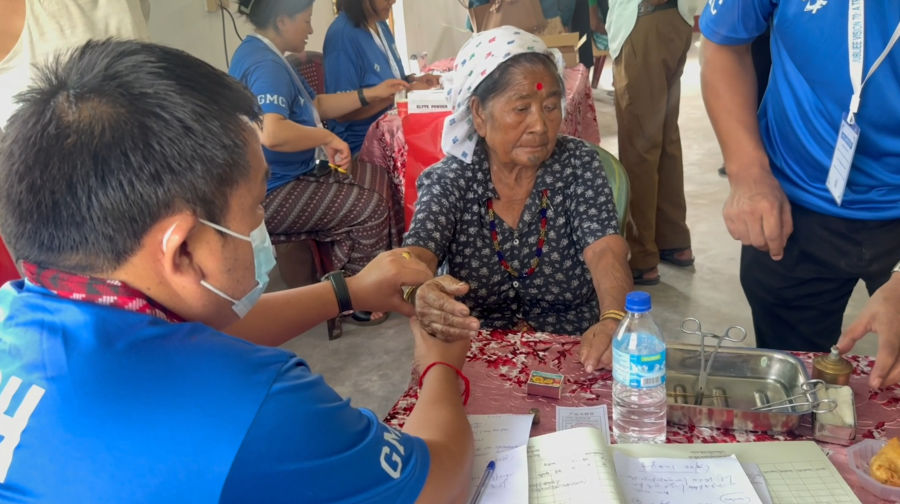
    Thimphu: Bhutan’s compassion has crossed borders. In a heartfelt gesture of friendship, the Bhutan-India Friendship Association and Gelephu Central Regional Referral Hospital have brought free eye care to residents of Hatisar, India, as a tribute to His Majesty the Fourth Druk Gyalpo on his 70th birthday.

    For sixty-year-old Kishan Narjary from the quiet border town of Hatisar in India, the world had long been a blur. With no nearby hospital, every journey for treatment meant hours on the road and money he could hardly spare. But this time, help arrived just a few steps from home.

    Kishan Narjary said, “We are very happy to receive such support in the name of Bhutan’s King. Many of us here are old and cannot travel far for checkups. We feel very grateful to the King and Government of Bhutan for helping us.”

    Like Kishan, dozens of others from Hatisar turned up for the free eye camp, part of the “Jubilee Vision 70” initiative, a joint effort between the Bhutan-India Friendship Association and the Central Regional Referral Hospital in Gelephu.

    “We don’t have a hospital here, so whenever we get sick, we have to travel all the way to Bongaigaon, which is quite far. For many people with limited money, it’s difficult, and they often ignore their illnesses. We’re really thankful that such a programme has been made possible for us,” said Mon Maya Niwar, a resident of Hatisar.

    Another resident, Ram Bdr Niwar said, “This programme is very helpful for us because we don’t have doctors or a good pharmacy here. For any health problem, we’ve always depended on Gelephu Hospital. We’re grateful that the team came here to help us.”

    Besides the eye screening, the camp also provided other essential health services to honour His Majesty the Fourth Druk Gyalpo on his 70th birthday.

    Ganga Ram, a member of the Bhutan-India Friendship Association said, “The programme is organised to provide eye and general health services. It’s our tribute to His Majesty the Fourth King on his birthday, and also to strengthen the friendship between Bhutan and India.”

    The camp offered free health services to all who came, and those requiring surgery will soon be treated at the Central Regional Referral Hospital in Gelephu. As a gesture of goodwill, visitors also received gift hampers marking the Great Fourth’s 70th birthday.

    The “Jubilee Vision 70” initiative not only helped restore sight and brought essential healthcare to those in need, but also reaffirmed the enduring friendship between the two nations that continues to flourish under His Majesty the Fourth Druk Gyalpo’s guidance and His Majesty The King’s visionary leadership.

  • India’s Modi visits Bhutan to open hydropower project

    India’s Modi visits Bhutan to open hydropower project

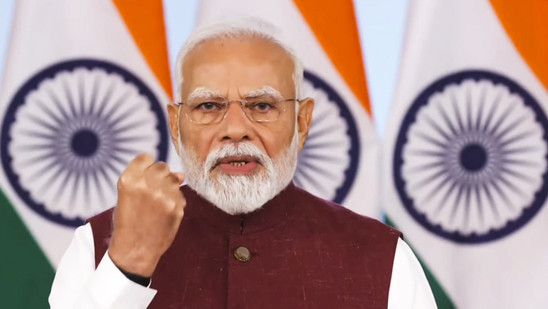
    India Prime Minister Narendra Modi addresses the nation on 12 May 2025. Photo: Collected
    India Prime Minister Narendra Modi addresses the nation on 12 May 2025. Photo: Collected

    Thimphu: Indian Prime Minister Narendra Modi flew to neighbouring Bhutan on Tuesday to open a giant hydropower project with the king of the Himalayan nation, where electricity is its key export.

    Carbon-negative Bhutan has aggressively promoted hydropower projects, earning substantial revenue by exporting electricity to energy-hungry India, as well as utilising the cheap power for its own drive to mine cryptocurrency.

    Modi and King Jigme Khesar Namgyel Wangchuck are scheduled to inaugurate the 1020 megawatt Punatsangchhu-II hydropower project, co-developed with India and among the biggest in Bhutan.

    “The visit will also mark another major milestone in our successful energy partnership”, Modi said in a statement as he departed New Delhi.

    Tiny but strategic Bhutan is squeezed between giants China and India, and courted by both.

    Modi said his visit would deepen ties and that their partnership was a “key pillar” of India’s “neighbourhood first” policy.

    India is Bhutan’s main trading partner, making up more than 80 percent of its trade – $1.78 billion overall in 2024-25 – according to India’s commerce ministry.

    Bhutan’s embassy in New Delhi says hydropower contributes nearly two-thirds of its total exports.

    India’s exports to Bhutan totalled $1.3 billion in 2024-25, ranging from petroleum products to iron and steel, grains and smartphones. Bhutan in turn exported products totalling $513 million, including electricity and construction materials.

    New Delhi said in September it would build the first cross-border railway to Bhutan.

    Bhutan champions a policy of prioritising “Gross National Happiness” over growth but that has not helped the government deal with widespread unemployment, forcing thousands of young people to leave the country.

    Bhutan’s GDP per capita is around $3,718, according to the World Bank.

    The mountainous kingdom is seeking to diversify its economy, taking advantage of abundant hydropower and a cool mountain climate to power vast computer farms to mine cryptocurrency.

    Its state-run Druk Holding and Investment (DHI) invested $539 million – nearly a fifth of its total GDP – to establish cryptocurrency operations in 2021-2022, according to the World Bank.

    It has since developed sizable crypto holdings, although the exact value is not public.

  • From Monarchy to Democracy: Bhutan’s remarkable path to democracy

    From Monarchy to Democracy: Bhutan’s remarkable path to democracy

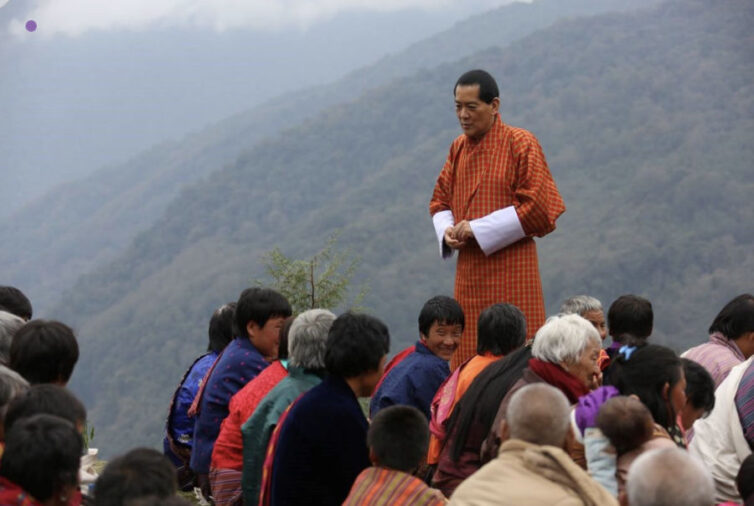
    Bhutan’s peaceful transition to democracy remains one of the most remarkable stories in modern political history, a transformation led not by public demand, but by a King’s vision. In this story, we look back at how His Majesty the Fourth Druk Gyalpo handed power to the people and how that selfless decision continues to shape Bhutan’s democracy today.

    When His Majesty announced his decision to introduce democracy in 2005 in Trashi Yangtse, it came as an unexpected yet defining moment in Bhutan’s modern history.

    At a time when people’s faith in the throne was absolute, the King believed the nation was ready to lead itself.

    “The government has decided that Bhutan will hold its first-ever general elections in 2008, and I feel that our people are ready to elect a government that will serve the interests of the nation and the people.”

    In the same address, His Majesty announced an extraordinary decision that the responsibilities of the throne would be handed over to the crown prince.

    “The Chhoetse Penlop will be enthroned as the Fifth Druk Gyalpo in 2008. If the King has to serve the country well, he must gain as much experience as possible to serve the nation to his fullest capacity. Therefore, all my responsibilities and powers will be handed over to the Chhoetse Penlop to enable him to serve the people and the country.”

    Former Chief Justice Sonam Tobgye was overcome by emotions at the time.

    “It was so sad as we stepped out of the throne room and then to the courtyard. The sun was shining brightly and strongly. But when your worries are there, even the sunlight is no more warm. Normally, I used to go to the court, but that day I felt so sad. I came back directly at home. I did nothing, but I lay down on my bed. I often curse why I have to be a witness of this change?” said Sonam Tobgye, Former Chief Justice.

    His Majesty’s vision culminated in Bhutan’s first parliamentary elections in 2008 and the signing of the Constitution, historic milestones gifted by a monarch who saw democracy as essential to the nation’s long-term happiness.

    Today, the fruits of that decision are visible across the country. Successive governments have carried forward Bhutan’s unique model of governance, rooted in Gross National Happiness and guided by the King’s enduring wisdom.

    From elders who witnessed the transition to young voters shaping Bhutan’s democratic journey today, His Majesty’s selfless act continues to inspire unity, humility, and civic responsibility.Bhutanese Livestock Products

    “We grew up in a democracy, but we know it was entrusted to us by our Fourth King. That’s why we feel responsible for protecting it,” said Tsheten Phuntsho, Assistant Media and Information Officer, Finance Ministry.

    Guided by His Majesty’s wisdom, Bhutan’s peaceful transition from an absolute monarchy to a democratic constitutional monarchy stands as one of the rarest and most graceful transformations in modern history.

  • Bhutan Integrated Taxation System set for launch next month

    Bhutan Integrated Taxation System set for launch next month

    Bhutan Integrated Taxation System set for launch next month
    Bhutan Integrated Taxation System set for launch next month

    Thimphu : The Bhutan Integrated Taxation System, worth over a billion ngultrum, will be accessible to taxpayers by next month. According to the Department of Revenue and Customs, the system is on track for launch and will soon serve as the primary portal for filing taxes.

    The new Goods and Services Tax, Income Tax, and Excise Tax will come into effect from January next year. However, for now, only the Goods and Services Tax and Excise Tax will be implemented through the Bhutan Integrated Taxation System, or BITs.

    Around 3,500 businesses with an annual turnover of five million ngultrum or more will be required to register under the GST framework.

    “If you are not registered, you will have to pay GST on any goods purchased from outside at the point of entry. However, since you are not registered, you will not be able to collect GST or claim the benefit of Input Tax Credit,” said Sonam Jamtsho, the Director General of the Department of Revenue and Customs.

    The updated Excise Tax will require brand registration of alcoholic beverages through eCMS and use BITs to file their returns and track their imports and sales.

    The department clarified that brand registration does not grant commercial exclusivity but serves as a regulatory control measure to ensure accountability and transparency.

    Yeshey Seldon, a collector with the Customs and Excise Division said, “Brand registration fees will apply to both domestic and imported products. Although registration has not yet started, we already have a list of registered products from the existing system. The fee is set at 100,000 ngultrum per brand per dealer for imported liquors, and 35,000 ngultrum for domestic liquors.”

    The Excise Tax apply to tobacco, alcohol, carbonated drinks, supari, pan masala, and vehicles

    Meanwhile, the Income Tax Act 2025 will be integrated into BITs starting from 2027. This year, individuals must continue to file their Personal Income Tax returns through the RAMIS system.

    “In 2026, when individuals file their taxes, they will have to declare their business income together with their personal income. The Act also introduces a 10 per cent final withholding tax on interest income and dividend income, with exemptions for Nu 300,000 for dividend income and Nu 400,000 for interest income,” said Tashi Wangmo, a collector, with the Income Tax Division.

    The Act provides several tax reliefs for resident individuals, including those related to education expenses, homeownership, insurance, disability, donations, health contributions, and the Parenthood Tax Child Credit.

    To prepare for the implementation of the new tax regimes, the Department has trained its officials, end users, and business entities. It has also upgraded computer systems across regional offices and conducted network assessments to ensure smooth and efficient operations.

    Additionally, the Department continues to carry out awareness and outreach programmes for both officials and business owners.

    The new Goods and Services Tax, Income Tax, and Excise Tax regimes were introduced to simplify and modernise Bhutan’s tax system. Parliament endorsed the legislation during its last session.

  • Bhutan’s Third Nationally Determined Contribution unveiled

    Bhutan’s Third Nationally Determined Contribution unveiled

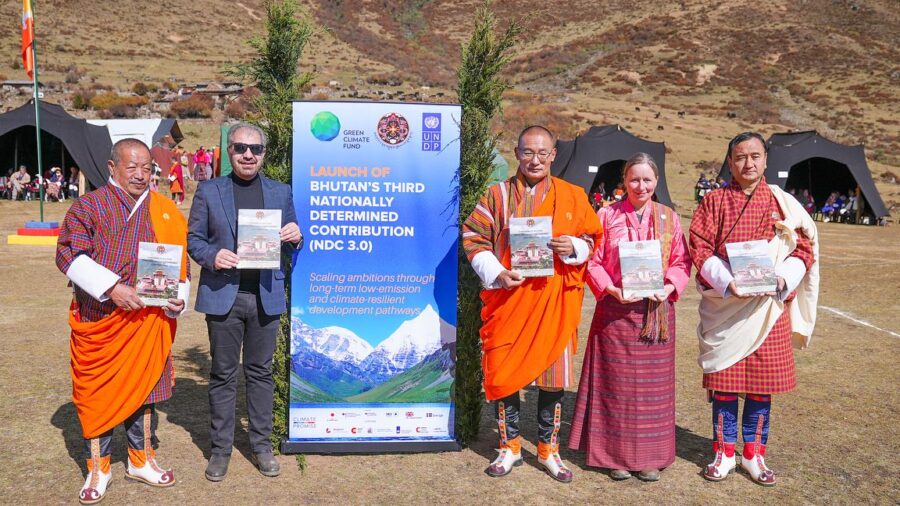
    Thimphu: The Prime Minister unveiled Bhutan’s Third Nationally Determined Contribution or NDC during the 8th Royal Highland Festival at Laya in Gasa yesterday. This latest national climate action plan reaffirms the country’s pledge to remain carbon neutral, while setting stronger goals for a resilient, inclusive and sustainable future. Their Majesties The King and Gyaltsuen graced the second day of the Royal Highland Festival yesterday.

    In this NDC, covering the period up to 2035, Bhutan reaffirms its historic 2009 commitment to ensure that greenhouse gas emissions do not exceed the carbon sequestration capacity of its forests and land-based sinks.

    The NDC outlines an ambitious plan to maintain carbon neutrality by expanding renewable energy and implementing interventions across energy, industry, and agriculture sectors. Crucially, the plan emphasises comprehensive adaptation priorities.

    The Prime Minister said, “Our NDC 3.0 aligns fully with Bhutan’s 13th Five Year Plan and 21st Century Economic Roadmap, charting the paths towards low emission, high value growth. Bhutan’s NDC 3.0 is our contribution to this kinetic effort, and we invite partners to join us in translating ambition into tangible action.”

    The plan also emphasises that climate adaptation has an urgent priority.

    For the first time, Bhutan’s NDC explicitly addresses loss and damage from climate impacts that outpace adaptation efforts including economic and non-economic losses from floods, GLOFs, landslides, forest fires, and slow-onset events such as glacier melt and droughts.

    Bhutan calls for international solidarity, including access to the Fund for Responding to Loss and Damage and technical assistance, create a centralised database for tracking losses, and support recovery and rehabilitation.

    The country continues to face acute vulnerabilities from climate change, including rising temperatures, erratic rainfall, floods, landslides, and forest fires threatening livelihoods and ecosystem and cultural heritage. This has become a significant concern in the country.

    Pema Jamtsho, Laya Mangmi in Gasa said, “Nowadays, snowfalls do not occur on time as they used to. Sometimes it comes early, and sometimes late. Likewise, the mountains around us used to remain covered with snow, but now the snow melts completely during summer. Moreover, our water sources have started drying up, causing water shortage.”

    Lobzang Tashi, a resident from Merak Gewog in Trashigang said, “Because of global warming, we may no longer be able to graze our animals in the usual areas. Rising mountain temperatures could cause our yaks to suffer from heat stress, and we risk losing them to the increasingly harsh conditions.”

    Kinley Dorji from Laya Gewog said, “We are now seeing many new insects appearing in our area. Even mosquitoes have reached here, whereas before we only heard of them in Gasa. Similarly, some animals from the lower regions are also moving into our area. In fact, we even spotted a gaur here last year.”

    Officials said while Bhutan exceeds its fair share in global climate efforts, sustaining carbon neutrality and addressing the loss and damage depends on international cooperation.

    There is a need for finance, technology, and capacity-building to counter climate threats.

    The climate action plan will be presented to the UNFCCC Secretariat prior to COP 30 in Belem in Brazil next month. As Bhutan charts its path to a tenfold Gross Domestic Product’s growth by 2050, the third NDC reaffirms that environmental leadership is integral to national progress.

  • Pema Gatshel’s Khar powers half of Bhutan’s sunflower yield, requests bigger extraction machines

    Pema Gatshel’s Khar powers half of Bhutan’s sunflower yield, requests bigger extraction machines

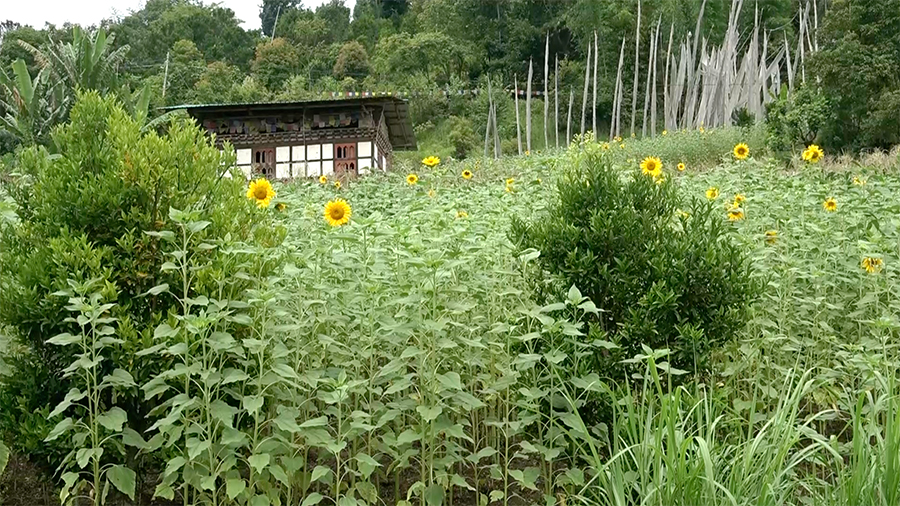
    Thimphu : Sunflower cultivation is fast gaining popularity among farmers at Khar Gewog in Pema Gatshel. Thanks to the gewog administration’s initiative, once limited to a few growers, the gewog now produces nearly 45 per cent of the country’s total sunflower harvest. With the installation of an oil extraction machine last year, farmers have started producing oil locally. However, with production on the rise, they are now requesting additional and larger machines to meet the growing demand.

    Many farmers in Khar Gewog now grow sunflower on large scale after an oil extraction machine was installed at Khengzor-Labar Chiwog last year. Some have already started making use of the machine to extract oil. But according to the farmers, the machine is too small to cater to the entire gewog. They are requesting for a larger or additional extraction machines.

    Tshering Chophel from Labar said, “If we are provided a bigger machine in our chiwog, we can collect sunflowers from nearby chiwogs and extract oil here. If that’s not possible, it would be better to provide one machine each to other chiwogs as well.”

    Ugyen Namgay, Khengzor Tshogpa said, “After receiving the machine, more people have shown interest in growing sunflowers compared to the previous years. Everyone wants to earn income from it. With a larger machine, we would be able toextract enough oil not just for self-consumption but also for commercial sale.”

    The gewog administration said it will support the farmers by providing two more machines. Villagers are now waiting for the machines to arrive.

    Metsi Wangmo, Shinangri Tshogpa said, “At first, we cultivated on a trial basis with support from the gewog office. There is already a machine at Labar, but since we planted only a small amount, taking it there wouldn’t even cover the hiring charges. So, we are waiting, as we heard we will get our own machine soon.”

    Ugyen Pema from Shinangri said, “We didn’t take our seeds to Labar to extract oil because we are hoping to get a machine here in our chiwog. Earlier, some people weren’t interested, but I believe everyone will be if we get our own machine.”

    According to gewog officials, a budget has already been allocated to buy two additional machines. However, they couldn’t make an immediate purchase as they are awaiting technical guidance and recommendations from the National Post-Harvest Centre.The gewog office is also exploring ways to provide sunflower seeds to interested farmers if there is any budget left after procuring the machines.

    According to the Integrated Agriculture and Livestock Census of Bhutan 2025, Pema Gatshel was the top sunflower-growing district in the country, producing over 620 kilogrammes of sunflower seeds last year. Bhutan’s total sunflower seed production stood at around 1,400 kilogrammes.

    With the number of growers in the district increasing from 17 last year to 60 this year, the harvest is expected to multiply.

    This progress is a reflection of how small initiatives can stimulate growth in import-driven sectors, promote import substitution, and enhance rural livelihoods.

  • Bhutan hosts SAARC Festival for Rice Culinary and Spice Exhibition

    Bhutan hosts SAARC Festival for Rice Culinary and Spice Exhibition

    Thimphu: Bhutan is hosting the SAARC Festival for Rice Culinary and Spice Exhibition in Paro. The region’s diverse food traditions, with the rich aroma of rice dishes and regional spices, are on display at the event. While promoting cultural exchange through food, the festival aims to celebrate and preserve rice-based cuisines.

    Rice, a common staple food across South Asia, has long been at the heart of the region’s culinary identity.

    The festival showcases Bhutan’s variety of rice delicacies, Sri Lanka’s milk rice dish, and Nepal’s rice dumplings.

    Tshering Choki, Deputy Chief Programme Officer of the Department of Culture and Dzongkha Development said, “Rice-based cuisines have been part of our tradition for a long time. However, nowadays, youths do not take much interest in cooking rice-based cuisines nor in using these culinary skills. Therefore, we organised this festival thinking that youth would come forward to learn culinary skills and spices that add flavours to it.”

    Moreover, exhibitors from three SAARC countries displayed a range of indigenous spices.

    According to the Director of the SAARC Cultural Centre, the festival is more than just a culinary celebration.

    He said the initiative hopes to inspire younger generations to take pride in their traditional food heritage while promoting regional collaboration through shared tastes and stories.

    Kaushalya Kumarasinghe (PhD), the director of SAARC Cultural Centre said, “We have a new food culture, like fast foods and people are getting used to this new food culture. That is how culture is, always changing. However, we need to preserve our tradition and other cultural aspects.”

    As foods are shared and stories exchanged, the festival serves as a platform to celebrate, revive, and promote the intangible heritage of rice cuisines, the art of their preparation and the spices that add flavour to it.