Tag: India

  • Hostile India, Pakistan swap lists of nuclear installations, prisoners in 35th such instance

    Hostile India, Pakistan swap lists of nuclear installations, prisoners in 35th such instance

    India and Pakistan on Thursday (1 January) exchanged lists of nuclear installations that cannot be attacked in the event of hostilities and lists of prisoners in each other’s custody, against the backdrop of unprecedented strains in bilateral ties after a brief but intense conflict last May.

    The lists were exchanged a day after external affairs minister S Jaishankar briefly interacted with Pakistan’s National Assembly Speaker Ayaz Sadiq in Dhaka, where they were representing their countries at the funeral of former Bangladesh premier Khaleda Zia. This was the first engagement between senior officials of the two sides since last year’s four-day conflict triggered by India’s military strikes on terrorist infrastructure in Pakistan.

    India and Pakistan exchanged the list of facilities covered under the Agreement on the Prohibition of Attack against Nuclear Installations and Facilities through diplomatic channels in New Delhi and Islamabad simultaneously, the external affairs ministry said.

    The exchange maintained a tradition going back to 1992 despite ties between the two neighbours being at an all-time low.

    Under the agreement, which was signed in December 1988 and entered into force in January 1991, India and Pakistan inform each other of nuclear installations and facilities to be covered under the pact on January 1 every year. This was the 35th consecutive exchange, though both sides don’t make the lists public.

    India and Pakistan also exchanged, through diplomatic channels in New Delhi and Islamabad, lists of civilian prisoners and fishermen in each other’s custody under provisions of the Agreement on Consular Access of 2008.

    India shared details of 391 civilian prisoners and 33 fishermen in its custody, who are Pakistani or believed-to-be-Pakistani, the external affairs ministry said. Pakistan shared lists with details of 58 civilian prisoners and 199 fishermen in its custody, who are Indian or believed-to-be-Indian.

    The Indian side called for the early release and repatriation of civilian prisoners, fishermen along with their boats, and missing Indian defence personnel from Pakistan’s custody. Pakistan was also urged to expedite the release and repatriation of 167 Indian fishermen and civilian prisoners who have completed their sentences, the ministry said.

    The Indian side also asked Pakistan to provide immediate consular access to 35 civilian prisoners and fishermen in Pakistan’s custody “who are believed-to-be-Indian and have not been provided consular access so far”, the ministry said. It also asked the Pakistan government to ensure the safety, security and welfare of all Indian and believed-to-be-Indian prisoners and fishermen.

    The ministry said that as a result of sustained efforts by the Indian government, 2,661 fishermen and 71 civilian prisoners had been repatriated from Pakistan since 2014. This includes 500 fishermen and 13 civilian prisoners repatriated since 2023.

    India and Pakistan have not had any sustained talks since New Delhi called off the composite dialogue in the aftermath of the 2008 Mumbai attacks, which were carried out by the Pakistan-based Lashkar-e-Taiba (LeT) and killed 166 people.

    The political leadership on both sides have attempted to resume contacts, though these efforts were derailed by a string of terror attacks blamed on Pakistan-based groups, and India responded to the Pahalgam terror attack last year with several punitive economic and diplomatic measures, including the suspension of the Indus Waters Treaty of 1960.

  • Bangladeshi politician’s threat targeting India’s northeast deepens row

    Bangladeshi politician’s threat targeting India’s northeast deepens row

    By Biman Mukherji

    Dhaka’s already strained relationship with New Delhi has come under fresh pressure after a Bangladeshi opposition leader threatened to shelter separatists targeting India’s sensitive northeast region in retaliation for what he claimed to be election interference.

    Hasnat Abdullah, a leader of the newly formed National Citizen Party (NCP), warned at a rally in Dhaka on Monday that he would carry out the move if Bangladesh believed India was trying to influence its election in February.

    “If Bangladesh is destabilised, the fire of resistance will spread beyond borders. Since you are housing those who destabilise us, we will give refuge to the separatists of seven sisters too,” Abdullah said, using a common reference for seven states in India’s northeast.

    “I want to say clearly to India that if you shelter forces who do not respect Bangladesh’s sovereignty, potential, voting rights and human rights, Bangladesh will respond.”

    His remarks were seen as particularly provocative in India because Delhi is sensitive about security in its northeast due to insurgencies, the region’s porous borders and its strategic location between Bangladesh, Myanmar and China.

    Abdullah accused “vultures”, whom he did not name, of trying to exert control over Bangladesh despite the country having been independent for 54 years. He also called for resistance rallies on Victory Day on Tuesday, which marked the defeat of Pakistan’s military in Bangladesh’s liberation war in 1971.

    Source :SCMP

  • India streamlines visa rules in boost for Chinese professionals

    India streamlines visa rules in boost for Chinese professionals

    Indian Prime Minister Narendra Modi shakes hand with Chinese Premier Li Qiang upon his arrival at Bharat Mandapam convention centre for the G20 Summit in New Delhi, India, Saturday, Sept. 9, 2023. Photo: Evan Vucci/Pool via REUTERS
    Indian Prime Minister Narendra Modi shakes hand with Chinese Premier Li Qiang upon his arrival at Bharat Mandapam convention centre for the G20 Summit in New Delhi, India, Saturday, Sept. 9, 2023. Photo: Evan Vucci/Pool via REUTERS

    New Delhi : India has reformed its business visa regime to ease movement of foreign engineers and technicians, the government said in a statement, which will be a boost local firms leaning on Chinese professionals for manufacturing services.

    India’s Department for Promotion of Industry and Internal Trade said late on Wednesday it had launched a new digital platform last month for companies to generate sponsorship letters to invite foreign professionals, has simplified visa forms and will no longer ask relevant ministries for additional recommendations.

    The visas have been eased for factory installation, commissioning, maintenance, and production, among other functions. Indian businesses predominantly depend on Chinese professionals for such services and to train local staff, especially in factories that deploy Chinese machinery.

    Reuters reported last week that India has cut red tape to speed up visas for Chinese professionals in signs of improved ties between the two nations.

    India had blocked virtually all Chinese visits after the nuclear-armed neighbours clashed on their Himalayan frontier in mid-2020, widening its vetting of business visas beyond the home and foreign ministries.

    The removal of red tape comes after Prime Minister Narendra Modi visited China this year for the first time in seven years, meeting Chinese President Xi Jinping and discussing ways to improve ties.

    In the face of punishing US tariffs, Modi has cautiously rekindled ties with Beijing.

    Think tank the Observer Research Foundation estimates the tougher scrutiny on visas led to production losses of $15 billion over four years to Indian electronics makers, which import key machinery from China.

    Major Chinese electronics companies, such as Xiaomi, have also struggled to get visas. Industry executives have said such curbs hit their plans to expand in India, while the solar industry was also hit by shortages of skilled labour.

  • India signs trade pact with Oman as it expands Middle East ties

    India signs trade pact with Oman as it expands Middle East ties

    Indian Prime Minister Narendra Modi meets with Oman's Deputy Prime Minister for Defence Affairs Sayyid Shihab bin Tariq Al Said in Muscat, Oman, December 17, 2025. Photo: Reuters
    Indian Prime Minister Narendra Modi meets with Oman’s Deputy Prime Minister for Defence Affairs Sayyid Shihab bin Tariq Al Said in Muscat, Oman, December 17, 2025. Photo: Reuters

    New Delhi : India signed an economic partnership agreement with Oman on Thursday to boost bilateral trade and investment as it seeks to expand Middle East ties and diversify trade to beat steep US tariffs.

    Oman has offered zero-duty access on over 98% of its tariff lines, covering nearly all Indian exports, including gems and jewellery, textiles, pharmaceuticals and automobiles, the Indian trade ministry said in a statement.

    India, in turn, will cut tariffs on about 78% of its tariff lines, covering nearly 95% of imports from Oman by value.

    India and Oman have annual trade of more than $10 billion.

    The relationship is important for New Delhi as the Gulf nation is a gateway to the narrow Strait of Hormuz between Oman and Iran, a major transit point for global oil shipments.

    “This (pact) will set a new pace of our trade, add new trust to our investments and open doors to new opportunities in many sectors,” Indian Prime Minister Narendra Modi said in an address in Oman today.

    The pact, India’s second after one with the United Kingdom this year, will help Indian goods enter new markets as exporters intensify diversification efforts to defy US President Donald Trump’s punishing tariffs.

    Oman’s first bilateral agreement since 2006

    This is Oman’s first bilateral agreement since its 2006 deal with the United States.

    After talks fell apart, Trump doubled duties on Indian goods to 50% in late August, the highest in the world. The hike included a 25% levy that was in retaliation for India’s purchases of Russian oil.

    Despite negotiations, New Delhi has been unable to close a deal with the U.S. or the European Union this year, as initially intended.

    The deal is “as much about geopolitics and regional presence as it is about tariffs,” said Ajay Srivastava, founder of the Global Trade Research Initiative.

    The pact will boost gem and jewellery exports which could rise from $35 million to about $150 million over the next three years, said Kirit Bhansali, chairman of Gems & Jewellery Export Promotion Council.

    Sensitive items including dairy, tea, coffee, rubber and tobacco have been kept out of the pact. The pact also offers an opportunity in Oman’s $12.5 billion services import market, in which India currently holds just a 5.3% share, the statement said.

  • India Condemns Pakistan’s Attacks On Afghanistan That Killed Civilians

    India Condemns Pakistan’s Attacks On Afghanistan That Killed Civilians

    A spokesperson of the Taliban regime in Afghanistan said Pakistan initiated the attacks.
    A spokesperson of the Taliban regime in Afghanistan said Pakistan initiated the attacks.

    New Delhi: India on Monday condemned Pakistan’s fresh attacks on Afghanistan that killed several civilians.

    Fresh clashes between the two sides erupted less than two months after both sealed a ceasefire pact to end weeks of fighting.

    “We have seen reports of border clashes in which several Afghan civilians have been killed,” Ministry of External Affairs (MEA) spokesperson Randhir Jaiswal said at his weekly media briefing.

    “We condemn such attacks on innocent Afghan people. India strongly supports the territorial integrity, sovereignty and independence of Afghanistan,” he said.

    A spokesperson of the Taliban regime in Afghanistan said Pakistan initiated the attacks and that Kabul was “forced to respond”.

    The border conflict between Pakistan and Afghanistan began in early October, following a Pakistani airstrike on Kabul.

    Afghanistan strongly responded to the attack, following which the conflict escalated.

    The hostilities erupted while Afghan Foreign Minister Amir Khan Muttaqi was visiting India. The clashes were the worst since the Taliban seized power in 2021.

    The two sides entered into a ceasefire agreement on October 19, following talks brokered by Qatar and Turkiye.

    (Except for the headline, this story has not been edited by SAC staff and is published from a syndicated feed.)

  • India sends fourth C-17 to Sri Lanka with Bailey bridge units for relief operations

    India sends fourth C-17 to Sri Lanka with Bailey bridge units for relief operations

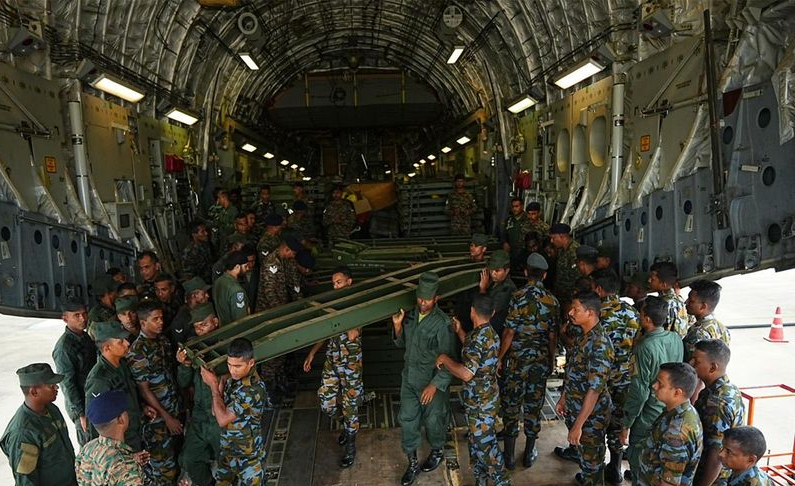
    Colombo [Sri Lanka], December 7 (ANI): India’s relief operations under Operation Sagar Bandhu continued, with another aircraft carrying key support equipment arriving in Colombo to assist ongoing humanitarian efforts in the country.

    In a post on X, Randhir Jaiswal, Official Spokesperson of the Ministry of External Affairs of India, wrote, “#OperationSagarBandhu: Relief operations continue! The 4th C17 aircraft, third one carrying Bailey Bridge units arrived in Colombo today. It had about 55 tonnes of Bailey Bridge stores, a JCB and 13 personnel from Engineer corps.”

    As India continues to deploy critical support equipment, its medical assistance on the ground has also expanded.

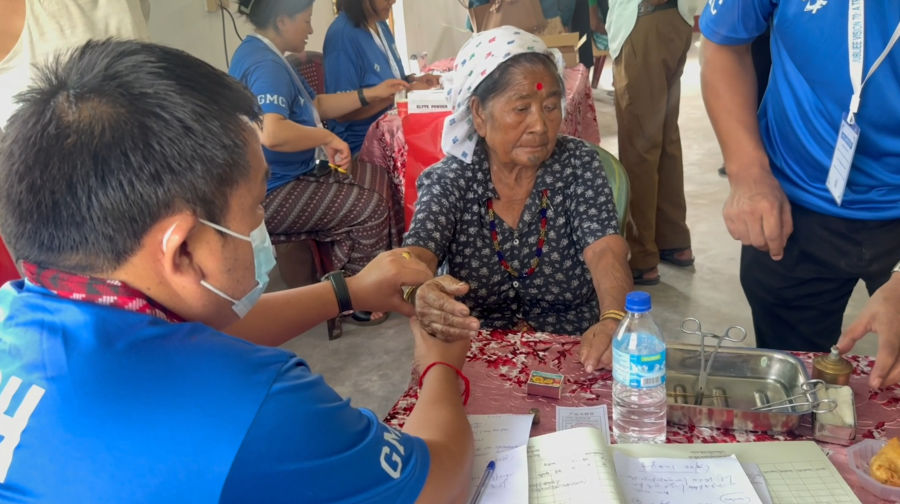
    India’s ongoing humanitarian relief mission has made significant progress as an Indian medical team set up a fully operational field hospital in Mahiyanganaya, near Kandy, to support communities hit hard by Cyclone Ditwah, one of the most devastating tropical storms to impact Sri Lanka in recent years.

    In a post on X on Friday, the High Commission of India in Colombo said the facility is being established to deliver urgent, life-saving medical assistance to affected residents.

    “Operation Sagar Bandhu continues healing on the ground. A fully operational field hospital is being set up by the Indian medical team in Mahiyanganaya near Kandy, bringing trauma care, surgical capability, ambulances and critical services directly to a hard-hit community. Ensuring those impacted have access to urgent, life-saving medical support,” the High Commission posted.

    These operations are part of India’s sustained humanitarian assistance to Sri Lanka through coordinated rescue, medical, and relief efforts under Operation Sagar Bandhu.

    Earlier, MEA Spokesperson Randhir Jaiswal said in a post on X that an Indian Air Force C-17 Globemaster landed in Colombo on Thursday carrying Bailey bridge units to help restore road connectivity.

    A team of 25 personnel, including engineers and medical experts, also arrived on the aircraft, the MEA stated.

    “Another IAF MCC C-17 Globemaster has landed in Colombo with Bailey bridge units to restore road accessibility. A team of 25 personnel, including engineers and medical experts also arrived in this flight,” Jaiswal wrote.

    The broader relief effort comes as Sri Lanka continues to struggle with the aftermath of severe weather.

    According to Sri Lanka’s Disaster Management Centre (DMC), the death toll from the severe weather across the country has climbed to 481 as of 6:00 pm on Thursday, the Daily Mirror Online reported.

    The latest update also noted that 345 people remain missing, as search, rescue, and relief operations continue in several of the worst-affected districts.

    Meanwhile, Sri Lanka’s Department of Meteorology on Friday issued a red alert for intense lightning in parts of the Western and Sabaragamuwa Provinces and in the districts of Galle and Matara, valid until 11:00 pm today, according to the Daily Mirror Online.

    Seven districts are currently under red alerts, while eight others are under amber alerts due to heightened lightning risk. (ANI)

  • Bhutan extends health care to Hatisar, India in honour of His Majesty the Fourth Druk Gyalpo’s birthday

    Bhutan extends health care to Hatisar, India in honour of His Majesty the Fourth Druk Gyalpo’s birthday

    Thimphu: Bhutan’s compassion has crossed borders. In a heartfelt gesture of friendship, the Bhutan-India Friendship Association and Gelephu Central Regional Referral Hospital have brought free eye care to residents of Hatisar, India, as a tribute to His Majesty the Fourth Druk Gyalpo on his 70th birthday.

    For sixty-year-old Kishan Narjary from the quiet border town of Hatisar in India, the world had long been a blur. With no nearby hospital, every journey for treatment meant hours on the road and money he could hardly spare. But this time, help arrived just a few steps from home.

    Kishan Narjary said, “We are very happy to receive such support in the name of Bhutan’s King. Many of us here are old and cannot travel far for checkups. We feel very grateful to the King and Government of Bhutan for helping us.”

    Like Kishan, dozens of others from Hatisar turned up for the free eye camp, part of the “Jubilee Vision 70” initiative, a joint effort between the Bhutan-India Friendship Association and the Central Regional Referral Hospital in Gelephu.

    “We don’t have a hospital here, so whenever we get sick, we have to travel all the way to Bongaigaon, which is quite far. For many people with limited money, it’s difficult, and they often ignore their illnesses. We’re really thankful that such a programme has been made possible for us,” said Mon Maya Niwar, a resident of Hatisar.

    Another resident, Ram Bdr Niwar said, “This programme is very helpful for us because we don’t have doctors or a good pharmacy here. For any health problem, we’ve always depended on Gelephu Hospital. We’re grateful that the team came here to help us.”

    Besides the eye screening, the camp also provided other essential health services to honour His Majesty the Fourth Druk Gyalpo on his 70th birthday.

    Ganga Ram, a member of the Bhutan-India Friendship Association said, “The programme is organised to provide eye and general health services. It’s our tribute to His Majesty the Fourth King on his birthday, and also to strengthen the friendship between Bhutan and India.”

    The camp offered free health services to all who came, and those requiring surgery will soon be treated at the Central Regional Referral Hospital in Gelephu. As a gesture of goodwill, visitors also received gift hampers marking the Great Fourth’s 70th birthday.

    The “Jubilee Vision 70” initiative not only helped restore sight and brought essential healthcare to those in need, but also reaffirmed the enduring friendship between the two nations that continues to flourish under His Majesty the Fourth Druk Gyalpo’s guidance and His Majesty The King’s visionary leadership.

  • India says Delhi blast was ‘terror incident’, sources cite possible link with Kashmir arrests

    India says Delhi blast was ‘terror incident’, sources cite possible link with Kashmir arrests

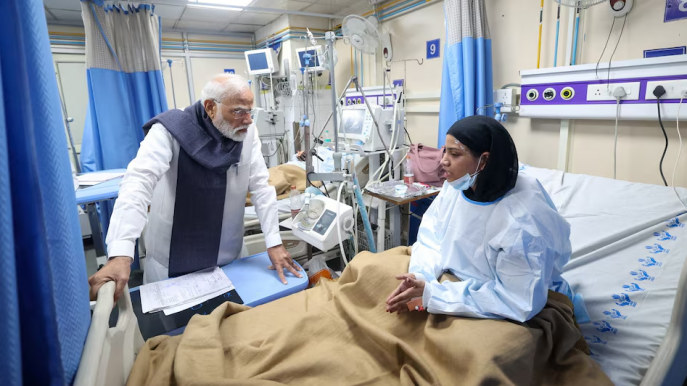
    India's Prime Minister Narendra Modi speaks with a woman, who was injured in an explosion near the historic Red Fort in the old quarters of Delhi on Monday, at LNJP Hospital in New Delhi, India, November 12, 2025. Photo: India's Press Information Bureau/Handout via REUTERS
    India’s Prime Minister Narendra Modi speaks with a woman, who was injured in an explosion near the historic Red Fort in the old quarters of Delhi on Monday, at LNJP Hospital in New Delhi, India, November 12, 2025. Photo: India’s Press Information Bureau/Handout via REUTERS

    New Delhi : India’s government confirmed on Wednesday that it was treating a car blast that killed eight people and wounded at least 20 others in Delhi as a “terror incident” and vowed to bring the perpetrators to justice as swiftly as possible.

    Earlier, three sources familiar with the investigation said police were checking whether there was a link between the blast and the previous arrest of a group of seven men from the restive Kashmir region with arms and bomb-making material.

    The blast on Monday evening outside Delhi’s historic Red Fort was the first such explosion in the heavily guarded city of more than 30 million people since 2011.

    Indian authorities are investigating the blast under a stringent anti-terrorism law and have said that all angles are being probed. They have not named anyone or made any arrests in connection with the explosion.

    In a resolution adopted late on Wednesday, Prime Minister Narendra Modi’s cabinet said: “The country has witnessed a heinous terror incident, perpetrated by anti-national forces, through a car explosion.”

    “The Cabinet directs that the investigation into the incident be pursued with the utmost urgency and professionalism so that the perpetrators, their collaborators, and their sponsors are identified and brought to justice without delay.”

    Two doctors among seven arrested in Kashmir region

    Hours before the blast in Delhi, police in the Jammu and Kashmir federal territory said they had arrested seven men, including two doctors, in connection with a separate anti-terror probe and searches in Kashmir, and in the states of Haryana and Uttar Pradesh that border Delhi.

    Police found two pistols, two assault rifles and 2,900 kg of bomb-making material during the raids, a Kashmir police statement said.

    “The investigation has revealed a white-collar terror ecosystem, involving radicalised professionals and students in contact with foreign handlers, operating from Pakistan and other countries,” it said, adding that the men were linked to Pakistan-based militant groups Jaish-e-Mohammad and Ansar Ghazwat-ul-Hind.

    Pakistan’s foreign office did not immediately respond to a request for comment.

    India accuses Pakistan of supporting Islamist militants in Kashmir, the Himalayan region which both nations claim, but Islamabad denies the accusation. Tens of thousands of people have been killed in an anti-Indian insurgency there since 1989 although violence has tapered off in recent years.

    In April, 26 men were killed in an attack on Hindu tourists in Kashmir which New Delhi blamed on what it called Islamist “terrorists” backed by Pakistan, a charge denied by Islamabad.

    The crisis led to the worst military conflict between the nuclear-armed rivals in decades before they agreed to a ceasefire after four days.

    Raids in Kashmir

    Police are investigating a possible connection between the driver of the car that exploded and the seven men arrested, the three sources said, speaking on condition of anonymity as they were not authorised to speak about the sensitive issue.

    Investigations are focused on whether the driver was a doctor and a colleague of one of the two arrested, one of the sources said.

    Spokespersons for the Delhi Police and the National Investigation Agency – the federal anti-terror agency that has taken over the probe – did not respond to requests for comment.

    Following the Delhi blast, Kashmir police carried out raids at hundreds of locations in the Himalayan region and about 500 people were detained, a Kashmir police source told Reuters. Most were let off after questioning, the source said.

  • India approves $5.1 billion package for exporters after US tariffs hit

    India approves $5.1 billion package for exporters after US tariffs hit

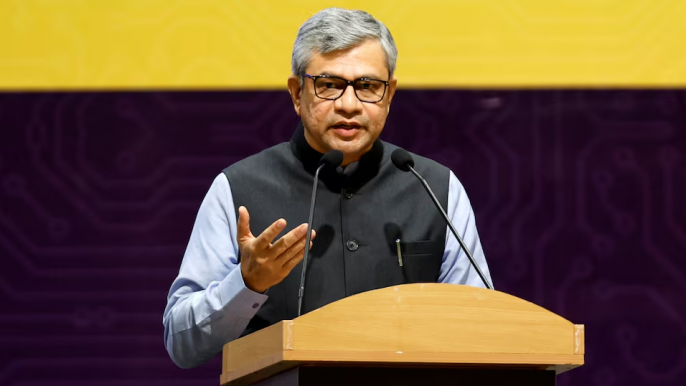
    India's Minister for Information Technology Ashwini Vaishnaw addresses the audience during the 'SemiconIndia 2023', India’s annual semiconductor conference, in Gandhinagar, India, July 28, 2023. Photo: REUTERS/Amit Dave
    India’s Minister for Information Technology Ashwini Vaishnaw addresses the audience during the ‘SemiconIndia 2023’, India’s annual semiconductor conference, in Gandhinagar, India, July 28, 2023. Photo: REUTERS/Amit Dave

    New Delhi : India’s cabinet has approved spending 450.6 billion rupees ($5.1 billion) on support for exporters, including 200 billion rupees in credit guarantees on bank loans, Information Minister Ashwini Vaishnaw said on Wednesday.

    The plan includes the allocation of 250.6 billion rupees over six years for affordable trade finance for small exporters, logistics and market support under an export promotion package to help offset the impact of recent US tariff hikes.

    The new US tariffs, including a 25% punitive levy over New Delhi’s Russian oil purchases, raised duties to as high as 50% on items such as garments, jewellery, leather goods and chemicals.

    Exporters said labour-intensive sectors such as textiles, jewellery and seafood, particularly shrimp – which all operate on margins of just 3%-5% – have been hit hardest, causing job losses in industrial hubs in Tamil Nadu and Prime Minister Narendra Modi’s home state of Gujarat.

    The plan includes a 200-billion-rupee credit guarantee programme running until March 2026 for collateral-free bank loans to exporters to boost their competitiveness and help explore new markets, Vaishnaw said.

    It would provide credit guarantees on loans of up to 500 million rupees, he said.

    Nearly 55% of India’s exports to the US, worth about $48 billion, faced a cost disadvantage against rivals from Vietnam, China and Bangladesh, Federation of Indian Export Organisations President S.C. Ralhan told the government, while seeking support.

    India’s merchandise exports to the US, its largest market, fell nearly 12% year-on-year to $5.43 billion in September, after the 50% tariffs took effect in late August, with engineering goods shipments down about 10%.

    On Monday, Trump said Washington was close to a deal with India to expand economic and security ties, an agreement New Delhi hopes could lead to an initial cut in punitive tariffs.

  • India lays foundation stone of military station just 30km away of Bangladesh border

    India lays foundation stone of military station just 30km away of Bangladesh border

    Lieutenant General RC Tiwari, General Officer Commanding-in-Chief, Eastern Command, lays the foundation stone of the Lachit Borphukan Military Station at Dhubri, Assam on 6 November 2025. Facebook page of Eastern Command-Indian Army
    Lieutenant General RC Tiwari, General Officer Commanding-in-Chief, Eastern Command, lays the foundation stone of the Lachit Borphukan Military Station at Dhubri, Assam on 6 November 2025. Facebook page of Eastern Command-Indian Army

    Guwahati: Lieutenant General RC Tiwari, General Officer Commanding-in-Chief, Eastern Command, visited the Gajraj Corps in the border areas and laid the foundation stone of the Lachit Borphukan Military Station at Dhubri, Assam, reports Indian news agency ANI on Thursday.

    According to the official release, named after the legendary Ahom Commander, Lachit Borphukan, the new military station embodies the indomitable spirit of courage, leadership, and resilience that defines the heritage of a resurgent Assam.

    The establishment of this station marks a significant step in further strengthening the operational capabilities and infrastructure of the Indian Army in the region.

    During the visit, the Army Commander reviewed the operational readiness and internal security situation in the bordering areas, along with the progress of ongoing infrastructure development initiatives undertaken by the formation.

    Lieutenant General Tiwari expressed heartfelt gratitude to the Government of Assam and the Civil Administration for their unwavering support and proactive role in facilitating the establishment of the new military station. He also commended all ranks of Gajraj Corps for their commitment, professionalism, and collective efforts in ensuring the early operationalisation of the project.

    The Lachit Borphukan Military Station stands as a testament to the synergy between the Armed Forces and the State Administration, reflecting the shared vision of national security and regional development.

    According to a Times of India report, the military station at the border town of Dhubri, India’s closest installation to the strategically vital Bangladesh border, and the first in western Assam, beyond Guwahati.

    Strategically positioned near the vulnerable “chicken’s neck” corridor — a narrow stretch connecting India’s northeast to the mainland — the Dhubri station is significant and is at an aerial distance of 30 km from the Bangladesh border, the report added.